Milk thistle is a common plant that has been used for thousands of years as a medicine for humans. [1] It contains abundant silymarin compounds which provide the plant’s medicinal benefits. Silymarin compounds are polyphenolic flavonoids that have been well-studied by modern medical science. They are also known fflavonolignans and include silybin A and silybin B.
Both anecdotal evidence and evidence provided by clinical trials demonstrate the plant’s effectiveness as a powerful medicine. It has been shown to be an antioxidant and to greatly protect and help heal numerous organs, including the heart and liver. It’s also been shown to have an anti-inflammatory and anti-aging effect on skin.
Additionally, silymarin compounds can help reduce cholesterol and insulin resistance, which is a problem for those suffering from type 2 diabetes. Silymarin compounds also may inhibit the growth of various cancer cells, including colorectal and breast cancers.
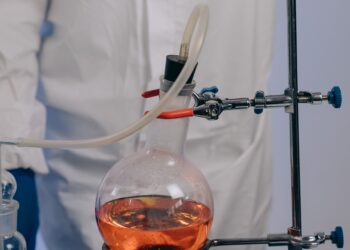
Silymarin compounds can be extracted from milk thistle seeds using various techniques. Two conventional methods include mechanical expression (ME) (pressing the oil out) and solvent extraction (SE). SE is used most often in industrial operations. SE consists of two stages: mechanical processing of the seeds followed by using a solvent, such as hexane, to extract the target compounds. Non-polar solvents are conventionally used to extract silymarin compounds. Heating to evaporate the solvent may reduce silymarin content, however.
Alternative methods of extraction to the above-mentioned methods exist. They include supercritical carbon dioxide (CO2) extraction, subcritical water extraction, microwave-assisted extraction, ultrasound-assisted extraction, and enzyme-assisted extraction.
Supercritical CO2 extraction involves heating and raising the pressure of CO2 to or beyond its critical point. Once in this state, the non-polar CO2 takes on the properties of a liquid and gas, and works as a solvent, especially in conjunction with a polar co-solvent such as ethanol. This form of extraction preserves the biological component of the extracted compound. Optimal conditions have been cited at 200-220 bar, 40º C, and a 4 ml/min flow rate. [2,3]
Milk thistle seed extraction can also work using water. In a study on subcritical water extraction, extracted silymarin content increased with temperature up to 250º C at a pressure of 12.5 MPa. [4]
Microwave-assisted extraction obviously uses microwaves. With this method, it’s important to note that the longer the process is performed, the more prone the source material and extract are to degradation. Maximum yields have been noted at 400 W for 30 minutes or 800 W for 15 minutes. [5]
Ultrasound-assisted extraction involves the use of sound waves passing through the source material used for extraction, usually in the range of 20 kHz – 100 MHz. One protocol for silymarin compounds describes 45 kHz in 50% ethanol at 25º C for 60 minutes. [6]
When complex structures prevent the use of solvent extraction, enzyme extraction can be used. One example of this is with the use of cellulase. Enzyme extraction can be combined with ultrasound-assisted extraction to produce optimal results. For example, one optimized method involves 50% ethanol and 30 U/mg cellulase at a 1:6 solid-solvent ratio; ultrasound power is applied at 180 W for 120 minutes. [1,7]
In general, the best forms of extraction are those which are the most environmentally friendly and produce the highest yield.
Image Source: Pexels
References:
- Lorenzo, M. Jose, Silymarin compounds: Chemistry, innovative extraction techniques and synthesis. Studies in Natural Products Chemistry. 64, 2020, Chapter 4, 112-128.
- Ben Rahal N, et al. Supercritical CO2 extraction of oil, fatty acids and flavonolignans from milk thistle seeds: Evaluation of their antioxidant and cytotoxic activities in Caco-2 cells. Food Chem Toxicol. 2015;83:275-282. doi:https://doi.org/10.1016/j.fct.2015.07.006. [Impact Factor: 4.6; Times Cited: 22 (Semantic Scholar) ]
- Çelik HT, Gürü M. Extraction of oil and silybin compounds from milk thistle seeds using supercritical carbon dioxide. J Supercrit Fluids. 2015;100:105-109. doi:https://doi.org/10.1016/j.supflu.2015.02.025. [Impact Factor: 3.744; Times Cited: 15]
- Platonov IA, et al. Subcritical water extraction of biologically active substances from milk thistle seed (Silybum murianum). Russ J Phys Chem B. 2010;4(8):1211-1216. doi:10.1134/S1990793110080063. [Impact Factor: 0.544; Times Cited: 4 (Semantic Scholar)]
- Saleh IA, et al. Extraction of silymarin from milk thistle (Silybum marianum) seeds – a comparison of conventional and microwave-assisted extraction methods. Journal of Microwave Power and Electromagnetic Energy. 2017;51(2):124-133. [Impact Factor: n/a; Times Cited: 11 (Semantic Scholar)]
- Drouet S, et al. Single laboratory validation of a quantitative core shell-based LC Separation for the evaluation of silymarin variability and associated antioxidant activity of Pakistani ecotypes of milk thistle (Silybum Marianum). Mol. 2018;23(4). doi:10.3390/molecules23040904. [Impact Factor: 3.267; Times Cited: 18 (Semantic Scholar)]
- Zhao F, Li X. Ultrasonic-assisted enzymatic extraction of silymarin from the Silybum marianum seed shell and evaluation of its antioxidant activity in vitro. EXCLI J. 2015;14:861-874. doi:10.17179/excli2015-257. [Impact Factor: 2.837; Times Cited: 2 (Semantic Scholar)]