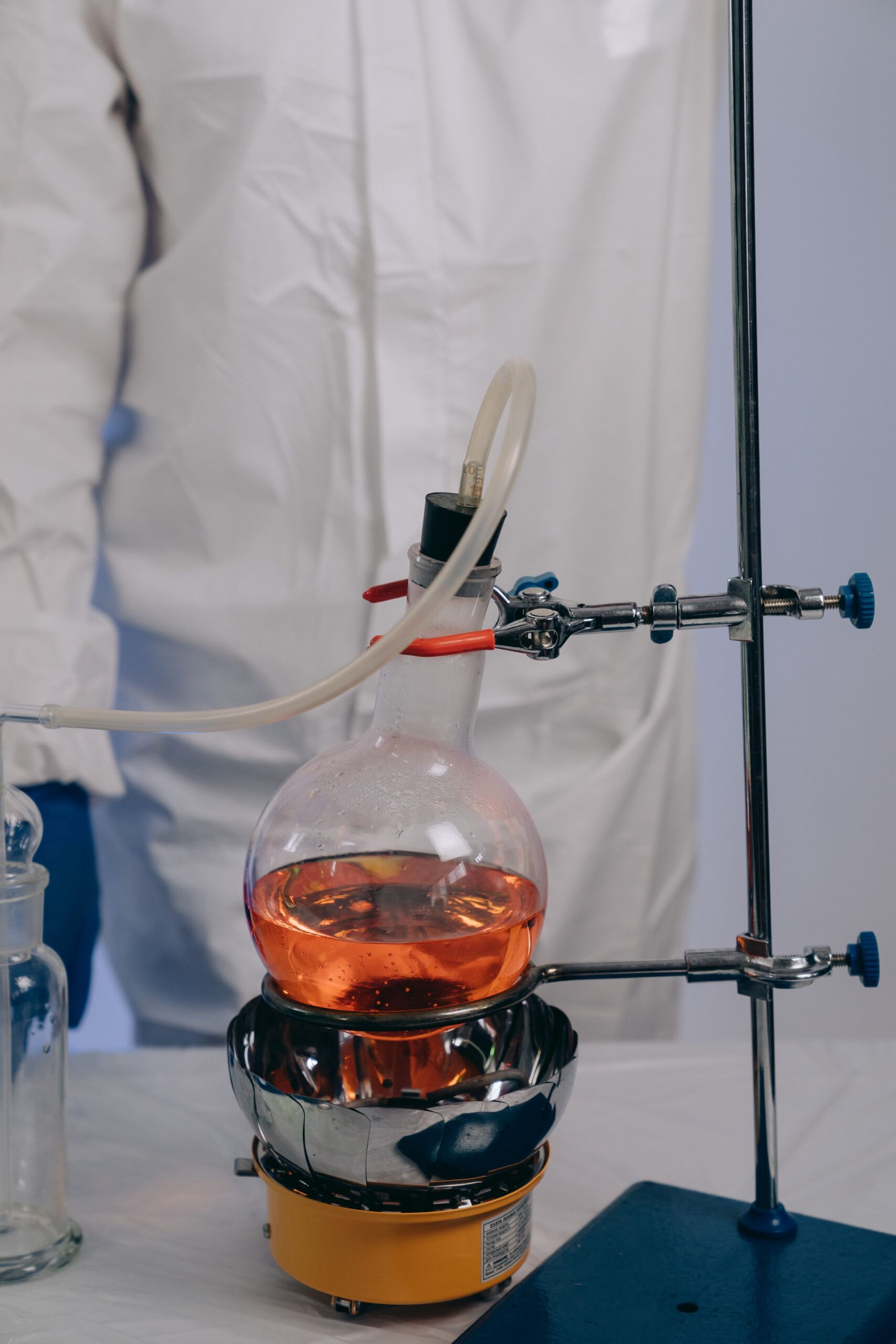
Most distillation purchases in extraction start the same way. A processor has crude oil, a target product and a budget, and someone on the team says the machine they want is a short path, or a fractionating column, because a competitor uses one. The equipment is then bought, installed and tuned by trial and error. Months later the operation is trying to explain why potency, color, odor or residual solvent results move from batch to batch.
Mature regulated industries rarely buy separation equipment that way. Pharmaceutical, food and supplement manufacturers have spent decades learning that a separation technique is only as good as the specification it serves and the controls around it. That discipline applies directly to the question of fractional distillation vs short path distillation. The question is not which technology is better. It is which one fits the separation you actually need, and how you prove it keeps doing so.
1. Start With the Separation, Not the Machine
Why it matters
The two techniques solve different problems. Short path distillation places a condenser a very short distance from the evaporating surface, under deep vacuum, so molecules travel a minimal distance and spend little time exposed to heat. It is a strong tool for removing light fractions and for pulling a heavy, heat-sensitive target away from non-volatile material such as waxes, pigments and plant matter. Fractional distillation uses a column with trays or packing and reflux, so vapor and liquid contact each other repeatedly. That gives multiple theoretical stages and the ability to separate compounds with close boiling points.
A short path pass is essentially a single-stage separation. A fractionating column is a multi-stage separation. Picking one without defining the job is how operations end up with a column that cannot handle the heat load or a short path unit asked to do a job it was never designed for.
What the mature industry does
Pharmaceutical development begins with a target product profile and a list of critical quality attributes before any unit operation is chosen. The process is then built backward from what the product must be.
How an extraction operator applies it
- Write the finished-product specification first: target potency range, acceptable levels of named minor compounds, color and odor expectations, and residual solvent limits.
- List what must be removed from the crude: light volatiles, residual ethanol or hydrocarbon, terpenes, waxes, pigments, specific cannabinoids or other compounds.
- Mark each removal as a gross separation (large boiling point gap) or a fine separation (close boiling points). Gross separations point toward short path or wiped film. Fine separations point toward fractionation.
2. Understand What Each Technique Actually Does Well
Why it matters
Marketing language blurs the differences. Operators who understand the mechanics can ask better questions of equipment vendors and spot a mismatch before it becomes an expensive one.
What the mature industry does
Flavor and fragrance houses routinely fractionate essential oils under vacuum using packed columns, because the goal is to separate closely related volatile components. Omega-3 concentrate producers in the nutritional oil space use molecular or short path distillation, because the goal is gentle removal of components from a heat-sensitive oil. Both industries use distillation, and neither treats the techniques as interchangeable.
How an extraction operator applies it
| Factor | Short path distillation | Fractional distillation |
|---|---|---|
| Separation stages | Roughly one | Several, set by column height and packing or trays |
| Thermal exposure | Low, short residence time | Higher, longer residence time and pressure drop across the column |
| Operating vacuum | Very deep, often sub-millibar range | Deep, but column pressure drop raises pot pressure and temperature |
| Best suited to | Bulk cleanup, removing volatiles, producing a distillate from crude | Separating close-boiling compounds, terpene fractions, solvent recovery |
| Fraction control | Coarse cuts | Fine cuts using reflux ratio and takeoff control |
| Typical risk | Poor selectivity between similar compounds | Heat-driven degradation and hold-up losses |
Treat this table as a starting point. Actual performance depends on the design of the specific unit, the feed composition and how it is operated.
3. Manage Thermal Exposure Like a Food Safety Variable
Why it matters
Heat history changes a product. Prolonged exposure to elevated temperature can degrade sensitive compounds, shift color and create off-odors. Short residence time is the main reason short path is favored for heat-sensitive material. Fractionation trades some of that advantage for selectivity.
What the mature industry does
Food manufacturers treat time and temperature as controlled variables with defined limits, monitoring and records. Under a HACCP-style approach, a critical parameter has a limit, a monitoring method, a corrective action and a verification step. Heat treatment in food is documented because it determines both safety and quality.
How an extraction operator applies it
- Record evaporator or pot temperature, condenser temperature, feed rate, and vacuum at the head for every run.
- For fractionation, also record column head temperature, reflux ratio and the pressure drop between pot and head.
- Define a maximum pot temperature for each product and treat excursions as deviations, not as normal variation.
- Track total residence time for batch fractionation, including heat-up, since long hold times at temperature are where quality tends to erode.
- Compare finished-product color, aroma and potency against thermal records so cause and effect become visible over time.
4. Treat Vacuum Integrity as a Qualified Control
Why it matters
Both techniques depend on vacuum, and both fail quietly when it is poor. A small leak raises operating pressure, which raises the temperature required for the same separation. The operator compensates by turning up the heat, and quality drifts without anyone naming the cause.
What the mature industry does
Pharmaceutical plants qualify equipment through installation, operational and performance qualification. Leak rate testing, calibration of pressure instruments and preventive maintenance schedules are standard. A gauge that cannot be trusted is treated as a gap in the control system.
How an extraction operator applies it
- Perform and record a leak-up or rate-of-rise test before each campaign, with a defined acceptance limit.
- Calibrate vacuum gauges on a schedule and keep certificates on file. Know where gauges are installed, because head pressure and pot pressure are not the same number in a fractionating column.
- Maintain pump oil change logs and cold trap procedures. Contaminated pump oil and overloaded traps degrade vacuum and can carry volatiles back into the system.
- Replace seals, gaskets and o-rings on a preventive schedule rather than waiting for failure.
5. Define Fractions and Cuts Before the Run
Why it matters
Distillation produces fractions: a forerun of light components, a main cut and a tail. Where one ends and the next begins is a decision. If that decision is made by eye or habit, the result will not be reproducible.
What the mature industry does
Fine chemical and flavor producers define cut points by measured parameters such as head temperature, refractive index or analytical results from in-process samples. The rule is written, the criteria are objective and the decision is recorded. Segregated fractions carry their own lot identifiers, and rework or reblending is permitted only under a documented procedure.
How an extraction operator applies it
For short path
- Define the point at which the volatile forerun stops and the main distillate begins, using temperature, vacuum and a quick in-process check where possible.
- Document the criteria for diverting heavy fractions to a separate receiver or back to a recycle stream.
For fractional distillation
- Set reflux ratio and takeoff rate as controlled parameters and record any changes.
- Use head temperature plateaus and sampling to decide when to switch receivers, and write the decision rule into the master procedure.
- Assign lot numbers to every fraction, including those intended for recycling.
6. Reconcile Yield Like an Accountant
Why it matters
Distillation losses hide in places that are easy to overlook: column hold-up, residue in the pot, material coating condenser surfaces, forerun that was discarded. Fractionating columns in particular retain material in packing and trays. Without a mass balance, those losses become normal.
What the mature industry does
Dietary supplement manufacturers operating under cGMP, including those following 21 CFR Part 111, work from master manufacturing records and batch production records that capture quantities in and out, and require investigation when yields fall outside defined limits. Pharmaceutical operations do the same with yield reconciliation as a standard step.
How an extraction operator applies it
- Weigh the feed, every fraction, the residue and any recovered material for each run.
- Set expected yield ranges for each product and feed type, and investigate results outside the range.
- Track hold-up in the column and condenser. If a changeover between products leaves material behind, count it and plan for it.
- Use the data to compare technologies honestly. A fractionating column that raises purity but adds a second pass may or may not beat a single short path pass once losses and labor are counted.
7. Design the Sequence: Often It Is Both
Why it matters
The framing of fractional distillation vs short path distillation suggests a choice, but many well-run refinement lines use them in sequence. Short path or wiped film handles the bulk separation of heavy, heat-sensitive material from non-volatile residue. A fractionating step then refines a cleaner feed where finer separation is needed. Feeding dirty crude directly into a column invites fouling and long, hot runs.
What the mature industry does
Pharmaceutical and fine chemical processes are built as sequences of unit operations, each with a defined purpose, defined inputs and outputs, and in-process controls between steps. Each step is validated for what it is meant to do, not for everything the product needs.
How an extraction operator applies it
- Map the full route from crude to finished product, including winterization, decarboxylation where relevant, solvent removal, distillation steps and any polishing step.
- Assign one primary purpose to each step so failures can be traced to a specific stage.
- Place in-process tests between steps, so an off-spec intermediate is caught before it contaminates a larger batch.
- Decide in advance what happens to side streams: recycle, rework or disposal, with approval criteria for each.
8. Use Analytical Data as the Decision Engine
Why it matters
Distillation outcomes cannot be judged by appearance alone. A clear, pale distillate can still carry unwanted compounds, and a darker one may be fine for its purpose. Data should drive cut decisions, rework approvals and release.
What the mature industry does
Food and supplement makers establish specifications for identity, strength, purity and contaminants, and verify them through testing with validated methods. Pharmaceutical operations apply recognized limits for residual solvents, such as the approach described in ICH Q3C and USP general chapters, and test accordingly. Results are tied to lot numbers and reviewed before release.
How an extraction operator applies it
- Test incoming crude so the feed is characterized before it enters the still. Variation in feed is a leading cause of variation in output.
- Run in-process potency and, where relevant, terpene or minor compound profiles to guide cuts.
- Test finished fractions for potency, residual solvents and contaminants required by your jurisdiction and customers.
- Use a lab with documented methods and keep certificates of analysis linked to batch records.
- Trend results by equipment, operator and feed source. A pattern across runs is more informative than any single result.
For more on analytical practice in this space, see our analytical techniques coverage.
9. Document, Validate and Control Change
Why it matters
Distillation is sensitive to small changes: a different packing, a new pump, a revised temperature setpoint, a new feed supplier. Without change control, the process that was approved last quarter may not be the process running today.
What the mature industry does
Pharmaceutical manufacturers working under frameworks such as ICH Q7 for active ingredients and ICH Q9 for quality risk management use written procedures, defined change control and periodic review. Cleaning validation shows that residues from one product do not carry over into the next. Supplement and food operations similarly require written procedures, trained personnel and records that show what was done, by whom and when.
How an extraction operator applies it
- Write a master procedure for each distillation process, with parameters, ranges, cut criteria and corrective actions.
- Use a batch record that captures the actual values for every run, with operator sign-off and a second-person review.
- Establish a change control form for any change to equipment, setpoints, materials or suppliers, including a short risk assessment.
- Define cleaning procedures for stills, columns, receivers and transfer lines, and verify them with swab or rinse testing where cross-contamination matters.
- Train operators on the procedure and keep training records current.
Regulatory expectations differ by state, by product type and by whether a product is regulated as cannabis, hemp-derived or a dietary ingredient. Some requirements are still proposed or evolving, so confirm what applies to your license and market. Building to a cGMP-style standard anticipates most of where oversight is heading and supports customer audits today. Related reading is available in our safety and compliance section.
Self-Assessment Checklist
Answer each honestly. Every “no” is a place to start.
- Do we have a written finished-product specification that the distillation step is designed to meet?
- Have we identified which separations are gross and which are fine?
- Are pot, head, condenser temperatures and vacuum recorded for every run?
- Do we perform and record a leak test before each campaign?
- Are vacuum gauges and temperature probes calibrated on a schedule?
- Are cut points defined by objective criteria rather than judgment alone?
- Does every fraction receive its own lot number?
- Do we reconcile mass in and out for each run and investigate abnormal yields?
- Do we test feed, in-process samples and finished fractions with documented methods?
- Is there a change control process for equipment, setpoints and suppliers?
- Are cleaning procedures written and verified between products?
- Are operators trained and are training records current?
Frequently Asked Questions
Is short path distillation better than fractional distillation?
Neither is better in general. Short path suits bulk separation and heat-sensitive materials because of its short residence time. Fractional distillation suits separating compounds with close boiling points because it provides multiple separation stages. The right choice depends on the specification and the feed.
Can short path distillation separate close-boiling compounds?
It offers limited selectivity because it behaves roughly like a single stage. Repeated passes can improve separation but at a cost in yield and time. If fine separation is the core requirement, a fractionating design is usually a better fit.
Why does fractional distillation expose material to more heat?
A column adds resistance to vapor flow, which raises the pressure and therefore the boiling temperature in the pot, and the material often stays hot for longer. Good column design and deep vacuum reduce the effect but do not remove it.
What about wiped film or thin film distillation?
Wiped film systems spread the feed as a thin layer over a heated surface, which improves heat transfer and reduces residence time. They are often used as a first or intermediate step and can be configured with short path geometry. They share the single-stage selectivity limits discussed above.
Do these techniques remove residual solvents?
Distillation can reduce volatile solvents, particularly in a forerun, but it should not be your only control. Verify with testing against the limits that apply in your market.
Do I need to follow pharmaceutical standards?
Not necessarily as a legal matter, and requirements vary by jurisdiction and product category. Adopting the underlying habits, such as specifications, records, qualification and change control, tends to improve consistency and makes audits and customer reviews easier.
Plan Your Next Step
If you are evaluating distillation equipment, designing a refinement line or building a quality system around one, start with the specification and work backward. Explore our extraction technology archive and our equipment coverage for related features, and for facility planning and build-out support, see nextbldg.com.
Conclusion: Choose the Separation, Then Prove the Process
The debate over fractional distillation vs short path distillation is easier once you stop treating it as a debate. Short path offers gentle, fast bulk separation. Fractionation offers finer selectivity at the cost of more heat exposure and complexity. Many operations will use both, in the right order, with clear controls between steps. What separates reliable operators from the rest is not the hardware. It is whether they define the target, control the variables, record what happened and manage change. Equipment choice is a single decision. Process discipline is a daily one.
Good distillation is not a one-time purchase. It is an ongoing management discipline.