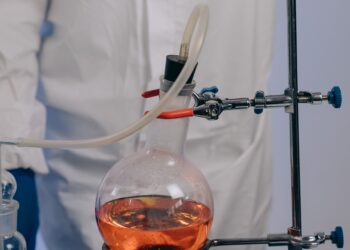
Steam distillation is not new, and that is part of the problem. Operators inherit it as a familiar, almost folk process: load a vessel, run steam, collect oil. Because it looks simple, it is often run on habit rather than on written parameters, and it is rarely documented to the standard applied to the solvent-based steps next to it. Yet the oil it produces ends up in flavors, fragrances, topicals, vape formulations and finished consumer goods, where buyers and regulators expect consistency and traceability.
Meanwhile, expectations are rising. Retail partners, state regulators and insurers increasingly ask extraction facilities to show how they control quality, not just what a certificate of analysis says on one day. Food, pharmaceutical and dietary supplement manufacturers answered those questions decades ago. Their methods transfer well to botanical work. So the question this article answers is: what is steam distillation, and what can a cannabis, hemp or botanical operator borrow from mature regulated industries to run it well?
1. What Is Steam Distillation, and Where Does It Sit in Your Process?
Why it matters
If a team cannot describe a process the same way, it cannot control it. Steam distillation is a separation method in which steam passes through plant material, carries volatile compounds out of the plant matrix as vapor, and is then condensed. The condensate separates into an oil layer and an aqueous layer, often called hydrosol or hydrolat. It is widely used for essential oils and, in cannabis and hemp work, for recovering the terpene fraction from fresh or dried plant material.
What the mature industry does
Food and supplement manufacturers begin with a written process description and a flow diagram that shows every input, transformation, hold point and output. The diagram is the foundation for hazard analysis, training and change control.
How an extraction operator applies it
- Draw the flow from raw material receiving through preparation, charging, steaming, condensing, separation, storage and release.
- Mark where steam distillation stands in relation to other steps, such as solvent extraction or short-path distillation, which are different processes with different outputs.
- State the intended product in plain terms: a terpene-rich oil, an aqueous co-product, or both.
- Define what it will not do. Steam distillation is not a method for recovering cannabinoids, which are far less volatile and are not carried over in meaningful quantity under ordinary conditions.
2. Understanding the Physics So You Can Control It
Why it matters
The reason steam distillation works is also the reason it can go wrong. Volatile oils and water are largely immiscible, so each contributes its own vapor pressure to the mixture. The combined mixture boils at a temperature below the boiling point of water at the operating pressure, and far below the boiling points of many aromatic compounds. That is how heat-sensitive volatiles come over without being driven to very high temperatures.
What the mature industry does
Pharmaceutical development treats process understanding as a deliverable. Teams identify which inputs and settings influence which quality attributes, then set ranges around them, a principle captured in quality risk management frameworks such as ICH Q9.
How an extraction operator applies it
- List the variables that matter: steam flow rate, vessel pressure, temperature at the condenser outlet, material packing density, run time and cooling water temperature.
- Run structured trials, changing one variable at a time, and record yield and terpene profile for each.
- Recognize the tradeoffs. Longer runs and hotter steam can raise yield but may shift the profile, because lighter compounds come over early and heavier ones later.
- Set operating ranges from your own data, not from another facility’s habits.
3. Raw Material Control: Identity, Condition and Preparation
Why it matters
The oil can only reflect what goes in. Variation in cultivar, harvest timing, moisture and storage shows up directly in output. Packing density and particle size also affect how steam moves through the charge. Poor packing causes channeling, where steam finds a path of least resistance and leaves portions of the charge untouched.
What the mature industry does
Dietary supplement manufacturers under 21 CFR Part 111 are expected to verify the identity of components and to establish specifications for them. Botanical suppliers are qualified, incoming lots are inspected, and certificates of analysis are verified rather than simply filed.
How an extraction operator applies it
- Create a written specification for each input: species or cultivar, plant part, condition (fresh, frozen or dried), moisture range and acceptable appearance.
- Qualify suppliers and growers, and keep lot numbers tied to every batch.
- Inspect on receipt for mold, foreign matter and off odors, and quarantine anything that fails.
- Standardize preparation. Define cut size, loading weight and packing method in the batch record so operators do not improvise.
4. Equipment Design and Qualification
Why it matters
A still is a pressure-bearing, heated vessel with a steam source, and it touches product. Both safety and quality depend on how it was designed, built and installed. Gaskets, fittings, condenser design and the separator all influence contamination risk and cleanability.
What the mature industry does
Pharmaceutical operations qualify equipment in stages: installation qualification, operational qualification and performance qualification. Food plants apply sanitary design principles, favoring smooth, cleanable, non-reactive surfaces with minimal dead legs.
How an extraction operator applies it
- Specify food-contact-appropriate stainless steel and compatible gaskets, and keep material certificates on file.
- Verify that installation matches the drawings, including pressure relief devices and instrumentation.
- Confirm operation across the intended range, then confirm repeatable performance with representative loads.
- Put gauges and temperature probes on a calibration schedule with documented results.
- Check local pressure vessel, boiler and fire code requirements early. Facility layout matters as well, and the facility planning resources at nextbldg.com are a useful starting point for thinking about utilities, drainage and workflow.
5. Process Parameters, Critical Control Points and Batch Records
Why it matters
Without a record, a good batch cannot be repeated and a bad one cannot be investigated. Most steam distillation problems, such as scorched notes, low yield and variable aroma, trace back to a parameter that drifted unnoticed.
What the mature industry does
Food processors identify critical control points under HACCP, set critical limits, monitor them, and define corrective actions. Supplement and pharmaceutical manufacturers use a master manufacturing record that generates a batch production record, signed and reviewed for every lot.
How an extraction operator applies it
- Decide which steps are truly critical. Candidates include steam pressure, condensate temperature, run time and the cutoff point at which collection stops.
- Write limits and corrective actions, such as what to do if condenser water warms beyond range.
- Build a batch record that captures lot numbers, start and stop times, readings at set intervals, operator initials and yield.
- Require a second person to review the record before the oil is released.
6. Separation, Hydrosol and Co-Product Handling
Why it matters
The condensate is a two-phase liquid, and what happens after the condenser affects quality. Oil that carries residual water can degrade or support microbial growth. The aqueous phase, a mix of water and dissolved aromatic compounds, is a product stream in its own right and a possible contamination source if mishandled.
What the mature industry does
Food manufacturers control water activity, hold times and storage temperature, and treat water-containing intermediates as microbial risks. They label and segregate intermediates, so nothing sits in an unmarked container.
How an extraction operator applies it
- Allow adequate settling time, record it, and separate phases with a defined method.
- Dry or clarify the oil as needed and verify the result. Do not assume it is dry.
- Decide in advance whether the aqueous phase is a product, a recycled stream (cohobation returns it to the still) or waste, and document the decision.
- If hydrosol is sold, treat it as a separate product with its own specification, container, shelf-life data and testing.
- Store oil in clean, sealed, labeled containers away from heat and light, with lot numbers on each.
7. Contaminants, Testing and Specifications
Why it matters
Distillation is a purification step, but it is not a guarantee. Many non-volatile contaminants, such as heavy metals, tend to stay behind in the spent plant material. Semi-volatile compounds, including some pesticide residues and solvents from earlier handling, can travel with steam. Testing the input alone does not prove the output is clean.
What the mature industry does
Supplement manufacturers set specifications for finished product and verify them with validated methods. Pharmaceutical quality units require that analytical methods be shown fit for purpose before results are relied upon for release.
How an extraction operator applies it
- Write a finished-oil specification covering appearance, odor, terpene profile and applicable contaminant panels required in your jurisdiction.
- Use a lab with appropriate accreditation, and ask what methods and reference standards it uses. Gas chromatography is the usual tool for terpene profiling.
- Test finished oil and keep retention samples from every lot.
- Trend results over time. A slow drift in profile may point to equipment wear or a change in supplier before any single result fails.
8. Sanitation, Changeovers and Cross-Contamination
Why it matters
Terpenes are, by definition, aromatic. Carryover between cultivars is easy to smell and sometimes difficult to remove from gaskets, condensers and transfer lines. For businesses handling both hemp and cannabis, or multiple customers’ material, cross-contamination can also create regulatory and contractual problems.
What the mature industry does
Pharmaceutical plants validate cleaning, proving by testing that residues fall below set limits. Food plants use written sanitation standard operating procedures, with verification steps and clear status labels on equipment such as “clean” and “in use.”
How an extraction operator applies it
- Write a cleaning procedure covering the vessel, condenser, separator, hoses and collection vessels, with chemicals, contact times and rinse steps.
- Verify cleaning with a visual inspection and, at least periodically, an analytical check such as a blank run or a rinse sample.
- Dedicate equipment, or at least gaskets and lines, to specific material classes where a mix-up carries legal or commercial risk.
- Schedule full changeovers when moving between very different cultivars or customers.
- Keep a cleaning log that is reviewed, not merely completed.
9. Documentation, Change Control and the Regulatory Picture
Why it matters
When an inspector, auditor or customer asks how a lot was made, the answer needs to be on paper and consistent across batches. Regulatory expectations also vary depending on what the oil becomes and where it is sold.
What the mature industry does
Regulated manufacturers use document control, controlled revisions, training records, deviation and corrective action systems, and formal change control. Any alteration to a process, supplier or equipment is assessed before implementation, not after a problem appears.
How an extraction operator applies it
- Control standard operating procedures with version numbers, approval signatures and effective dates.
- Train operators before they run a step and record the training.
- Open a deviation record when a run departs from the batch record, and follow through with a documented root cause and corrective action.
- Require review before changing a supplier, a gasket material, a run time or a cutoff point.
- Maintain lot traceability from incoming material to shipped oil, and test it with a mock recall.
On regulation, be precise about what is settled. In the United States, cannabis and hemp operators work under a patchwork: state licensing programs, federal law that treats the plant and its derivatives differently depending on source, and FDA oversight of foods, supplements, cosmetics and drugs that may contain plant-derived ingredients. FDA has publicly expressed concerns about cannabinoid ingredients in foods and supplements and, as of this writing, has not finalized a dedicated pathway, so operators should confirm current status rather than rely on older commentary. State rules on testing, labeling and manufacturing practices differ, and some borrow language from food or supplement GMPs. Requirements for terpene ingredients depend on the end use and the ingredient’s status, so check with qualified regulatory counsel and your state authority before assuming a given market is open to you. Building to a food or supplement GMP standard is a sound hedge either way.
Self-Assessment Checklist
Use this short list to see where your steam distillation operation stands. Every “no” is a place to start.
- Do you have a written process flow that includes steam distillation and its outputs?
- Are incoming plant materials covered by written specifications and lot tracking?
- Have your still, gauges and condenser been qualified and calibrated, with records?
- Do operating ranges come from your own trial data?
- Does every batch generate a signed record that someone else reviews?
- Do you separate, dry and store oil and hydrosol under defined, documented conditions?
- Is finished oil tested against a written specification, with retention samples kept?
- Is your cleaning procedure verified, and are changeovers logged?
- Are deviations and process changes handled through a formal system?
- Could you trace any shipped lot back to its source material within a few hours?
Frequently Asked Questions
Does steam distillation extract cannabinoids?
Not in practical terms. Cannabinoids have much lower volatility than terpenes and are generally recovered by other methods. Steam distillation is mainly used to recover the volatile aromatic fraction.
What is the difference between steam distillation and hydrodistillation?
In steam distillation, steam from a separate source passes through the plant material. In hydrodistillation, the plant material is in contact with boiling water in the same vessel. Some systems combine the two, and the choice affects heat exposure and how much material may cook or stick.
Is steam distillation the same as short-path distillation?
No. Short-path distillation uses vacuum and heat to separate less volatile compounds from a concentrated extract. Steam distillation works directly on plant material using steam and water.
Can heat damage the oil?
Yes, it can. Although co-distillation lets volatiles come over below their normal boiling points, extended exposure, high steam temperature or overpacked vessels can alter the profile. This is why parameters should be tested and recorded.
Is the aqueous layer waste?
Not necessarily. It may be recycled, sold as a separate product or discarded, but whichever route you choose should be defined, documented and controlled for microbial risk.
Next Steps
If you are starting a distillation line or tightening an existing one, begin with the process flow and a single batch record. Then review related coverage in our Botanical Extraction and Extraction Technology sections, and compare your controls against the guidance under Safety & Compliance. When you are ready to evaluate vessels, condensers and support systems, see our Equipment coverage. For facility layout, utilities and build-out planning, talk with the team at nextbldg.com.
Conclusion: Treat a Simple Process Like a Controlled One
Steam distillation is easy to explain and easy to underestimate. Steam carries volatile compounds out of plant material, the condenser turns them back into liquid, and the separator divides oil from water. The craft is in everything around those steps: inputs that are specified, equipment that is qualified, parameters that are recorded, testing that is meaningful, and changes that are managed. Food, pharma and supplement manufacturers learned these lessons through audits, recalls and decades of practice, and extraction operators can adopt them without waiting for a mandate. Regulatory readiness is not a one-time project. It is an ongoing management discipline.