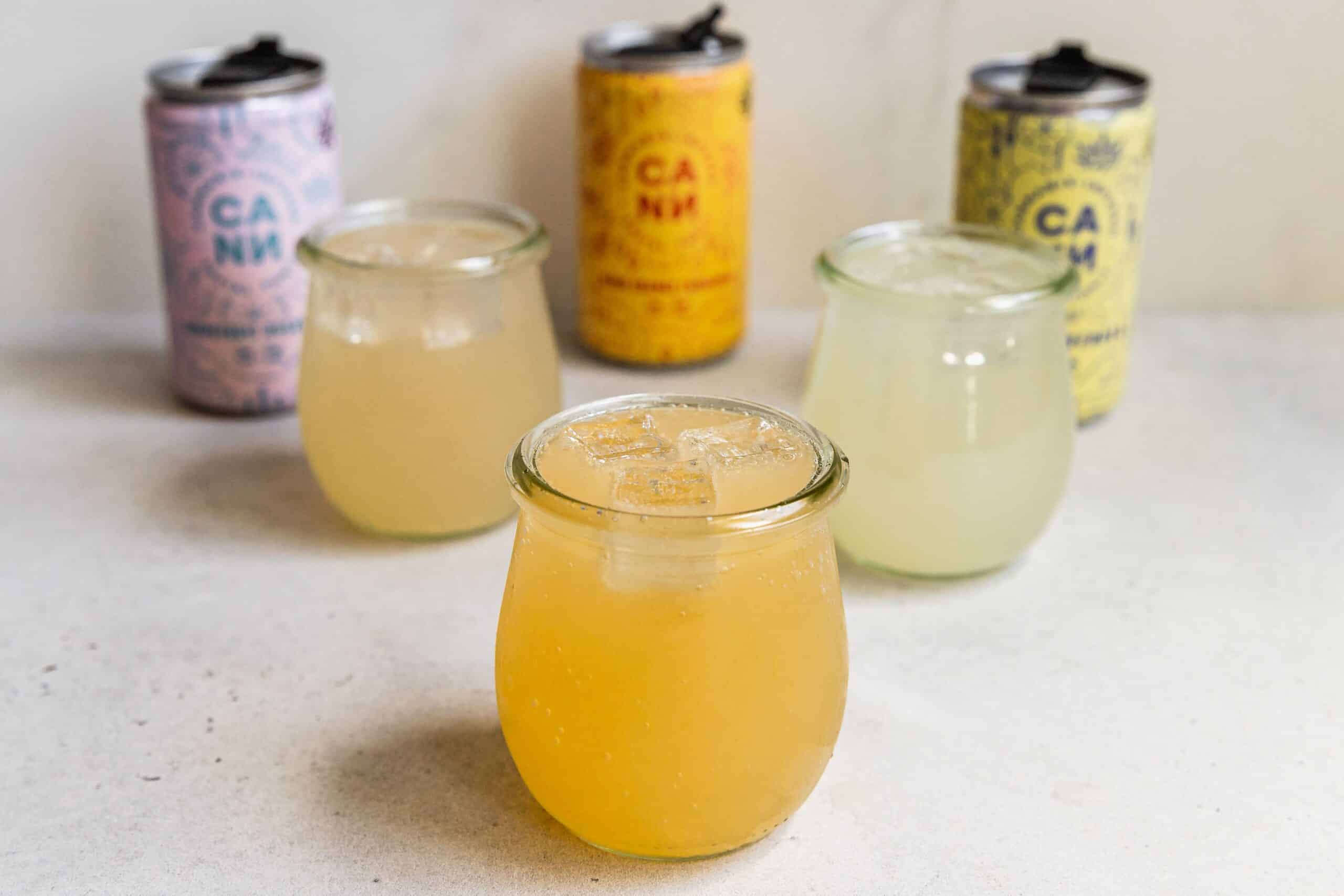
Cannabis-infused beverages are creating new opportunities for product developers, extraction companies, beverage manufacturers, and consumer packaged goods (CPG) businesses. From sparkling drinks and flavored waters to functional beverages and alcohol alternatives, these products are expanding the ways consumers encounter cannabis-derived ingredients.
However, the commercial opportunity comes with significant regulatory and operational challenges. Manufacturers must navigate ingredient restrictions, evolving federal and state laws, product safety expectations, labeling requirements, and distribution limitations. Formulations that appear technically feasible may not be legally marketable as conventional foods or beverages under current federal requirements.
The U.S. Food and Drug Administration (FDA) remains central to this regulatory landscape. Its position on tetrahydrocannabinol (THC) and cannabidiol (CBD) in conventional foods has important consequences for manufacturers seeking to develop, produce, and distribute infused beverages. At the same time, state cannabis programs and rules governing hemp-derived products create a complex patchwork of requirements.
For industry decision-makers, the future of cannabis beverages will depend on more than consumer demand or improved infusion technology. Sustainable growth will require defensible ingredient strategies, reliable manufacturing processes, accurate labeling, robust quality systems, and a clear understanding of which regulatory pathways apply to each product.
FDA Oversight: Understanding the Federal Regulatory Framework
The FDA regulates foods, beverages, drugs, and other products under the Federal Food, Drug, and Cosmetic Act (FD&C Act). The agency’s authority applies to relevant products regardless of whether cannabis is permitted under a particular state’s laws.
As of October 2026, the FDA’s published position remains that introducing conventional foods or beverages containing added THC or CBD into interstate commerce is prohibited under Section 301(ll) of the FD&C Act, subject to the statute’s exceptions. The agency also maintains that these ingredients lack the required authorization for use as food additives in the relevant circumstances. State-level permission does not automatically resolve these federal restrictions.
The distinction is important because a beverage can comply with a state’s cannabis licensing requirements while still presenting separate questions under federal food law.
The FDA has approved specific cannabis-related prescription drug products, including Epidiolex, which contains CBD, and certain medicines containing synthetic or other cannabis-related compounds. These approvals do not authorize the general use of THC or CBD in commercially marketed beverages.
The agency has also evaluated certain hemp seed-derived food ingredients. Hulled hemp seed, hemp seed protein powder, and hemp seed oil may be used in human foods under the conditions described in the relevant Generally Recognized as Safe (GRAS) notices, provided all applicable requirements are met. Those conclusions do not extend to cannabinoid extracts or establish that CBD or THC can be added to beverages.
Manufacturers should consult the FDA’s official guidance on cannabis and cannabis-derived products when evaluating ingredient legality and potential product claims.
Why regulatory classification matters
Before investing in a formulation or production line, a company needs to determine how its product is classified and which requirements govern its ingredients, intended use, and distribution.
A conventional beverage containing added cannabinoids raises different regulatory questions from an FDA-approved drug or a beverage made with permitted hemp seed ingredients. Products marketed with claims to diagnose, treat, mitigate, or prevent disease may also raise drug-related concerns.
A compliant state license, a supplier’s certificate of analysis, or a statement that an ingredient is hemp-derived does not independently establish that a finished beverage meets all applicable federal requirements.
For manufacturers, regulatory review should therefore begin during product development rather than after a formulation, label, and production process have already been finalized.
Formulation Challenges: Solubility, Stability, and Ingredient Control
Even when a formulation is technically achievable, manufacturers must separately establish whether the ingredients and intended uses are legally permissible.
Cannabinoids present formulation challenges because their behavior in a beverage differs from that of many conventional water-soluble ingredients. Depending on the cannabinoid, carrier system, and formulation, manufacturers may need to address limited water solubility, uneven dispersion, sensitivity to environmental conditions, and changes during storage.
These variables can influence appearance, taste, texture, dose consistency, and shelf life.
Emulsions and dispersion systems
Formulators may investigate emulsions, encapsulation, or other delivery systems to disperse oil-soluble ingredients throughout a liquid. Such approaches can help address physical formulation challenges, but they do not automatically make an ingredient legally permissible or establish that the finished product is safe.
Development teams should evaluate the suitability of each ingredient and processing aid for the intended food use. They should also document the formulation, processing conditions, ingredient specifications, and finished-product performance.
A beverage that appears uniform immediately after production may develop separation, sediment, or concentration differences over time. These changes can undermine product quality and, where relevant, create concerns about consistent ingredient delivery.
Stability and shelf-life testing
Shelf-life studies should evaluate the finished product under defined storage conditions and use scientifically justified acceptance criteria. Depending on the formulation, testing may examine:
- Ingredient identity and concentration.
- Changes in pH and other relevant chemical properties.
- Physical separation, sedimentation, color, and flavor.
- Microbiological quality and applicable food safety criteria.
- Packaging compatibility and product integrity.
- Changes associated with light, temperature, and storage duration.
Testing should reflect the actual formulation, manufacturing process, packaging configuration, and intended distribution conditions.
Manufacturers should avoid relying exclusively on supplier data or results from a different beverage matrix. An ingredient’s performance in an oil, tincture, or laboratory solution does not necessarily predict its behavior in a carbonated beverage, acidic drink, or protein-containing formulation.
Supplier qualification and incoming materials
Ingredient control begins before production. Companies should establish specifications for raw materials and evaluate suppliers according to the risks associated with each ingredient.
Where relevant, supplier documentation should address identity, composition, contaminant risks, traceability, and testing methods. For cannabis-derived materials, analytical reports may include cannabinoid profiles and applicable testing for pesticides, heavy metals, residual solvents, or microbial contaminants.
A certificate of analysis (COA) is useful evidence, but it is not a substitute for supplier qualification, independent verification where appropriate, or a complete finished-product safety program.
Manufacturers should also verify that the supplied ingredient is authorized for its intended use. Quality documentation cannot correct a regulatory problem with the ingredient itself.
Labeling: Transparency Without Unsupported Claims
Product labeling is a critical control point for both regulatory compliance and consumer protection. Cannabis beverage labels may need to communicate ingredient information, serving size, net contents, applicable warnings, storage conditions, and other information required by the relevant jurisdiction and product category.
The exact requirements depend on the product’s legal classification, formulation, and distribution channel.
Ingredient statements and cannabinoid content
Manufacturers should ensure that ingredient declarations accurately reflect the finished product and comply with applicable labeling rules. Where cannabinoid content is lawfully declared under the relevant framework, the amount per serving and per package should be consistent with validated analytical results and applicable state requirements.
Serving-size information deserves particular attention. A multi-serving container can create consumer confusion if the total contents and the amount in each serving are not clearly distinguished.
Any declared quantity should be supported by an appropriate testing and quality-control program. Formulation calculations alone may not adequately account for manufacturing variation, ingredient degradation, or differences between production lots.
Claims require careful review
Words such as “relaxing,” “sleep support,” “pain relief,” or “anti-inflammatory” can carry regulatory implications depending on how they are presented and what a product claims to do.
Disease-treatment claims may cause a product to be regulated as a drug. Other health-related claims may also trigger specific requirements for substantiation and permissible wording.
Manufacturers should review the entire marketing presentation, including packaging, websites, social media, product descriptions, and advertising. A disclaimer does not necessarily neutralize an otherwise impermissible therapeutic claim.
Likewise, terms such as “natural,” “clean,” “functional,” or “hemp-derived” do not establish safety or legal authorization.
Packaging and consumer safeguards
Packaging design should account for applicable child-resistance requirements, tamper evidence, product protection, and clear differentiation from conventional beverages where required by law.
Companies should consider how products will be displayed, transported, stored, and consumed. Packaging that resembles familiar non-infused drinks may increase the risk of accidental consumption, particularly when products are accessible to children.
Warning statements, age restrictions, and other consumer safeguards must be determined according to the applicable federal, state, and local rules. Manufacturers distributing across multiple jurisdictions should not assume that a single label will satisfy every market’s requirements.
Manufacturing Operations: Building Quality Into the Process
A scalable beverage business needs repeatable production, documented controls, and a facility designed around the hazards associated with its products.
Cannabis beverage manufacturers may face many of the same operational challenges as conventional beverage producers, including sanitation, water quality, process control, packaging integrity, and microbiological stability. The addition of a specialized ingredient can introduce further risks related to dosing, handling, cross-contamination, and analytical verification.
Good Manufacturing Practices and food safety
Applicable food facilities must evaluate and comply with relevant FDA requirements, including applicable current Good Manufacturing Practice (CGMP) provisions and preventive-control requirements under the food safety regulations.
The precise obligations depend on the facility, product, activities performed, and any applicable exemptions or alternative regulatory frameworks.
A documented food safety program should identify reasonably foreseeable hazards and establish controls appropriate to the operation. Depending on the process, this may include sanitation controls, supplier controls, allergen management, process monitoring, corrective actions, verification activities, and recordkeeping.
Hazard Analysis and Critical Control Points (HACCP) principles can also help manufacturers systematically identify and manage food safety risks. Whether a formal HACCP plan is legally required depends on the product and applicable regulatory framework; it should not be treated as a universal substitute for FDA-required preventive controls.
Process control and dosing consistency
Where a product is lawfully manufactured, ingredient addition should be controlled through documented procedures and suitable measurement systems.
Batch records should identify the materials used, quantities added, relevant equipment, processing conditions, operator activities, and results of required checks. Procedures should address weighing, mixing, transfer, sampling, equipment cleaning, and reconciliation of materials.
Appropriate in-process checks and finished-product testing can help identify variation before release. The testing plan should be scientifically justified and capable of detecting relevant deviations.
Manufacturers should also establish procedures for out-of-specification results, investigations, corrective actions, and decisions about product disposition.
Facility design and sanitation
Facility layout influences both product quality and operating efficiency. Material flow, personnel movement, cleaning access, storage arrangements, and separation of incompatible activities should be considered during facility planning.
Equipment selection should account for cleanability, compatibility with the formulation, process requirements, and maintenance needs. Water systems, compressed air where used, and other utilities should be assessed according to their potential impact on product safety and quality.
For facilities handling multiple product types, companies should evaluate cross-contact and cross-contamination risks. Sanitation procedures must be practical to execute, documented, and verified at a level appropriate to the identified hazards.
A well-designed facility does not guarantee compliance, but poor layout and inadequate infrastructure can make consistent compliance more difficult and expensive.
Distribution: A Patchwork of Federal and State Requirements
Distribution is one of the most complicated aspects of the cannabis beverage market. Companies must distinguish between products authorized under state-licensed marijuana programs, hemp-derived products, and conventional beverages containing ingredients permitted for food use.
These categories are not interchangeable.
State laws may establish licensing requirements, testing standards, age restrictions, packaging rules, and retail limitations. Requirements can differ substantially between jurisdictions, creating operational challenges for manufacturers serving multiple markets.
Interstate commerce and market access
A manufacturer should not assume that a product permitted for sale in one state can be shipped to another state or distributed through conventional retail channels.
The FDA’s position on added THC and CBD in conventional foods remains a significant federal constraint. State authorization does not eliminate the need to assess federal law, and a product’s hemp-derived origin does not, by itself, establish that it can legally enter interstate commerce as a beverage.
Manufacturers should evaluate distribution plans before committing to production volumes, packaging inventory, or retail agreements.
The analysis should include applicable federal law, state cannabis and hemp legislation, local restrictions, licensing requirements, and the rules governing the intended sales channel.
Federal hemp law is also changing
The federal definition of hemp is particularly important for companies developing hemp-derived intoxicating beverages.
A December 2025 Congressional Research Service analysis describes amendments enacted through Public Law 119-37 that are scheduled to take effect on November 12, 2026. These changes revise the statutory definition of hemp and may materially affect which hemp-derived products qualify for treatment under that framework. The precise consequences depend on the amended statutory language and how relevant provisions are implemented. See the Congressional Research Service analysis of changes to the federal definition of hemp.
With the effective date approaching, businesses should reassess ingredient sourcing, product eligibility, inventory exposure, and contractual commitments rather than relying on interpretations of the 2018 Farm Bill alone.
This development reinforces the need for ongoing legal and regulatory monitoring. Formulations and distribution strategies should be reviewed against the law applicable when products are manufactured and marketed.
Testing, Traceability, and Product Recalls
Testing programs are essential to verifying product identity, quality, and safety. For cannabis beverages, a risk-based program may need to address cannabinoid content, microbiological hazards, chemical contaminants, and the stability of relevant ingredients.
The appropriate tests depend on the formulation, ingredient sources, processing method, packaging, and applicable legal requirements.
Finished-product verification
Manufacturers should establish written specifications and determine how samples will be collected, tested, evaluated, and retained. Analytical methods should be suitable for the product matrix and the intended measurement.
Testing should also be connected to production records. If a finished product fails a specification, the company should be able to identify the affected lot, investigate the cause, determine whether other lots are implicated, and document the disposition decision.
A single passing laboratory result cannot establish that every unit in a production run is identical. Sampling plans, process controls, and analytical capabilities must work together.
Traceability and recall readiness
Traceability systems should connect incoming ingredients to production batches, finished products, and distribution records.
This information becomes particularly important when a supplier reports a contamination issue or a manufacturer identifies a labeling error, inconsistent ingredient concentration, or microbiological concern.
Companies should maintain procedures for investigating complaints, assessing adverse events, initiating recalls when necessary, and communicating with relevant authorities and customers.
Mock recalls can help determine whether a company can identify affected products and distribution destinations within an appropriate timeframe.
A documented recall procedure is most effective when supported by accurate records, clear responsibilities, and routine testing of the system.
The Commercial Outlook: Innovation Must Follow Regulatory Clarity
Consumer interest in alternative beverages, alcohol substitutes, and functional product formats provides a commercial rationale for continued development in this category. However, demand alone does not establish a viable regulatory or manufacturing pathway.
Companies that invest in product development should distinguish between technical feasibility, consumer acceptance, and legal marketability.
Near-term investment priorities should include regulatory due diligence, ingredient qualification, validated production processes, analytical capability, and adaptable packaging strategies. Businesses should also evaluate whether proposed formulations can be produced consistently and whether their intended distribution channels remain viable under changing rules.
For established beverage manufacturers, partnerships with ingredient suppliers and specialized processors may provide access to technical expertise. These partnerships should include clear agreements on specifications, testing responsibilities, change notifications, traceability, and compliance documentation.
For startups, limiting initial product complexity and validating the regulatory pathway before scaling can reduce the risk of stranded inventory and costly reformulation.
What industry leaders should do now
Companies evaluating cannabis beverages can take several practical steps:
- Confirm ingredient eligibility. Obtain a product-specific legal assessment before treating a cannabinoid ingredient as acceptable for conventional food use.
- Build a regulatory calendar. Monitor federal legislative changes, FDA guidance, state rules, and relevant effective dates.
- Validate formulation performance. Establish appropriate specifications for stability, consistency, packaging compatibility, and finished-product quality.
- Strengthen supplier oversight. Document ingredient identity, traceability, analytical evidence, and responsibilities for quality issues.
- Design for controlled production. Evaluate sanitation, material flow, dosing controls, utilities, equipment cleanability, and recordkeeping.
- Review all labeling and claims. Confirm that product statements, serving information, warnings, and packaging comply with applicable requirements.
- Verify distribution eligibility. Assess each intended market and sales channel instead of assuming that state authorization or hemp origin is sufficient.
- Prepare for deviations and recalls. Establish documented investigation, corrective-action, complaint-handling, and product-recovery procedures.
These measures will not resolve every regulatory uncertainty, but they can help companies make better-informed investment decisions and reduce preventable operational failures.
Conclusion
The future of cannabis beverages will be shaped by the interaction of ingredient science, food safety, federal oversight, state regulation, and manufacturing discipline.
Formulation technology can improve dispersion and product consistency, while modern quality systems can strengthen traceability and process control. Yet neither technological progress nor strong manufacturing practices can replace the legal authorization required for an ingredient’s intended use.
The FDA’s current position on THC and CBD in conventional foods remains a fundamental consideration for beverage developers. At the same time, forthcoming changes to federal hemp law and continuing variation among state requirements make regulatory monitoring essential.
For manufacturers, the most resilient approach is to establish regulatory eligibility first, validate the formulation and production process second, and scale distribution only after the relevant requirements have been assessed.
Companies that integrate these considerations into product development, facility planning, quality assurance, and commercial strategy will be better positioned to respond as the cannabis beverage market evolves.
The industry’s long-term prospects will depend not simply on creating new beverages, but on demonstrating that products can be manufactured consistently, labeled accurately, and marketed through legally supportable channels.
Visit: nextbldg.com