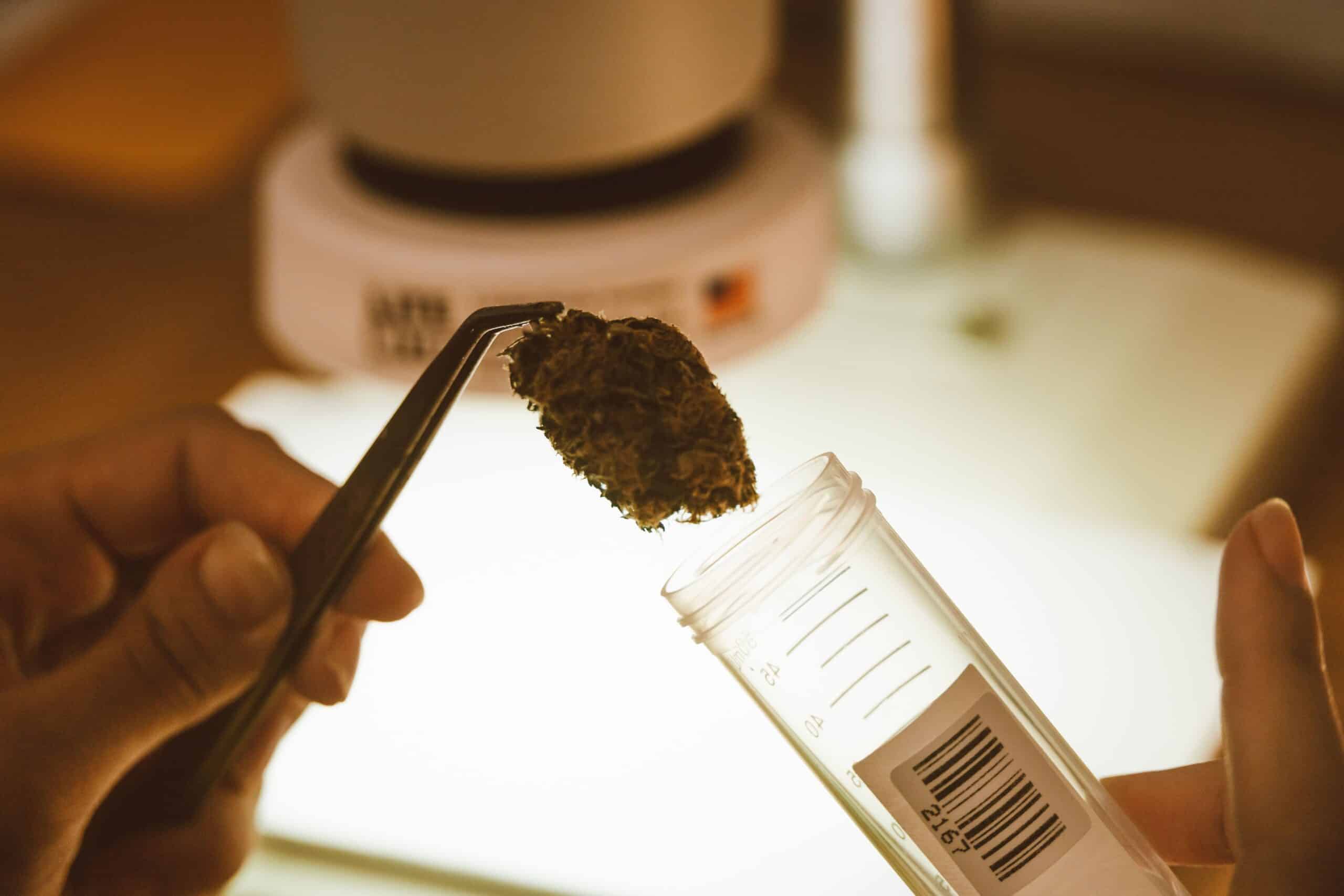
Understanding the difference between validation, verification, and testing is essential for cannabis, hemp, botanical extraction, and functional ingredient manufacturers. Although these terms are often used interchangeably, they describe different activities within a quality management system. Confusing them can lead to incomplete documentation, ineffective quality controls, failed audits, and products that do not consistently meet safety and quality requirements.
For manufacturers converting extracted ingredients into gummies, beverages, tinctures, topicals, dietary supplements, and other consumer products, these distinctions have practical consequences. Testing may show that a sample meets specifications, but it does not necessarily demonstrate that the entire manufacturing process is under control. Verification can confirm that established procedures are being followed, while validation provides evidence that a process or control is capable of achieving its intended result.
The distinction becomes especially important as manufacturers move from pilot production to commercial-scale operations, introduce new formulations, or prepare facilities for regulatory inspections.
This guide explains how validation, verification, and testing work together, where each belongs in a manufacturing operation, and how companies can apply them to strengthen food safety, product consistency, and regulatory readiness.
- What Is Validation?
Validation is the process of establishing, through scientific evidence, that a process, procedure, or control is capable of consistently achieving its intended outcome.
In regulated manufacturing, validation answers a fundamental question: Does this process actually work under the conditions in which it will be used?
A procedure may look effective on paper, and operators may follow it correctly, but neither fact proves that it reliably controls the hazard or produces the intended result. Validation provides the supporting evidence.
Examples of validation in extraction and product manufacturing
Consider a manufacturer producing cannabis-infused gummies. The company needs to ensure that its manufacturing process can consistently distribute the active ingredient throughout the batch.
A validation study might evaluate mixing time, temperature, ingredient addition sequence, batch size, and sampling locations. Analytical results from representative samples can help determine whether the mixing process produces an adequately uniform product.
Other examples include:
- Thermal processing: Establishing that a heat treatment achieves the intended microbial reduction when the process is used for that purpose.
- Cleaning procedures: Demonstrating that a cleaning process can adequately remove relevant residues or contaminants from equipment.
- Extraction processes: Establishing that defined operating parameters consistently produce material meeting predetermined specifications.
- Packaging systems: Evaluating whether a container-closure system protects the product throughout its intended shelf life.
- Environmental controls: Demonstrating, where appropriate, that facility controls are capable of maintaining specified conditions.
The appropriate validation method depends on the intended outcome and the risks involved. For example, an extraction process that produces a consistent cannabinoid profile has not automatically been validated as a microbial kill step. Those are separate objectives requiring different evidence.
What should validation documentation include?
A useful validation package identifies the process or control being evaluated, the intended outcome, the scientific rationale, the acceptance criteria, the study design, the results, and the conclusion.
Where relevant, it should also document equipment settings, operating conditions, sampling methods, deviations, and the qualifications of personnel conducting the study.
Acceptance criteria should be established before evaluating results. Otherwise, manufacturers risk interpreting unfavorable findings as acceptable after the fact.
Validation should also be revisited when significant changes occur, such as an increase in batch size, a different formulation, new equipment, altered processing parameters, or the identification of a previously unrecognized hazard.
- What Is Verification?
Verification determines whether established requirements, procedures, and controls are being implemented as intended.
Where validation establishes that a process or control is capable of achieving its objective, verification checks whether the system is operating according to its documented requirements.
Validation asks, “Can it work?” Verification asks, “Are we doing what we said we would do, and is the system operating as intended?”
In practice, verification may involve record reviews, direct observations, instrument checks, calibration reviews, inspections, or other documented activities.
Examples of verification in manufacturing
A facility may have a validated cleaning procedure for a production vessel. Verification activities could include reviewing the cleaning record, checking that the operator completed the required steps, inspecting relevant surfaces, and reviewing residue-test results where appropriate.
Similarly, a manufacturer using a preventive control for a food safety hazard might verify that:
- Monitoring records are complete and accurate.
- Required checks occurred at the prescribed frequency.
- Deviations were identified and addressed.
- Corrective actions were documented.
- Instruments were calibrated or otherwise checked as required.
- Relevant product or environmental testing was completed when appropriate.
Verification does not always require laboratory testing. Reviewing a production record or observing an operator perform a procedure can be a verification activity if it is appropriate to the control and documented requirements.
Verification in food safety programs
The U.S. Food and Drug Administration’s preventive controls framework under 21 CFR Part 117 distinguishes among monitoring, corrective actions, and verification. For covered facilities, verification activities help establish that preventive controls are implemented and effective, as required by the applicable provisions.
For example, a facility might monitor a defined processing parameter during production. A supervisor’s review of the monitoring records is a different activity: it helps verify that the monitoring was performed correctly and that deviations were handled appropriately.
The exact verification requirements depend on the applicable regulation, the hazard analysis, and the type of control involved.
Why verification matters
A validated procedure can still fail operationally if employees skip steps, equipment drifts out of calibration, records are incomplete, or changes are made without authorization.
Verification helps identify these failures before they become recurring problems.
It also provides management with evidence that written procedures reflect actual manufacturing practices. A procedure that exists in a quality manual but is not followed on the production floor offers little practical protection.
- What Is Testing?
Testing is the examination or measurement of a material, sample, product, process output, or environmental condition to determine a particular characteristic.
Testing produces data. Depending on the method, those data may describe identity, potency, concentration, microbial levels, chemical residues, physical properties, or other specified characteristics.
Testing is often part of validation and verification, but it is not synonymous with either one.
Common testing applications
For cannabis, hemp, botanical, and functional ingredient manufacturers, testing may include:
- Identity testing: Determining whether a material is the ingredient it is represented to be.
- Potency or strength testing: Measuring the concentration of relevant active ingredients, such as cannabinoids.
- Microbiological testing: Evaluating specified microorganisms or microbial indicators.
- Contaminant testing: Assessing relevant pesticides, heavy metals, residual solvents, or other contaminants.
- Uniformity testing: Evaluating variation in ingredient distribution across a batch or among individual dosage units.
- Stability testing: Assessing product characteristics over time under defined storage conditions.
- Environmental testing: Examining selected surfaces, air, or other environmental samples as part of a risk-based monitoring program.
Not every product requires every test. A suitable testing program should reflect the product’s intended use, ingredient characteristics, process risks, applicable regulations, customer requirements, and established specifications.
Testing is only as reliable as the method
A laboratory result is not automatically conclusive evidence of product quality. Results depend on the sampling plan, sample handling, analytical method, instrument performance, laboratory competence, and interpretation of the data.
For example, a laboratory might accurately report the cannabinoid concentration of a submitted gummy sample. If that sample does not represent the batch, the result may not reveal a distribution problem elsewhere in the lot.
Manufacturers should therefore establish scientifically appropriate sampling plans and use suitable analytical methods. Where appropriate, they should also evaluate method performance, measurement uncertainty, detection limits, and the laboratory’s qualifications.
Testing should answer a defined question. Ordering additional tests without understanding the risk they address can increase costs without necessarily improving quality.
- Validation vs. Verification vs. Testing: The Key Differences
These activities are closely connected, but each serves a distinct purpose in a quality management system.
| Activity | Primary question | Typical evidence |
| Validation | Can the process or control achieve its intended outcome? | Scientific studies, challenge studies where appropriate, process data |
| Verification | Are requirements being followed, and are controls operating as intended? | Record reviews, observations, inspections, calibration checks |
| Testing | What does the sample or measured characteristic show? | Laboratory reports, analytical measurements, test results |
Consider a manufacturer producing a ready-to-eat botanical beverage.
The company first establishes that a defined processing treatment can achieve the intended food safety outcome under specified conditions. That is validation.
During routine production, operators monitor the required process parameters. Supervisors review the records, confirm that required activities occurred, and evaluate deviations. These are examples of monitoring and verification.
The manufacturer also tests finished product samples for specified quality attributes or hazards, where appropriate. Those laboratory results provide information about the sampled product.
Together, these activities create a stronger system than any one of them could provide alone.
A successful test does not automatically validate a process. A completed checklist does not prove that a control is scientifically effective. A validated procedure does not guarantee that employees follow it every time.
- How These Concepts Apply to Cannabis and Botanical Manufacturing
The practical application depends on the product, its intended use, the manufacturing process, and the regulations that govern the operation.
Extraction and ingredient preparation
During extraction, manufacturers may monitor solvent ratios, temperature, pressure, extraction time, and other parameters relevant to the process.
Validation can establish whether defined operating conditions consistently achieve intended process outcomes. Verification can confirm that operators follow approved procedures and that required records are complete. Testing can evaluate the resulting extract for specified characteristics, such as identity, potency, residual solvents, or contaminants.
A consistent cannabinoid profile alone does not establish that an extract meets every safety or quality requirement.
Infused gummies and edibles
For gummies, chocolates, and other infused products, manufacturers must consider ingredient distribution, formulation, process consistency, and product-specific hazards.
A validation study may establish that a mixing process can achieve the required uniformity under defined conditions. Verification can confirm that batch records reflect the approved mixing procedure. Testing can measure ingredient concentration and variability in appropriately selected samples.
Microbiological controls, water activity, packaging, and shelf-life considerations may also be important depending on the product formulation and process.
Beverages and liquid formulations
Beverage manufacturers must evaluate the interaction between formulation, processing, packaging, and storage.
Depending on the product, validation may be necessary to establish the effectiveness of a thermal process or another food safety control. Verification can include reviewing processing records and confirming that required checks were performed. Testing may assess microbial quality, ingredient concentration, pH, or other relevant specifications.
Manufacturers should not assume that a particular processing treatment is sufficient simply because a similar product uses it. The product’s formulation, packaging, process conditions, and intended storage conditions all matter.
Topicals, cosmetics, and wellness products
Creams, lotions, balms, and other topical products have different risk profiles from foods and beverages.
Manufacturers may need to evaluate ingredient identity, formulation consistency, microbiological quality, packaging compatibility, and stability. The applicable regulatory framework depends on the product’s intended use and claims.
A product marketed as a cosmetic may be subject to different requirements from a product intended to treat or prevent disease. Manufacturers should determine the applicable requirements before deciding which validation studies, verification activities, and tests are appropriate.
- Regulatory Expectations: Why Product Category Matters
There is no single validation and testing checklist that applies to every cannabis, hemp, botanical, and functional ingredient manufacturer.
In the United States, regulatory obligations depend on factors including product classification, ingredients, intended use, manufacturing activities, and state law.
For covered human food facilities, FDA’s Current Good Manufacturing Practice and Hazard Analysis and Risk-Based Preventive Controls requirements in 21 CFR Part 117 establish applicable requirements for food safety plans, preventive controls, verification, and records.
Dietary supplement manufacturers are also subject to the dietary supplement current good manufacturing practice requirements in 21 CFR Part 111. These include requirements concerning specifications, component identity, quality control, testing or examination, and records. FDA explains that the methods used to determine whether specifications are met must be appropriate and scientifically valid.
Cannabis-derived ingredients introduce additional considerations. FDA has stated that the 2018 Farm Bill did not remove its authority under the Federal Food, Drug, and Cosmetic Act over products containing cannabis-derived compounds. The agency’s position on CBD in conventional food and dietary supplements must therefore be considered separately from state-level cannabis licensing and testing rules.
These distinctions matter because meeting a state laboratory-testing requirement does not automatically establish compliance with every applicable federal manufacturing requirement.
Likewise, a certificate of analysis (COA) from a supplier can provide useful evidence about an ingredient, but it does not replace every responsibility a manufacturer may have for identity, specifications, supplier qualification, or finished-product quality.
Before launching a product, manufacturers should identify the applicable federal, state, and local requirements and document how their quality systems address them.
- Building a Practical Validation and Verification Program
A reliable program does not need to begin with an overwhelming collection of documents. It should begin with the risks and intended outcomes of the operation.
Step 1: Define product and process specifications
Establish measurable requirements for raw materials, in-process materials, finished products, and relevant process parameters. Specify the characteristics that determine whether a batch is acceptable.
Step 2: Assess process hazards and risks
Identify biological, chemical, and physical hazards where relevant, along with quality risks such as ingredient variability, inaccurate dosing, or packaging failure. Use the assessment to determine which controls require validation and what verification activities are appropriate.
Step 3: Validate critical processes and controls
Develop a documented protocol with defined acceptance criteria, suitable methods, and a scientific rationale. Record the results, investigate deviations, and approve the conclusions before relying on the process for its intended purpose.
Step 4: Establish routine verification
Assign responsibility for record reviews, equipment checks, inspections, and other applicable verification activities. Define how often each activity occurs and what happens when a discrepancy is identified.
Step 5: Use testing strategically
Establish a risk-based testing program with appropriate sampling plans, validated or otherwise scientifically suitable analytical methods, defined specifications, and clear procedures for reviewing results.
Step 6: Review changes and recurring failures
Reassess the program after significant changes to equipment, formulation, facility layout, suppliers, batch size, or process parameters. Investigate recurring deviations and determine whether revalidation, revised procedures, or additional controls are necessary.
Documentation is part of the control system
A quality program should make it possible to reconstruct what happened during a production run.
Records should identify the relevant batch, materials, equipment, process conditions, responsible personnel, test results, deviations, and disposition decisions, as applicable.
Document control is equally important. Employees should use approved, current procedures, and changes should be reviewed by authorized personnel before implementation.
A completed record is not proof that a process was effective, but reliable records provide the evidence needed to evaluate performance and identify problems.
- Common Mistakes That Weaken Quality Systems
Even manufacturers with experienced production teams can misunderstand how these activities fit together.
Relying exclusively on finished-product testing. Testing detects certain problems in the samples examined, but it cannot guarantee that every unit is acceptable or that a process is consistently controlled. FDA’s food safety framework emphasizes preventive controls and appropriate verification rather than relying solely on end-product testing.
Treating verification as a paperwork exercise. Signing a checklist without evaluating the underlying information can allow recurring problems to go unnoticed. Verification should assess whether the required activities occurred and whether the available evidence supports the expected outcome.
Validating a process once and never reviewing it again. A validation study may no longer represent actual production after substantial changes in equipment, formulation, scale, or operating conditions. Companies need change-control procedures that determine when additional evaluation or revalidation is warranted.
Using supplier COAs without an appropriate review process. Supplier documentation is valuable, but manufacturers should establish that the supplier is suitable for the intended purpose and that the information adequately addresses applicable specifications. The degree of reliance permitted depends on the product category and relevant requirements.
Failing to investigate out-of-specification results. A failed result should trigger a documented assessment under established procedures. Simply retesting until a passing result appears does not resolve the original discrepancy. Manufacturers should investigate potential sampling, analytical, material, and process causes before making disposition decisions.
- How Validation, Verification, and Testing Support Commercial Growth
These activities are not just compliance expenses. When designed effectively, they help manufacturers reduce operational uncertainty and improve production consistency.
A well-developed program can help identify process weaknesses before they lead to rejected batches, recalls, customer complaints, or costly production interruptions.
It can also support scale-up. A formulation that performs well in a small pilot batch may behave differently in a larger vessel because of changes in mixing, heat transfer, or material flow. Appropriate validation and process monitoring help manufacturers understand these differences before committing to full commercial production.
The same principles apply to contract manufacturing, private-label production, and co-packing. Clear specifications, documented controls, and agreed testing responsibilities reduce misunderstandings between brand owners, ingredient suppliers, contract manufacturers, and laboratories.
Facility planning also plays a role. Equipment access, hygienic design, environmental controls, material flows, and the ability to clean and inspect processing systems can influence whether manufacturing procedures are practical and repeatable. Quality requirements should therefore be considered during facility design and equipment selection, not only after production begins.
Ultimately, the objective is to create a system in which quality is built into the process, routinely checked, and supported by reliable evidence.
Conclusion: Three Different Activities, One Quality System
Validation, verification, and testing address different questions, but their value comes from how they work together.
Validation establishes whether a process or control can achieve its intended objective. Verification evaluates whether requirements are being followed and controls are functioning as intended. Testing generates measurements that help determine whether specified characteristics meet established criteria.
For cannabis, hemp, botanical, and functional ingredient manufacturers, understanding these distinctions is essential when designing quality systems, scaling production, and preparing for regulatory scrutiny.
The most effective approach is to define the risks, establish clear specifications, validate processes where needed, conduct appropriate verification activities, and use scientifically sound testing methods. Every activity should have a defined purpose, responsible personnel, acceptance criteria where applicable, and documented outcomes.
When these elements are integrated into daily operations, manufacturers are better positioned to identify problems early, maintain product consistency, and make informed decisions about product release and process improvement.