
Few pieces of U.S. agricultural legislation have changed a processing industry as quickly as the Agriculture Improvement Act of 2018, commonly known as the 2018 Farm Bill.
Signed into law on December 20, 2018, the legislation fundamentally changed the federal legal status of hemp. By removing qualifying hemp from the federal definition of marijuana under the Controlled Substances Act, Congress opened a legal pathway for commercial cultivation, processing and interstate commerce involving hemp and hemp-derived materials.
The change was especially significant for the cannabinoid industry.
Before 2018, hemp, marijuana and most cannabis-derived materials were treated under federal controlled-substance law in ways that severely limited commercial activity. After the Farm Bill, companies could develop businesses around hemp biomass, cannabinoids, extracts, ingredients and consumer products, provided the materials met the federal definition of hemp and complied with other applicable laws.
That distinction created the foundation for much of today’s hemp processing and cannabinoid marketplace.
It also created regulatory questions that remain important for manufacturers today.
Hemp Legalization Did Not Begin With the 2018 Farm Bill
The 2018 Farm Bill was a major turning point, but it was not the first federal legislation to recognize industrial hemp.
The 2014 Farm Bill established a federal hemp research pilot program. Section 7606 authorized institutions of higher education and state departments of agriculture to grow or cultivate industrial hemp for research purposes when permitted by state law. The legislation also used a 0.3% delta-9 THC threshold to define industrial hemp.
That pilot program allowed states, universities and researchers to begin developing practical experience with hemp cultivation.
It also demonstrated that hemp could be treated differently from marijuana for federal policy purposes.
But the 2014 framework was fundamentally limited.
It was designed around research and pilot programs rather than a nationwide commercial hemp economy.
The 2018 Farm Bill changed that structure.
What the 2018 Farm Bill Actually Did
The most important provision was the federal definition of hemp.
Under the 2018 Farm Bill, hemp was defined as Cannabis sativa L. and its parts, including seeds, derivatives, extracts, cannabinoids, isomers, acids, salts and salts of isomers, containing no more than 0.3% delta-9 THC on a dry-weight basis.
That definition created a legal dividing line.
Cannabis above the federal THC threshold remained within the federal marijuana framework.
Qualifying hemp, by contrast, was removed from the federal definition of marijuana under the Controlled Substances Act.
The distinction was enormously important for the supply chain.
For the first time, businesses could build commercial operations around federally recognized hemp without treating the entire supply chain as a controlled-substance operation under the CSA.
That opened the door to commercial cultivation, processing and manufacturing.
From Agricultural Crop to Manufacturing Feedstock
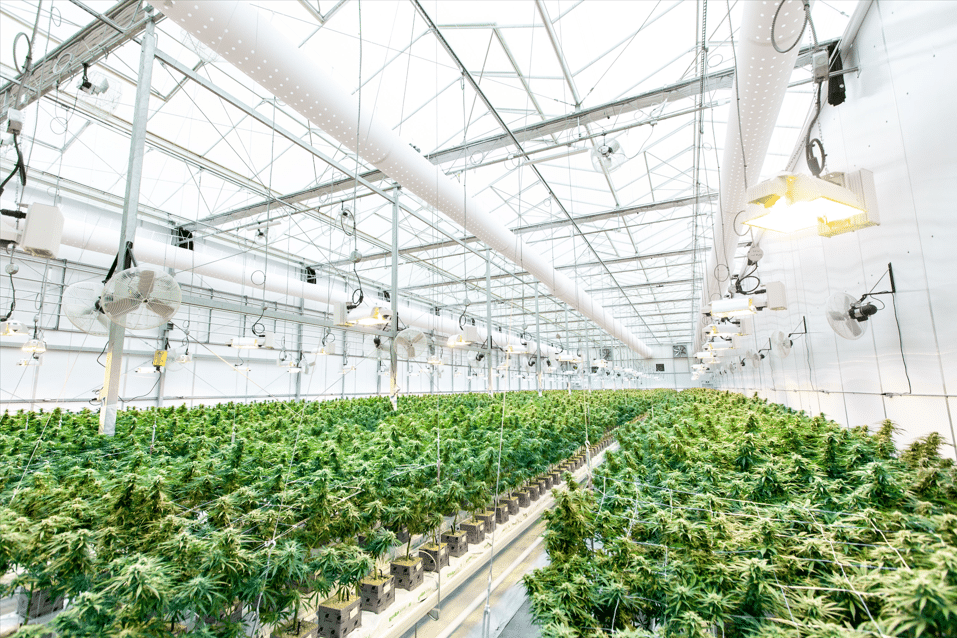
One of the most important consequences of the 2018 Farm Bill was that hemp became an agricultural input for commercial manufacturing.
USDA was directed to establish a regulatory framework for hemp production.
The department subsequently established the Domestic Hemp Production Program, with regulations governing hemp cultivation, testing, disposal of non-compliant plants and related production requirements. USDA’s final hemp rule became effective March 22, 2021.
This created a more defined supply chain:
Seed → Cultivation → Harvest → Drying → Processing → Extraction → Ingredient Manufacturing → Finished Product
That distinction is important because hemp cultivation and hemp product manufacturing are not regulated by exactly the same federal authority.
USDA regulates hemp production.
Once compliant hemp leaves the farm and enters manufacturing, other agencies—including FDA for products within its jurisdiction—can become involved. USDA specifically notes that FDA and state and local governments regulate hemp products manufactured for human or animal consumption.
For manufacturers, that means the regulatory chain follows the material.
The 0.3% THC Standard Became the Foundation of the Industry
The 0.3% delta-9 THC threshold became one of the defining numbers in the modern hemp industry.
It gave cultivators and processors a measurable federal standard.
For growers, genetics and cultivation practices became closely connected to compliance.
For processors, testing became a critical part of receiving and managing biomass.
For manufacturers, the cannabinoid profile of an incoming material could determine how it could be processed and marketed.
This created demand for:
- Hemp testing laboratories
- Cultivation genetics
- Drying and storage infrastructure
- Extraction equipment
- Refinement systems
- Distillation
- Chromatography
- Isolate production
- Formulation
- Analytical testing
- Packaging
- Quality systems
The hemp industry therefore expanded beyond farming.
It became a vertically connected manufacturing ecosystem.
Why Cannabinoids Became the Economic Catalyst
Hemp can be used for fiber, grain, seed, food ingredients and numerous industrial applications.
But cannabinoids—particularly CBD—became one of the most visible commercial opportunities created by the new federal framework.
The 2018 Farm Bill specifically included derivatives, extracts and cannabinoids within the statutory definition of hemp, provided the material met the applicable THC requirement.
That language was significant for extraction businesses.
It meant the federal hemp definition was not limited to an agricultural plant sitting in a field.
It extended to materials created through processing.
That distinction helped support the emergence of a commercial cannabinoid ingredient industry.
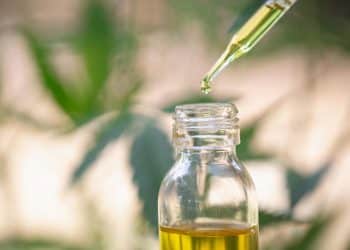
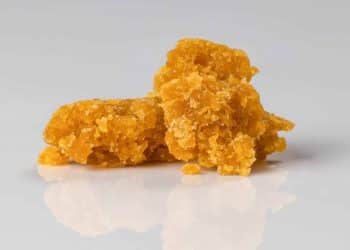
Companies began investing in processes capable of converting hemp biomass into higher-value materials such as:
- Full-spectrum extracts
- Broad-spectrum extracts
- CBD distillates
- Cannabinoid-rich formulations
- Consumer-ready ingredients
The economics of the industry consequently shifted from simply growing hemp to extracting, refining, standardizing and formulating value from hemp.
Extraction Became a Central Manufacturing Function
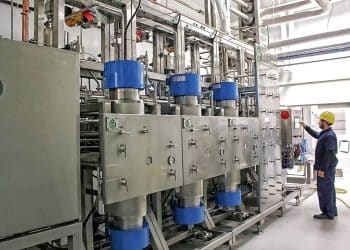
The rise of the hemp-derived cannabinoid industry created a new role for extraction facilities.
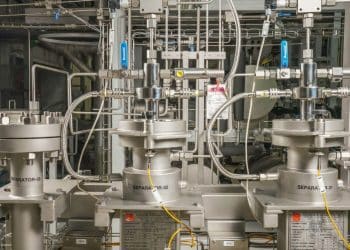
An extraction operation is essentially a manufacturing plant that separates desirable compounds from plant material and then prepares those compounds for downstream use.
The process can involve multiple stages:
Biomass preparation → Extraction → Separation → Filtration → Concentration → Purification → Testing → Formulation
The technology selected depends on the desired product and feedstock.
Manufacturers have used processes including solvent extraction, supercritical carbon dioxide extraction, ethanol extraction, distillation and chromatography.
Each process brings different requirements for:
- Equipment
- Utilities
- Ventilation
- Solvent handling
- Fire protection
- Process controls
- Cleaning
- Waste management
- Analytical testing
- Material storage
The 2018 Farm Bill therefore indirectly created demand for a specialized class of industrial facilities.
The CBD Boom Also Exposed the Limits of the Farm Bill
The rapid expansion of hemp-derived CBD products created an important regulatory distinction.
The Farm Bill addressed whether qualifying hemp was a controlled substance under the CSA.
It did not establish that every product containing hemp or CBD was automatically legal to sell.
FDA retained authority over hemp and cannabis-derived products under the Federal Food, Drug, and Cosmetic Act. FDA has repeatedly emphasized that hemp’s removal from the CSA did not remove FDA’s authority over foods, dietary supplements, drugs, cosmetics or other products within its jurisdiction.
This distinction was sometimes lost in the early commercial expansion of the CBD market.
A company could have a federally compliant hemp ingredient while still facing separate requirements governing how that ingredient could be used in a consumer product.
That remains one of the most important lessons from the industry’s early development.
FDA Drew a Line Between Hemp and Finished Products
FDA’s position became particularly important for foods and dietary supplements.
The agency has stated that CBD cannot currently be marketed as a dietary supplement and that food containing added CBD cannot be introduced into interstate commerce under the Federal Food, Drug, and Cosmetic Act. FDA’s position is based in part on the drug-exclusion provisions of the statute and the agency’s approval and clinical-investigation history involving CBD.
This produced a regulatory disconnect:
The hemp itself could qualify under the Farm Bill while a particular consumer product made from that hemp could still raise FDA compliance issues.
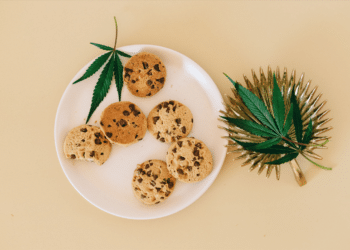
That distinction became especially important as companies moved from selling ingredients to producing:
- Gummies
- Beverages
- Foods
- Dietary supplements
- Tinctures
- Cosmetics
- Topicals
- Pet products
For manufacturers, the lesson is straightforward: raw-material legality and finished-product legality are separate compliance questions.
Hemp Seed Products Followed a Different Path
Not all hemp-derived ingredients encountered the same regulatory issues.
Hemp seeds do not naturally contain CBD or significant amounts of THC.
In December 2018, FDA responded to three GRAS notices involving hemp seed-derived ingredients: hulled hemp seed, hemp seed protein powder and hemp seed oil. FDA stated that it had no questions regarding the submitter’s conclusions that these ingredients were generally recognized as safe under their intended conditions of use.
That distinction helped establish hemp seed ingredients as a conventional food category while cannabinoid ingredients such as CBD remained subject to a different regulatory analysis.
For food manufacturers, it is an important example of why the word “hemp” alone does not determine regulatory status.
The specific plant material, chemical composition, intended use and product category all matter.
The Farm Bill Created a New Supply Chain
By creating a federally recognized category of hemp, the 2018 legislation effectively connected several industries that previously operated with much greater separation.
Agriculture
Growers could develop commercial hemp operations under federal and state frameworks.
Processing
Hemp could be dried, milled, stored and processed as a commercial agricultural commodity.
Extraction
Processors could invest in technologies designed to recover cannabinoids and other valuable compounds.
Ingredient Manufacturing
Extracts could become standardized ingredients for downstream manufacturers.
Consumer Packaged Goods
Companies could develop products around hemp-derived ingredients, subject to applicable federal and state requirements.
Testing
The industry developed a growing need for laboratories capable of measuring cannabinoids, contaminants and other quality parameters.
This created an ecosystem rather than a single market.
State Regulation Became Another Layer
The federal Farm Bill did not create a completely uniform hemp marketplace.
States and Tribal governments retained significant roles in hemp production and could establish their own regulatory plans consistent with federal requirements.
USDA notes that states and Tribal governments may also have additional requirements concerning hemp products.
This became particularly important for manufacturers selling finished cannabinoid products across state lines.
A company might operate under one federal framework while encountering different requirements for:
- Product registration
- Testing
- Labeling
- Packaging
- Age restrictions
- Cannabinoid limits
- Retail sales
- Manufacturing
- Distribution
The result was a market that was federally transformed but still highly fragmented at the state level.
The Farm Bill Also Changed Facility Economics
From a facility-design perspective, the 2018 Farm Bill changed the investment case for hemp infrastructure.
Before commercial hemp legalization, building a large-scale hemp extraction facility carried substantial federal regulatory uncertainty.
After 2018, companies could begin planning commercial facilities around a legally recognized agricultural feedstock.
That created demand for purpose-built operations.
A modern hemp processing facility may need dedicated areas for:
Raw-material receiving
Incoming biomass must be identified, documented and stored appropriately.
Processing and extraction
The facility needs equipment and utilities matched to the selected extraction technology.
Post-extraction refinement
Distillation, filtration, chromatography or other processes may require separate controlled areas.
Analytical testing
Material needs to be tested against defined specifications.
Finished-product manufacturing
Formulation and packaging must follow the requirements applicable to the product category.
Waste handling
Plant material, solvents and other process waste require appropriate management.
The result is a facility that increasingly resembles a modern food, pharmaceutical, chemical or specialty-ingredient manufacturing operation rather than a traditional agricultural building.
Quality Systems Became Part of the Business Model
The industry’s rapid expansion also exposed the importance of quality systems.
FDA reported concerns about CBD products whose measured contents did not match their labels and about products containing other potentially harmful compounds.
For manufacturers, this reinforced the importance of:
- Supplier qualification
- Raw-material specifications
- Batch records
- Standard operating procedures
- Analytical testing
- Environmental controls
- Cleaning procedures
- Traceability
- Finished-product release
- Complaint management
- Recall procedures
A certificate of analysis is only one component of a quality program.
For a manufacturing operation serving national CPG markets, the larger objective is reproducibility.
The process should consistently produce the intended material, at the intended potency and quality, with documentation demonstrating how that result was achieved.
The 2018 Framework Also Created the “Hemp-Derived THC” Market
One of the most consequential developments after 2018 involved cannabinoids other than CBD.
Because the original federal definition focused specifically on delta-9 THC, companies argued that certain other cannabinoids could qualify as hemp if the resulting material remained below the 0.3% delta-9 THC threshold.
Congressional Research Service has documented how this interpretation contributed to the emergence of products containing cannabinoids such as delta-8 THC and delta-10 THC.
These products became an important part of the post-2018 hemp marketplace.
They also became one of the major sources of federal regulatory debate.
The issue illustrates an important feature of legislation: a definition written around one chemical measurement can have consequences across an entire manufacturing sector as processing technology evolves.
What the 2018 Farm Bill Ultimately Changed
The most important legacy of the 2018 Farm Bill was not simply that it “legalized hemp.”
It created a federal legal category for hemp distinct from marijuana under the Controlled Substances Act and established the foundation for commercial cultivation and processing.
That distinction allowed the industry to build infrastructure around hemp as a commercial crop.
It supported:
- Commercial cultivation
- Agricultural investment
- Extraction facilities
- Cannabinoid processing
- Ingredient manufacturing
- Laboratory testing
- Product development
- Consumer packaged goods
- New supply-chain businesses
It also established the regulatory architecture that continues to shape the market: USDA oversight of production, FDA authority over FDA-regulated products, and state-level requirements layered onto the federal framework.
What Manufacturers Should Take From the History
For today’s operators, the history of the 2018 Farm Bill provides several practical lessons.
- Definitions Matter
A single statutory definition can determine whether an entire class of materials enters a commercial market.
Manufacturers should closely monitor changes to statutory definitions rather than focusing only on agency enforcement announcements.
- Agricultural Legalization Is Not Product Approval
Hemp’s federal status does not automatically authorize every product made from hemp.
The intended use, formulation and product category must be evaluated separately.
- Extraction Is Only One Part of Compliance
A compliant extraction process does not automatically produce a compliant consumer product.
The downstream formulation, testing, labeling and distribution systems matter as well.
- Facility Flexibility Has Value
The hemp industry demonstrates how quickly regulatory assumptions can change.
Facilities designed with adaptable process areas, utilities, testing capabilities and material flows can be better positioned to accommodate changing product requirements.
- Quality Systems Should Be Built Early
Testing and documentation should not be added after commercialization.
Supplier controls, specifications, batch records and traceability should be part of the manufacturing system from the beginning.
The Next Chapter of the Hemp Industry
The 2018 Farm Bill created the foundation for the modern U.S. hemp industry.
But the regulatory framework it established was never the final word.
The original definition focused on delta-9 THC. The resulting marketplace eventually expanded into cannabinoids that were not specifically contemplated when Congress drafted the 2018 language. Federal agencies, courts, states and Congress have since had to address questions created by the industry’s rapid development.
That history matters because the industry is again facing significant changes to the federal hemp framework.
For manufacturers, the lesson from the last eight years is clear: regulatory definitions can reshape an entire supply chain.
Companies that understand the connection between agriculture, extraction, formulation, testing, facility design, quality systems and finished-product regulation will be better equipped to navigate whatever framework comes next.
The 2018 Farm Bill opened the door.
What emerged was not simply a hemp farming industry.
It was a new manufacturing ecosystem built around converting hemp and other botanical materials into ingredients and consumer products.
And the regulatory decisions now being made will determine how much of that ecosystem remains viable—and what form it takes next.