
Artificial intelligence has figured out how to boost cannabinoid yields by 34% and terpene production by 28% — and the companies mastering these “smart formulas” are quietly capturing millions in a market that traditional growers are still trying to understand?
Picture this: It’s early 2024, and a mid-sized cultivation facility in Oregon is staring at another disappointing harvest. Despite following industry-standard growing protocols, their premium strains are testing at 18% THC when competitors are hitting 25%. Their terpene profiles are flat, their yields inconsistent, and their profit margins are getting crushed. Meanwhile, across the state, a smaller operation using AI-designed cultivation formulas just locked in a $4.2 million contract with a major dispensary chain — purely based on their consistent, high-quality output.
The secret? Machine learning algorithms that can predict and optimize the exact combination of nutrients, environmental conditions, and timing needed to maximize specific cannabinoid and terpene production. And in 2025, this technology reached a critical milestone: AI-optimized cannabis facilities are now commanding 40-60% premium prices for their products.
The $847 Million Problem That Sparked an AI Revolution
Before we dive into the numbers, let’s understand what’s really at stake. The global terpenes market, valued at $2.3 billion in 2024, is expected to reach $4.1 billion by 2030. Cannabis represents the fastest-growing segment, but here’s the catch — traditional cultivation methods are leaving massive value on the table.
Companies like Motorleaf and Grownetics are leading the way in this field, offering AI-driven agriculture technology that automates the monitoring and analysis of cannabis crops. These solutions not only optimize crop yield and quality but also reduce resource waste, making cultivation more efficient and sustainable.
Industry insiders call it “the consistency crisis.” Even experienced master growers struggle to replicate exact cannabinoid and terpene profiles from batch to batch. A single environmental variable — humidity fluctuation, nutrient timing, or light spectrum shift — can completely alter a plant’s chemical composition.
“We were losing 25-30% of our potential revenue because our supposedly ‘identical’ batches were testing completely different,” explains a Colorado-based facility manager whose operation now generates $12 million annually using AI optimization. “Some batches would hit 2.8% total terpenes, others barely reached 1.4%. Customers were complaining about inconsistency, and we were leaving money on the table every single harvest.”
What Makes AI “Learn” Cannabis Chemistry — And Why Everyone’s Racing to Adopt It
Here’s where it gets fascinating. Traditional growing relies on static recipes — fixed nutrient schedules, predetermined environmental settings, and harvest timing based on visual cues. But AI-designed formulas are dynamic, learning from thousands of data points to predict exactly what each plant needs at each growth stage.
Think of it as giving each plant a personalized nutritionist and environmental coach:
- Real-time chemical analysis: Sensors monitor cannabinoid and terpene development throughout the growth cycle
- Predictive nutrient delivery: AI adjusts feeding schedules based on plant response and target compounds
- Environmental micro-management: Systems optimize temperature, humidity, and light spectrums for specific terpene production
- Harvest timing precision: Algorithms predict the exact moment when target compounds peak
- Genetic pattern recognition: AI identifies which strains respond best to specific protocols
FolioGrow connects to a sensor manufacturer’s API—companies like Ridder, Growlink, and Braingrid—and then collects data points, like, air temperature in five-minute intervals, or analytics for one corner of a room to another.
The technology builds on decades of agricultural research, but recent breakthroughs in machine learning and IoT sensors have made real-time chemical optimization possible for the first time.
The Numbers Tell a Remarkable Story
The adoption of AI-designed formulas represents more than just technological advancement — it signals a fundamental shift toward precision agriculture in cannabis. Current market penetration tells the story:
2024: 342 facilities using AI optimization (the “early adopter” phase) 2025: 784 facilities deployed AI systems (mainstream adoption begins) 2030 projection: 2,400+ facilities (estimated 15% of commercial operations)
But raw adoption numbers don’t capture the real impact. What’s happening is a complete transformation of how cannabis chemistry is controlled and optimized.
Industry Spotlight: Where the Real Results Are
Cannabis: The Precision Chemistry Revolution
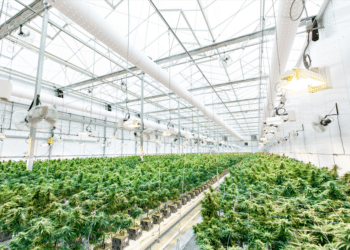
Premium cannabis brands discovered that consumers will pay 40-85% more for products with consistent, optimized terpene profiles. AI systems analyze data from environmental sensors and cameras to monitor conditions such as light, humidity, temperature, and CO2 levels in real time, adjusting these factors to maintain optimal growing conditions.
A West Coast facility using AI optimization reports being booked solid for the next eight months. “Dispensaries know exactly what they’re getting from us,” explains the head cultivator. “Batch 47 of our Sunset Sherbet will have virtually identical terpene profiles to Batch 15. That predictability is worth premium pricing.”
Cannabis facilities using AI optimization now represent approximately 8% of commercial operations but capture nearly 25% of premium market revenue.
Pharmaceuticals: Where Molecular Precision Matters Most
Pharmaceutical companies developing cannabis-based medicines require exact cannabinoid ratios for FDA approval processes. Traditional cultivation can vary by 15-20% between batches — unacceptable for pharmaceutical applications.
AI systems can monitor plants continuously, identifying problems that the human eye might overlook. This allows for rapid response to treat affected areas, preventing the spread of pests or disease and minimizing potential damage.
One biopharmaceutical company developing epilepsy treatments found that AI optimization reduced batch-to-batch cannabinoid variation from 18% to under 3%, dramatically accelerating their clinical trial timelines.
Extraction: The Compound Targeting Revolution
Extract manufacturers are using AI formulas to grow cannabis specifically optimized for their extraction processes. By targeting specific terpene and cannabinoid combinations during cultivation, they’re achieving extraction efficiencies previously thought impossible.
A leading concentrate producer reports that AI-optimized input material increased their live resin terpene retention by 34% while reducing processing time by 22%.
Meet the Companies Driving Innovation
The Technology Pioneers
FolioGrow has emerged as the leader in cannabis-specific AI optimization. Himansu Karunadasa, cofounder and chief technology officer at FolioGrow, an AI-fueled software application that analyzes output for cannabis farmers. Their platform analyzes over 200 variables to predict yield outcomes and optimize cannabinoid production.
Motorleaf focuses on environmental optimization using computer vision and predictive analytics. Their systems have helped facilities increase terpene production by an average of 28% while reducing energy consumption by 15%.
Grownetics specializes in integrated cultivation management systems that combine AI optimization with automated environmental controls. Their modular approach allows facilities to scale AI implementation without complete system overhauls.
SpexAI is developing robotic systems with AI-powered cameras for plant monitoring. “If you’re looking at how cannabis operations are run, everyone is doing their own trials or experiments already,” said Ben Niehaus, founder of Dresden, Germany-based SpexAI.
The Innovation Pipeline
Companies are pushing boundaries with:
- Molecular-level optimization (targeting specific terpene biosynthesis pathways)
- Strain-specific algorithms (AI models trained on individual genetic profiles)
- Real-time chemical feedback loops (instant nutrient adjustments based on plant chemistry)
- Predictive harvest timing (algorithms that predict peak compound concentrations)
- Cross-batch learning (AI that improves formulas based on previous harvest data)
Regional Market Dynamics: Where the Smart Money Flows
North America: The Innovation Laboratory
North America leads AI adoption in cannabis cultivation, driven by:
- Mature legal markets demanding premium products
- Venture capital availability for agtech investments
- University research partnerships advancing plant science
- Consumer willingness to pay for quality and consistency
States like California, Colorado, and Oregon have become testing grounds for AI cultivation technologies, with successful implementations quickly scaling across legal markets.
Europe: Pharmaceutical-Grade Precision
European markets prioritize medical applications, with Germany and the Netherlands leading AI adoption for pharmaceutical cannabis production. Stricter EU regulations on medical cannabis consistency are accelerating AI adoption across the continent.
Asia-Pacific: The Emerging Frontier
Countries like Australia and New Zealand are experiencing rapid growth in AI-optimized medical cannabis cultivation, while jurisdictions exploring legalization are studying North American AI implementations.
Investment Landscape: Smart Money Follows Smart Algorithms
Private equity and venture capital are pouring into cannabis AI optimization:
- $23 million Series B for AI cultivation management platform
- $45 million acquisition of IoT sensor company specializing in cannabis chemistry monitoring
- $67 million expansion funding for AI-optimized multi-state cultivation operations
“The investment thesis is compelling,” explains Sarah Kim of AgTech Ventures. “AI optimization isn’t just about higher yields — it’s about consistent, premium products that command higher prices. The economics are transformative.”
The Engineering Challenge: Making Chemistry Predictable
Behind every successful AI optimization lies sophisticated biochemical modeling. Modern systems must balance:
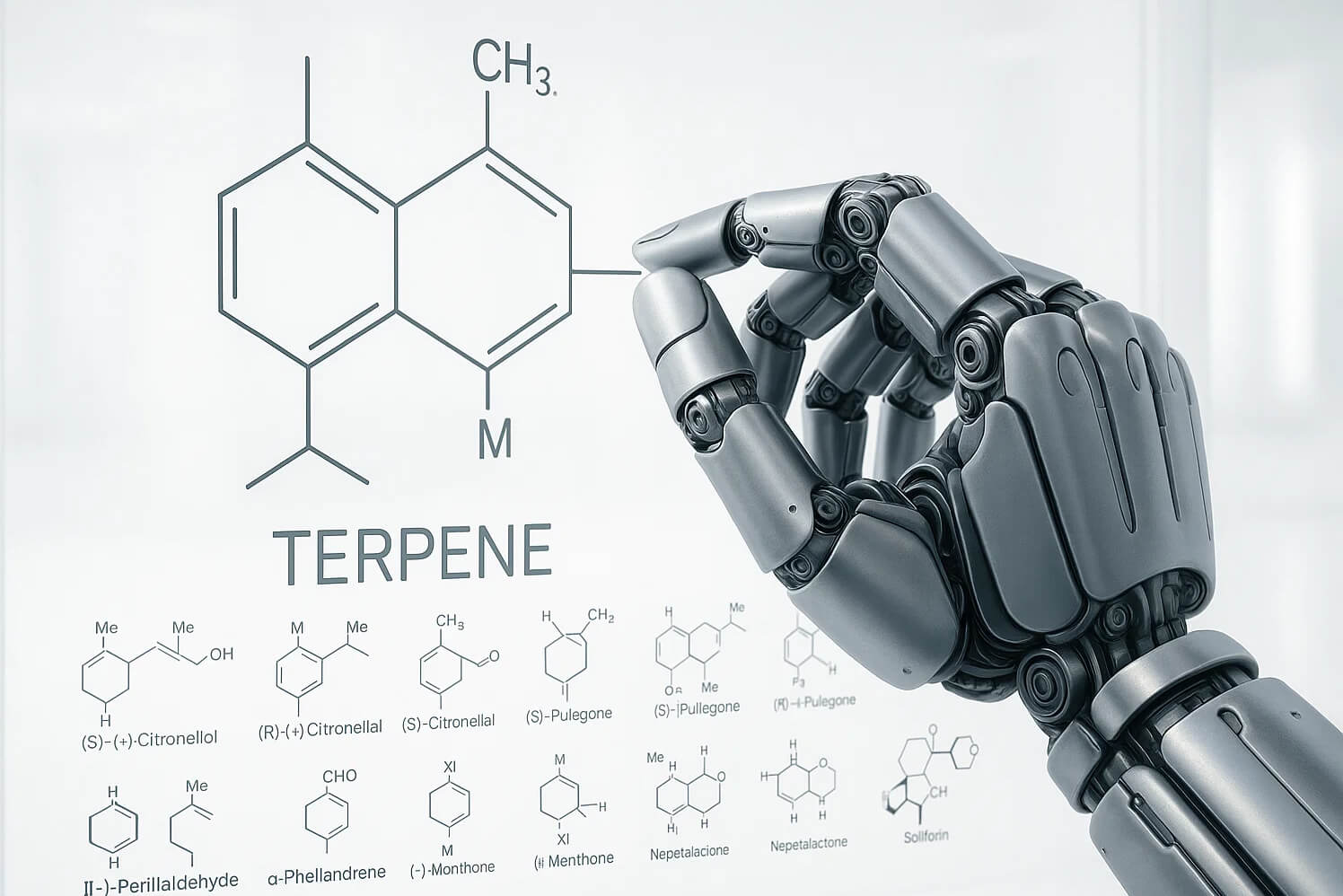
Chemical Pathway Modeling: Understanding how environmental factors influence specific cannabinoid and terpene biosynthesis requires deep plant biology knowledge.
Real-time Monitoring: Tracking chemical development throughout the growth cycle demands precision sensors and continuous data analysis.
Predictive Algorithms: AI models must predict how current conditions will affect final chemical profiles weeks in advance.
Environmental Integration: Systems must coordinate dozens of environmental variables to optimize chemical production.
Genetic Variability: AI must account for how different strains respond to optimization protocols.
Economic Impact: Beyond Cultivation Optimization
The AI optimization market generates significant downstream economic activity:
- Software and licensing: $184 million annually
- Sensor and hardware integration: $267 million annually
- Data analytics and consulting: $93 million annually
- Training and implementation services: $45 million annually
Total industry economic impact approaches $600 million annually when considering the full ecosystem.
Challenges on the Horizon
Despite impressive results, the industry faces critical challenges:
Data Quality Requirements
If the growing practices aren’t strict and replicable, and the data isn’t high-quality, then the model won’t be able to produce accurate predictions. Many facilities lack the data infrastructure necessary for effective AI implementation.
Implementation Complexity
AI optimization requires significant changes to existing cultivation protocols. Even if the farmer has tracked and standardized everything to a T, the AI will still need three to four weeks to collect at least a few thousand data points before it’s up and running.
Cost Barriers
Complete AI optimization systems require $150,000-400,000 investments, limiting access for smaller operators.
Technical Expertise Gap
Operating AI systems requires specialized knowledge that many cultivation teams lack.
What Industry Experts Predict
“We’re witnessing the birth of precision cannabis agriculture,” says Dr. Michael Chen, Director of Plant Science at AgriTech Institute. “AI optimization will become as standard as irrigation systems within five years.”
Key factors driving future growth include:
- Regulatory pressure for consistency in medical markets
- Consumer demand for premium products with predictable effects
- Competition driving efficiency improvements
- Technology costs decreasing as systems scale
- Data network effects improving AI performance over time
The Investment Opportunity
For investors and industry participants, AI optimization represents a transformative shift toward scientific precision in cannabis cultivation. Key investment themes include:
Platform Technologies: Companies developing comprehensive AI optimization platforms for multi-facility operations.
Specialized Hardware: Sensor manufacturers creating cannabis-specific monitoring equipment.
Data Analytics: Businesses building predictive models and optimization algorithms.
Implementation Services: Consultancies helping facilities deploy and optimize AI systems.
Looking Forward: The Path to Ubiquity
Industry analysts project that 25% of premium cannabis will be AI-optimized by 2030, driven by converging trends:
Market Premiums: By leveraging AI, cultivators can produce cannabis more sustainably and efficiently than ever before. Premium pricing for consistent, high-quality products will continue expanding.
Technology Maturation: AI systems are becoming more user-friendly and cost-effective with each generation.
Competitive Pressure: Facilities without AI optimization will struggle to compete on quality and consistency.
Regulatory Evolution: Medical markets will increasingly require pharmaceutical-level consistency that only AI can deliver.
Consumer Education: As consumers become more sophisticated about terpenes and cannabinoids, demand for optimized products will grow.
The Bottom Line: Why This Matters Now
AI-designed terpene and cannabinoid optimization isn’t just about better growing — it represents the transition from agriculture to pharmaceutical-grade chemical manufacturing. Early adopters are establishing competitive advantages that compound over time.
For entrepreneurs, the question isn’t whether AI optimization will transform cannabis cultivation — the chemistry advantages are too compelling. The question is which applications, markets, and business models will capture the greatest value as the industry scales toward pharmaceutical-level precision.
The companies and investors positioning themselves now, while the technology transitions from early adoption to mainstream acceptance, stand to benefit most from what industry insiders are calling “the precision cannabis revolution.”
As cultivation expert Lisa Park puts it: “Three years ago, AI optimization was experimental. Today, it’s becoming competitive necessity. Tomorrow, it’ll be standard practice. The smart money is getting in while it’s still becoming necessary.”
The revolution isn’t just coming — it’s here, it’s measurable, and it’s creating fortunes for those who understand that the future of cannabis is precisely engineered chemistry.
References
- Solink – AI in the Cannabis Industry: https://solink.com/resources/industry-insights/ai-in-the-cannabis-industry/
- Cannabis Risk Manager – Cannabis & AI: The Future of Smart Cultivation: https://cannabisriskmanager.com/cannabis-ai-the-future-of-smart-cultivation/
- Emerging Tech Brew – How a cannabis-focused AI platform helps growers predict yield: https://www.emergingtechbrew.com/stories/2021/09/10/cannabisfocused-ai-platform-helps-growers-predict-yield
- Cannabis Business Times – The Future of AI in Cannabis: https://www.cannabisbusinesstimes.com/business-issues-benchmarks/automation/article/15687280/the-future-of-ai-in-cannabis
- Veriheal – AI And Cannabis: Will Artificial Intelligence Affect the Cannabis Industry?: https://www.veriheal.com/blog/will-ai-impact-the-cannabis-industry/
- PMC – Cold Ethanol Extraction of Cannabinoids and Terpenes from Cannabis Using Response Surface Methodology: https://pmc.ncbi.nlm.nih.gov/articles/PMC9786071/
- MDPI – Integrating Sustainable Cultivation Practices and Advanced Extraction Methods: https://www.mdpi.com/2037-0164/16/2/38
- ScienceDirect – Machine learning algorithms and artificial neural network for optimizing Cannabis sativa: https://www.sciencedirect.com/science/article/abs/pii/S0926669022002849