

Bioengineering yeast and bacteria to produce pharmaceutical drugs is not new. The world’s supply of insulin depends on yeast (Saccharomyces cerevisiae). [1] The bacteria Escherichia coli also serves as a “cell factory for production.” Yeast and E. coli contribute to more than 300 biopharmaceutical antibodies, hormones, and growth factors. [1] Recently, scientists and producers have harnessed these microorganisms to cultivate cannabinoids.
Using the sugar galactose and S. cerevisiae (brewer’s yeast), Luo et al [2] synthesized cannabigerolic acid (CBGA), Δ9 -tetrahydrocannabinolic acid (THCA), cannabidiolic acid (CBDA), tetrahydrocannabivarinic acid (THCVA), and cannabidivarinic acid (CBDVA). They engineered cannabinoid pathways within yeast genetics. Genetic engineering means directly manipulating the genes of an organism—in this case, to produce cannabinoids.
They started by introducing cannabis enzymes (tetaketide synthase and olivetolic acid cyclase) into the yeast’s genetic profile. The modified yeast converted galactose into olivetolic acid in small amounts; the researchers boosted this production with hexanoic acid. Additional steps included re-creating the mevalonate pathway, generating geranyl pyrophosphate. [2] Olivetolic acid and geranyl phosphate combine to form CBGA, the precursor (or “mother”) to other cannabinoids. The researchers could tweak a single gene to determine the conversion of CBGA into another cannabinoid. [2]
Such synthetic systems may efficiently produce rare cannabinoids that are otherwise difficult to cultivate and extract. [3] InMed, for example, specializes in the “development of rare cannabinoids” and produces cannabinol (CBN) using genetically modified E. coli. Ginkgo Bioworks has tested 10,000 engineered strains of yeast and E. coli to produce rare cannabinoids. It may be possible to create new cannabinoids not found in nature, including those that act in familiar ways while skirting federal prohibition via novel molecular structures.
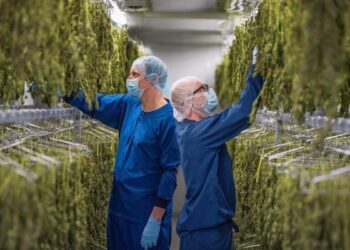
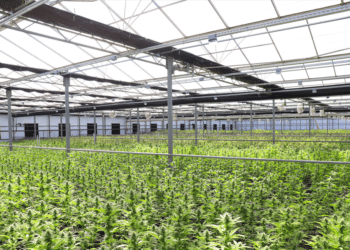
Others see genetic engineering as a challenge to traditional cultivation. In 2019, Zenabis Global Inc. signed a three-year supply agreement for CBD isolate “for an incredibly low cost.” The supplier, Farmako, created the CBD using Zymomonas mobilis, a bacteria known for its use in tequila. General advantages of producing cannabinoids in a laboratory potentially include product consistency and the elimination of extensive labor and energy costs.
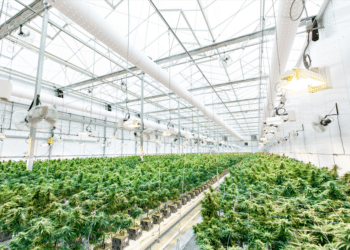
This poses an important question: do we want lab-grown cannabinoids to displace horticulture and extraction? In 1978, Genentech synthesized insulin from yeast to replace expensive, scarce animal pancreases. People’s lives were on the line. Imagine the cannabis industry downsized into a lab vat manned by a few scientists. What’s on the line?
References
1- Nielsen J. Production of biopharmaceutical proteins by yeast: advances through metabolic engineering. Bioengineered. 2013;4(4):207-211. doi:10.4161/bioe.22856. [Impact Factor: 205; Times Cited: 63 (Semantic Scholar)]
2- Luo X et al.Complete biosynthesis of cannabinoids and their unnatural analogues in yeast. Nature. 2019;567:123–126. https://doi.org/10.1038/s41586-019-0978-9. [Impact Factor: 42.778; Times Cited: 148 (Semantic Scholar)]
3- Carvalho Â, et al. Designing microorganisms for heterologous biosynthesis of cannabinoids. FEMS Yeast Res. 2017;17(4):fox037. doi:10.1093/femsyr/fox037. [Impact Factor: 3.193; Times Cited: 27 (Semantic Scholar)]
Image: Gerd Altmann from Pixabay