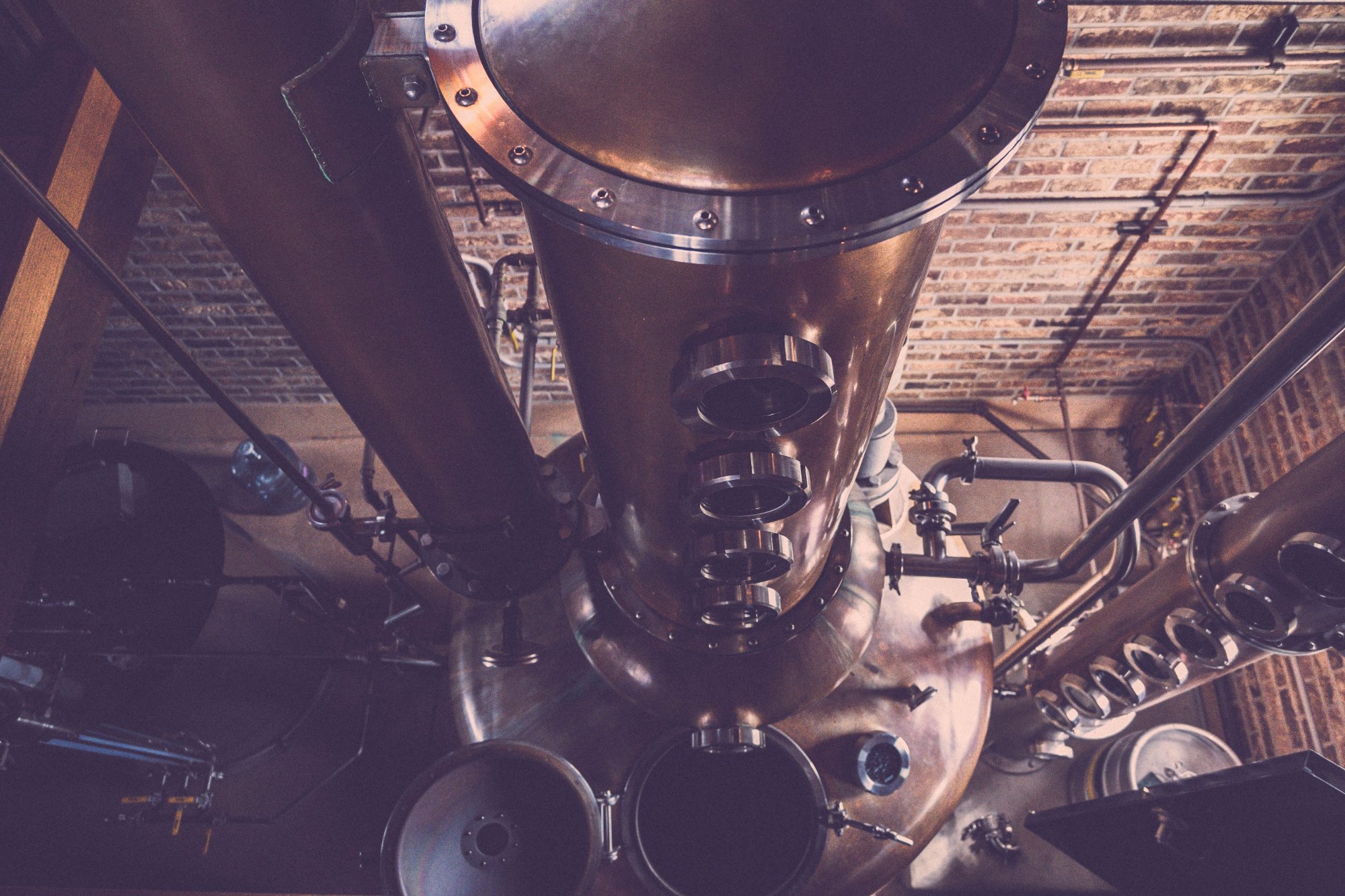
Few pieces of equipment in an extraction facility carry as much capital, as much expectation and as much quiet risk as the distillation train. It turns a dark, variable crude into a clear, concentrated fraction that buyers, formulators and regulators all want to be consistent. When it works, nobody notices. When it does not, the failure shows up weeks later as a failed potency test, a color shift, a residual solvent result or a customer complaint.
The pressure on operators is rising from several directions at once. Buyers ask for specifications and certificates of analysis that actually reconcile with batch records. State programs differ from one another and keep changing. Retail and private-label partners increasingly audit suppliers the way food and supplement brands do. Meanwhile, other industries have run vacuum distillation for decades: fish oil concentrates, tocopherols, distilled monoglycerides and pharmaceutical intermediates. They learned the hard lessons long ago. So the question this article answers is a practical one: what does molecular distillation actually do, and which controls from food, pharma and dietary supplement manufacturing should an extraction operator adopt around it?
1. Molecular Distillation Explained: What It Does and Why It Is Different
Why it matters. You cannot control a process you describe loosely. In the cannabis and hemp trade, “short path,” “wiped film” and “molecular distillation” are often used interchangeably. They overlap, but they are not identical, and the distinctions affect how you write specifications and validate the equipment.
The core principle
Distillation separates compounds by differences in volatility. Heating a mixture drives off the more volatile components first. The problem with heat-sensitive botanical compounds is that the temperatures needed at atmospheric pressure would degrade them. Pulling a deep vacuum lowers the temperature at which compounds evaporate, which is what makes distillation of cannabinoids and similar molecules practical.
In a molecular distillation regime, the vacuum is deep enough that the mean free path of a vapor molecule (the average distance it travels before hitting another molecule) is comparable to or longer than the gap between the heated evaporator surface and the cooled condenser. Molecules leave the film and reach the condenser with few collisions. The practical benefits are a short exposure to heat, often measured in seconds, and efficient separation at lower temperatures.
How the common configurations relate
- Short path distillation: the condenser sits close to the evaporator, often inside the same vessel. Pressure and geometry determine how close it gets to a true molecular regime.
- Wiped film (thin film) evaporators: rotating wiper blades spread the feed into a thin, constantly renewed film on a heated wall, improving heat transfer and limiting residence time.
- Falling film and centrifugal units: used in other industries, less common in cannabis, but the same physics applies.
Most cannabis and hemp systems are wiped film, short path units operated at deep vacuum. Whether a specific machine is operating in a strictly molecular regime depends on its pressure, geometry and feed rate, so avoid claiming it unless you can show the operating conditions.
What it does not do
- It does not remove everything that is unwanted. Compounds with similar volatility to your target can travel with it.
- It does not make an unsafe input safe. Some contaminants concentrate in the distillate fraction (more on this in section 6).
- It does not substitute for testing.
2. Start With Specifications, Not Setpoints
Why it matters. Many operators begin with the machine: what temperature, what vacuum, what feed rate. Mature industries begin with the product and work backward.
What the mature industry does
Under the dietary supplement GMP framework in 21 CFR Part 111, a manufacturer must establish specifications for components, in-process steps and finished product before manufacturing begins. Pharmaceutical operations do the same, defining a quality target and then showing the process can reliably hit it. Specifications come first, and process parameters exist to serve them.
How an extraction operator applies it
Write a specification for each distillation output, not just the final one. A practical set includes:
- Feedstock specification: minimum target content, maximum residual solvent before entry, moisture or water content, and acceptable appearance.
- Intermediate fractions: the light fraction (terpenes and volatile components) and heavy residue each need a defined disposition, whether they are retained, reworked or discarded.
- Main fraction (distillate): target content range, acceptable minor cannabinoid profile, residual solvents, contaminants and appearance.
Specifications should reflect your buyer requirements and the rules in the jurisdictions where you sell. Those rules differ by state and by product category, so check them rather than assuming one standard applies everywhere. If you cannot say what “good” looks like in numbers, the distillation log is just a record of activity.
3. Treat Feedstock as a Controlled Variable
Why it matters. Distillation is only as repeatable as what goes in. Crude from different cultivars, harvests or extraction methods can behave very differently under the same setpoints.
What the mature industry does
Food and supplement manufacturers qualify suppliers, require certificates of analysis, and verify identity on receipt rather than trusting a label. Pharma adds approved supplier lists and periodic audits. The common idea: an incoming material is not released to production until it has been checked against a specification.
How an extraction operator applies it
- Quarantine and release: hold incoming crude or in-house intermediate until it passes feedstock criteria.
- Verify supplier data: for purchased crude, run your own testing on a defined schedule rather than relying solely on a supplier certificate.
- Characterize before you run: know the potency, residual solvent level and water content going in. Unremoved ethanol or water can cause bumping and unstable vacuum.
- Pre-process consistently: winterization, filtration and decarboxylation steps should have their own documented parameters, since the distillation inherits their variability.
- Track lineage: every distillation lot should trace back to specific input lots.
4. Qualify the Equipment: Installation, Operation, Performance
Why it matters. A vacuum system is a collection of components that degrade quietly: pump oil, seals, gauges, wiper blades, heaters, chiller performance. A unit that worked in commissioning may not work the same way eighteen months later.
What the mature industry does
Pharmaceutical and ingredient manufacturers use a staged qualification approach, commonly described as IQ, OQ and PQ:
- Installation qualification (IQ): confirm the equipment was installed as specified, with correct materials of construction, utilities, instruments and documentation.
- Operational qualification (OQ): confirm the equipment functions across its intended operating ranges, including vacuum leak rate, temperature control and rotor speed.
- Performance qualification (PQ): confirm the process produces product to specification, repeatedly, under real conditions.
How an extraction operator applies it
- Document a baseline vacuum leak rate and ultimate vacuum when the system is clean and new, then retest on a schedule.
- Calibrate or verify vacuum gauges, temperature sensors and flow meters. A gauge reading that is off by a meaningful margin changes the true separation conditions.
- Run PQ batches with a defined number of consecutive runs meeting spec before declaring a recipe validated.
- Keep a maintenance log covering pump oil changes, seal replacement, wiper blade condition and cold trap servicing.
- Define what triggers requalification: major repairs, new pumps, relocation or changes in feed type.
Related reading: our coverage of extraction equipment covers how to evaluate vendors and documentation packages.
5. Lock Down the Process With a Master Record
Why it matters. Distillation recipes tend to live in an operator’s head or on a whiteboard. That works until someone is on vacation, a shift changes or an auditor asks how you know the process is consistent.
What the mature industry does
Supplement manufacturers maintain a master manufacturing record for each product and a batch production record for each lot. The master record defines the approved process. The batch record proves the process was followed, with real-time entries, signatures and reconciliation of quantities.
How an extraction operator applies it
A distillation master record should capture:
- Feed material and specification, with the expected input quantity range.
- Critical process parameters with ranges: evaporator temperature, condenser temperature, vacuum level, wiper speed, feed rate, and any degassing step.
- Pass sequence, such as a first pass to remove volatiles and a second to collect the main fraction, with the parameters for each.
- Sampling points and the tests to run.
- Yield expectations and an action rule if actual yield falls outside the expected range.
- Equipment identification, so the batch record names the exact unit and pump used.
The batch record should be filled in during the run, not reconstructed from memory afterward. Record actual values, not just “as per SOP.” Mass balance matters here: input, distillate, residue and light fraction should reconcile within a defined tolerance, and unexplained loss should trigger a review.
6. Do a Hazard Analysis: Concentration Cuts Both Ways
Why it matters. Distillation concentrates the target compound, and it can concentrate unwanted compounds too. Operators sometimes assume a high-purity distillate is automatically clean. That is a hazard assumption, not a verified fact.
What the mature industry does
Food manufacturers use hazard analysis frameworks such as HACCP and preventive controls, identifying biological, chemical and physical hazards at each step and deciding where controls are needed. Fish oil refiners, for example, pay close attention to how contaminants behave through the refining steps and verify with testing rather than assuming.
How an extraction operator applies it
Build a simple hazard analysis for the distillation step:
- Residual solvents: may carry into the light fraction or contaminate the vacuum system. Confirm removal before and after.
- Pesticide residues: some may co-distill with cannabinoids depending on volatility, and the concentration factor can push a marginal crude result over a limit. Test the feed and the output.
- Heavy metals: these are generally non-volatile and tend to remain in residue, but do not assume. Verify through testing, and keep the logic documented.
- Thermal degradation products: excessive temperature or residence time can change the profile. Monitor potency and minor cannabinoid ratios.
- Equipment-derived contaminants: pump oil backstreaming, seal materials and cleaning agent residues.
Document the conclusion for each hazard: controlled, not significant, or requires verification. For more on building these frameworks, see our safety and compliance coverage.
7. Build a Testing Plan Around the Process
Why it matters. End-of-line testing tells you what happened. In-process testing tells you what is happening, while there is still time to adjust.
What the mature industry does
Pharma and supplement manufacturers combine in-process checks with finished-product release testing, and they validate their analytical methods so results are trustworthy. Retained samples are kept so questions can be investigated later.
How an extraction operator applies it
- Pre-run feed test: potency and residual solvent as a minimum.
- In-process checks: a quick potency estimate on the first fraction can confirm the cut points before you commit the whole batch.
- Release testing: potency profile, residual solvents, contaminants required by your jurisdiction and buyer, and appearance.
- Method suitability: a lab result is only useful if the method is appropriate for the matrix. Distillate and crude behave differently in analysis. Ask your lab about method validation for each matrix.
- Retains: keep a labeled retained sample from every lot for a defined period.
- Out-of-specification handling: write a procedure before you need it. Retesting without a rule is how bad results get tested into passing ones.
More on lab methods is available in our analytical techniques section.
8. Control Cleaning, Changeover and Cross-Contact
Why it matters. A distillation unit is hard to clean. Residue bakes onto glass and steel, and the next batch can carry traces of the last one. For operators running multiple product types, such as different cultivars, hemp and marijuana streams, or products for different customers, this is a real risk.
What the mature industry does
Pharma uses cleaning validation to demonstrate that a cleaning procedure reliably removes residue to a defined limit. Food manufacturers control allergen changeovers with documented procedures and verification swabs. The principle: do not assume clean; show it.
How an extraction operator applies it
- Write a cleaning SOP with solvent type, contact time, rinse steps and drying or purge steps.
- Define what “clean” means: visual inspection plus an analytical check such as a rinse or swab sample on a sensible schedule.
- Use dedicated equipment or components for streams that must stay segregated, particularly where regulatory category differs.
- Label equipment status: clean, in use, needs cleaning. Record who cleaned it and when.
- Verify the cleaning agent is fully removed, since residual cleaning solvent is its own contaminant.
- Include a changeover review before switching between product types.
9. Run Change Control, Deviations and Training as a System
Why it matters. Most quality failures in distillation do not come from the machine. They come from small, unrecorded changes: a new pump oil, a different wiper blade, a feed rate tweak that worked once and became habit.
What the mature industry does
Regulated manufacturers use formal change control, deviation reporting and corrective and preventive action (CAPA). Employees are trained to documented procedures, with records showing competency. The goal is that the process stays in a known state, and when it drifts, the drift is caught, investigated and fixed at the root cause.
How an extraction operator applies it
- Change control: any change to equipment, parameters, suppliers or SOPs is assessed, approved and recorded. Decide whether it requires requalification.
- Deviations: a vacuum excursion, power loss, off-color fraction or unexpected yield is logged with what happened, the impact and the disposition of affected product.
- CAPA: repeat issues get a root-cause investigation, not just a note saying “operator error.”
- Training: operators are trained on the SOP, observed performing it, and signed off. Retrain when the SOP changes.
- Data integrity: records are attributable, legible, contemporaneous and original. No pencil, no backfilled logs, no shared logins on electronic controllers.
- Management review: review yield trends, OOS rates and deviations on a regular cadence.
10. Self-Assessment: Is Your Distillation Step Audit-Ready?
Answer honestly. Any “no” is a place to start.
- Do you have written specifications for feedstock, each fraction and the final distillate?
- Is incoming crude quarantined until it meets feed criteria?
- Have your vacuum gauges, temperature sensors and key instruments been calibrated or verified on a schedule?
- Do you have a documented baseline leak rate and ultimate vacuum for each unit?
- Is there an approved master record for each distillation recipe?
- Are batch records completed during the run, with actual values recorded?
- Do input, output and residue masses reconcile within a defined tolerance?
- Have you completed a documented hazard analysis for the step?
- Do you test both feed and output for the contaminants relevant to your market?
- Is there a written out-of-specification procedure?
- Do you have a validated or verified cleaning procedure with a defined acceptance check?
- Are changes to equipment, parameters and suppliers formally reviewed?
- Are operators trained, observed and signed off on the current SOP?
- Do you retain samples from every lot?
If you answered “no” to more than a few, prioritize in this order: specifications, batch records, testing plan, then qualification and cleaning validation.
Frequently Asked Questions
Is molecular distillation the same as short path distillation?
Not exactly. Short path describes a geometry where vapor travels a short distance to a nearby condenser. Molecular distillation describes a regime of very low pressure where molecules travel from evaporator to condenser with few collisions. Many commercial short path units approach that regime, but whether a given unit truly operates in it depends on its pressure and design.
Does distillation remove pesticides and heavy metals?
It depends on the compound. Non-volatile materials tend to stay in the residue, while some volatile or semi-volatile compounds can travel with the target fraction and even concentrate. Do not rely on distillation as a contaminant control. Test feed and output, and address contamination at the source.
Do we need GMP to run a distillation system?
Requirements depend on your product category and jurisdiction. State cannabis programs set their own manufacturing and testing rules, and the framework for hemp-derived products varies by product type and destination. Whether a product may lawfully be sold as a dietary supplement is a separate regulatory question, so consult qualified regulatory counsel. Regardless, GMP-style controls such as specifications, records, testing and change control are what buyers and auditors increasingly expect.
How many passes should a run include?
There is no universal answer. Operators commonly use an initial pass to strip volatiles and a later pass to collect the main fraction, and sometimes additional passes for polishing. The right design depends on feed composition, equipment and target specification, and it should be established and validated with data from your own system.
How often should we requalify the equipment?
Set a schedule based on risk and usage, and requalify after significant changes such as major repairs, a new vacuum pump or relocation. Routine checks like leak rate and calibration should be more frequent than full requalification.
Where to Go Next
If you are planning a new refinement line, upgrading an existing one or preparing for a buyer audit, start with the specifications and the hazard analysis, then work through the checklist above. For facility planning, build-out and operational support resources, visit nextbldg.com. You can also browse our extraction technology and product refinement archives for related guides.
Conclusion: Distillation Is a Controlled Process, Not a Machine Setting
Molecular distillation is a well-understood separation technique, and the physics is not the hard part. The hard part is running it the same way every time, proving it, and catching drift before a customer does. Food, pharma and supplement manufacturers got there by defining specifications first, qualifying equipment, controlling inputs, analyzing hazards, testing with purpose and managing change formally. Extraction operators can adopt the same habits without waiting for a regulator to require them.
A still can separate molecules, but only a quality system can make the result repeatable.