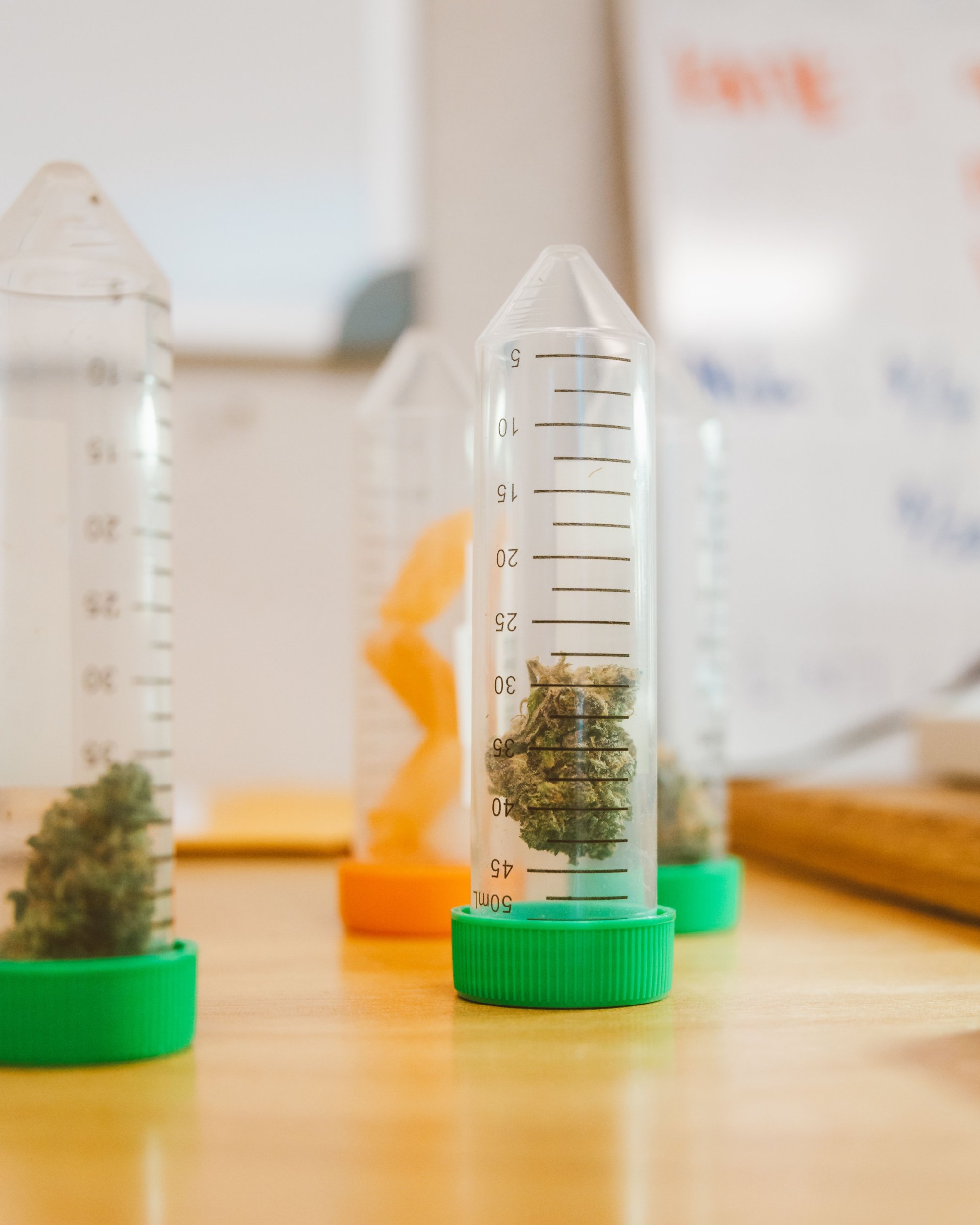
Terpenes are the most fragile product a extraction operation will ever try to sell. They are volatile, oxidize easily, and are lost to heat, vacuum and time in ways that cannabinoids simply are not. Buyers know it. Brands now ask for terpene profiles on certificates of analysis, formulators want consistent lots, and a processor who can only say that a product is “full spectrum” is losing ground to one who can show a chromatogram and a documented process behind it.
At the same time, the compliance picture has not simplified. Terpene products end up in vaporizers, edibles, tinctures, topicals and flavor systems, and each route carries a different set of expectations from state regulators and from the buyers who audit you. The flavor and fragrance industry, the food industry and the supplement sector have been managing volatile botanical compounds under documented quality systems for a long time. So the question for operators is practical: how are terpenes extracted commercially, and which controls from mature industries should sit around each method?
1. Define the Product Before You Choose the Method
Why it matters
“Terpene extract” can mean at least four different things: a whole-plant aromatic oil that carries the original profile, a terpene-rich fraction collected during cannabinoid extraction, a purified individual terpene, or a reconstituted blend. Each has a different yield, cost and risk profile. Choosing equipment before choosing the product is how operators end up with a good extractor and no saleable specification.
What mature industries do
Flavor houses and supplement manufacturers write a specification first. Identity, appearance, aroma, assay range, contaminant limits and shelf life are agreed before a batch is run. Process design follows the spec, not the other way around.
How operators apply it
- Write a one-page product specification for each terpene product: target profile, acceptable ranges for major components, residual solvent limits, and storage conditions.
- Decide whether the goal is profile fidelity (match the plant), profile consistency (match the last lot) or purity (single compounds).
- Identify the end use, because an inhalable product and a flavor additive will be judged against different expectations.
2. Control the Starting Material
Why it matters
Terpene content varies with cultivar, harvest timing, drying, curing and storage. A method cannot recover what the biomass no longer contains. Fresh-frozen material, dried flower and trim give very different terpene yields and very different profiles.
What mature industries do
Food and supplement manufacturers qualify suppliers, set incoming material specifications and test or review a certificate on receipt. Botanical raw materials are identified, not assumed.
How operators apply it
- Define input forms: fresh frozen, freshly dried, cured flower, trim or post-extraction streams, and never mix them within a lot without a documented reason.
- Record handling: time from harvest to freezing or drying, storage temperature and duration.
- Screen incoming lots: moisture, visual inspection for mold, and contaminant test results from the supplier or your own lab.
- Keep lot genealogy: every output lot should trace to its input lots.
3. Steam Distillation and Hydrodistillation
Why it matters
Steam distillation is the classic essential-oil method and remains common for aromatic crops such as lavender, mint, conifers and hops. Steam carries volatile compounds out of the plant matrix, then the vapor is condensed and the oil separates from the water. It uses no organic solvent, which simplifies residual solvent concerns.
What mature industries do
Essential oil producers treat distillation as a controlled unit operation. They log batch size, steam rate, run time and condensate temperature, because the early and late fractions of a run have different compositions. Many cut fractions deliberately.
How operators apply it
- Know the trade-off: heavier sesquiterpenes come over slowly and may be underrepresented in short runs, while prolonged heat can alter sensitive compounds.
- Collect and label fractions rather than blending the whole run automatically.
- Manage the hydrosol: the aqueous byproduct needs a documented disposal or use path.
- Verify with analysis: compare the profile of the oil to the input material, not to an assumption.
4. Cold Pressing and Mechanical Methods
Why it matters
Citrus oils are the textbook case. The peel is mechanically ruptured and the oil is recovered without applied heat, which protects delicate top notes. Mechanical separation is attractive when the aromatic compounds sit in accessible glands or oil sacs.
What mature industries do
Citrus processors treat the oil as a defined byproduct stream with its own specification and testing. They manage separation, centrifugation and clarification as controlled steps and keep the oil cold in storage.
How operators apply it
- Consider mechanical recovery for botanical inputs with obvious oil reservoirs, particularly if you source non-cannabis terpenes for blends.
- Control temperature and exposure to air during separation and filtration.
- Set storage rules: cold, dark, low headspace, and nitrogen blanketing where practical.
5. Solvent-Based Extraction: CO2, Hydrocarbon and Ethanol
Why it matters
Most commercial cannabis and hemp terpene products come from solvent-based systems, either as a dedicated terpene fraction or as a terpene-rich product such as live resin or a high terpene extract. The choice of solvent and temperature largely decides what survives.
What mature industries do
Pharmaceutical and supplement manufacturers qualify solvents by grade, control their receipt, validate removal steps and test finished product for residuals against defined limits. They also keep the solvent system under engineering controls appropriate to its hazards.
How operators apply it
CO2
- Lower temperature and pressure conditions are generally gentler on volatile compounds. Supercritical conditions pull more broadly and are less selective.
- Staged separators allow a terpene-rich fraction to be collected apart from heavier material, if the system is designed and operated for it.
Hydrocarbon (butane, propane and blends)
- Cold extraction of fresh-frozen material is the basis of most live resin. Low temperatures help retain aromatics.
- Terpene-rich fractions can be separated during purging or by dedicated fractionation.
- Hazardous-location design, code approval and process safety review are not optional. Follow your jurisdiction’s rules and your authority having jurisdiction.
Ethanol
- Cold ethanol is effective, but it co-extracts chlorophyll, waxes and other compounds that need downstream cleanup.
- Solvent recovery steps that apply heat and vacuum can strip terpenes unless the design anticipates it.
Whatever the solvent, test the finished product for residuals, and keep solvent receipt, usage and recovery records. For more on the solvent side, see our coverage in Solvents.
6. Solventless Methods and Aroma Capture
Why it matters
Ice-water separation, dry sift and rosin pressing avoid extraction solvents and have a strong market position. Some operators also experiment with headspace or cryogenic capture of volatiles from fresh material. These methods can preserve a recognizable aroma, but yields are typically lower and variation between lots can be higher.
What mature industries do
Food manufacturers that rely on physical processes still validate them. A “no solvent” claim does not replace a hazard analysis. Water quality, equipment sanitation, drying and microbial control all become critical.
How operators apply it
- Control temperature and pressure during pressing, and record them for every batch.
- Manage water and moisture: wet processes carry microbial and mold risk if drying is slow or incomplete.
- Sanitize food-contact surfaces on a documented schedule, with verification such as visual inspection or swab programs where appropriate.
- Do not rely on method alone for claims. Back marketing statements with test data and process records.
7. Fractionation and Refinement
Why it matters
Raw terpene streams often contain cannabinoids, waxes, residual solvent and off-notes. Fractional or short path distillation can separate compounds by boiling point. Myrcene and limonene boil at lower temperatures than linalool, and sesquiterpenes such as beta-caryophyllene boil considerably higher. That spread is why careful fractionation can isolate components, and why careless heating can also distort a profile.
What mature industries do
Flavor and fragrance producers fractionate under vacuum with defined cut points, monitor each fraction by gas chromatography and keep distillation records that show which cut went where. Pharma treats purification as a validated step with established limits on critical parameters.
How operators apply it
- Define cut points by analysis, not by temperature alone, and document the reasoning.
- Maintain separate, labeled receivers for each fraction and a rule for what happens to heads and tails.
- Track mass balance so that missing material is noticed, whether it is lost as vapor, retained in equipment or misrecorded.
- Treat reblending as a manufacturing step with its own batch record and specification, particularly if you reconstitute profiles from isolated compounds.
8. Analytical Testing and Specifications
Why it matters
You cannot manage a terpene profile you cannot measure. Gas chromatography, commonly with flame ionization or mass spectrometry detection, is the standard approach to identify and quantify terpene components. Contaminant testing sits beside it: residual solvents, pesticides, heavy metals and microbial testing, depending on product type and state requirements.
What mature industries do
Supplement manufacturers under cGMP expect identity testing, specification-based release and a documented process for out-of-specification results. Methods are validated or verified for their intended use, reference standards are controlled, and the lab is part of the quality system rather than an afterthought.
How operators apply it
- Set release criteria for each product: profile range for key terpenes, residual solvent limits, and contaminant limits.
- Use qualified reference standards and keep records of their source and expiry.
- Sample consistently. Terpene oils stratify and evaporate, so mix before sampling and seal samples promptly.
- Investigate out-of-specification results with a written procedure before retesting.
- Audit your outside lab for accreditation status, method suitability and turnaround, and compare results across labs if there is doubt.
Our Analytical Techniques archive covers chromatography and method questions in more depth.
9. Validation, Change Control and Regulatory Posture
Why it matters
A terpene process that works once is a recipe. A process that works repeatedly and can show why is a manufacturing system. The regulatory picture adds urgency. The FDA has not issued a cannabis-specific GMP framework, and requirements vary by state, product category and market. Many states require testing and licensed-facility controls, and buyers frequently audit against cGMP-style expectations whether or not a regulator does. Where rules are proposed rather than final, treat them as direction of travel, not as law, and confirm the current status with your state agency and counsel.
One further point deserves caution. Many terpenes have a history of use as flavor ingredients in food, but a food-use status for ingestion does not by itself establish suitability for inhalation. Operators selling terpene products for vaporizers or blends should check state rules on additives and ingredients and avoid implying safety or benefit claims they cannot support.
What mature industries do
Pharmaceutical and supplement manufacturers validate or qualify critical process steps, control changes through formal review, and use risk tools such as HACCP or failure mode analysis to decide where controls belong. Deviations and complaints feed a corrective and preventive action process.
How operators apply it
- Write batch records that capture input lots, equipment, parameters, operators, yields and fractions.
- Run a hazard analysis for each process, covering chemical, microbial, physical and allergen-type hazards, and identify critical control points.
- Use change control: a new solvent supplier, a different cut point or a modified temperature profile should be reviewed and approved before use.
- Run three consecutive confirmation batches after significant changes to show the process stays within specification.
- Keep a deviation and CAPA log and review it on a schedule.
- Hold a recall plan that you have tested with a mock trace from finished lot back to input lots.
For broader regulatory context, see our Safety & Compliance coverage and our Botanical Extraction library.
Method Comparison at a Glance
| Method | Typical strength | Main watch point |
|---|---|---|
| Steam distillation | No organic solvent, established practice | Heat exposure, fraction control |
| Cold pressing | No applied heat, good for oil-rich peels | Limited to suitable inputs |
| CO2 | Tunable, solvent clears readily | Equipment cost, selectivity tuning |
| Hydrocarbon | Cold operation, strong aroma retention | Process safety, residual solvent |
| Ethanol | Scalable, familiar | Co-extractives, recovery losses |
| Solventless | No extraction solvent | Lower yield, moisture and microbial control |
| Fractional distillation | Isolates and refines components | Thermal stress, cut point discipline |
Self-Assessment Checklist
Answer yes or no. Any “no” is a place to start.
- Do you have a written specification for every terpene product you sell?
- Can you trace every output lot back to its input lots?
- Are input material types and handling times recorded?
- Do batch records capture temperature, pressure, time and fractions for every run?
- Do you test each lot for terpene profile and residual solvents before release?
- Is there a written procedure for out-of-specification results?
- Do you control changes to suppliers, solvents and process parameters formally?
- Have you completed a documented hazard analysis for each method?
- Is finished terpene product stored cold, sealed and protected from light?
- Have you run a mock recall in the last year?
Frequently Asked Questions
What is the most common way terpenes are extracted commercially?
It depends on the sector. In essential oil production, steam distillation and cold pressing dominate. In cannabis and hemp, terpene-rich products usually come from hydrocarbon or CO2 extraction, often followed by fractionation, with solventless methods holding a strong niche.
Does steam distillation work for cannabis terpenes?
It can recover volatile terpenes, but heat and time can shift the profile, and heavier components may be underrepresented. Many operators prefer cold solvent-based or solventless methods when profile fidelity matters. Confirm any method against your own analytical results.
Why do extracted terpenes differ from the plant’s aroma?
Volatile losses during drying, heating, vacuum and storage change the mix, and different methods favor different compounds. Starting with fresh-frozen material and using lower temperatures typically helps, though results vary by cultivar and equipment.
How should terpene products be tested?
Use gas chromatography to identify and quantify terpenes, and add contaminant testing such as residual solvents, pesticides, heavy metals and microbials as required by your state and product type.
Are terpene regulations settled?
No. There is no cannabis-specific federal GMP framework from the FDA, and state requirements differ and continue to change. Check your current state rules and treat proposed measures as proposals until finalized.
Where to Go Next
If you are building or upgrading a terpene line, the most useful first step is a gap review of your specifications, batch records and testing plan against the checklist above. Facility design, equipment selection and documentation systems are all easier to get right before the first production run than after. For planning support and facility resources, visit nextbldg.com.
Conclusion: Treat Terpenes Like a Controlled Ingredient
Commercial terpene extraction is not one technique. It is a family of methods, from steam distillation and cold pressing to CO2, hydrocarbon, ethanol and solventless systems, each with its own trade-offs between yield, fidelity and risk. What separates durable operations from fragile ones is rarely the method itself. It is the specification behind it, the records around it, and the testing that proves the output matches the promise. The food, flavor, supplement and pharmaceutical industries learned this through decades of audits and recalls, and extraction operators can borrow the lessons without repeating the mistakes. A terpene is only as trustworthy as the system that made it.