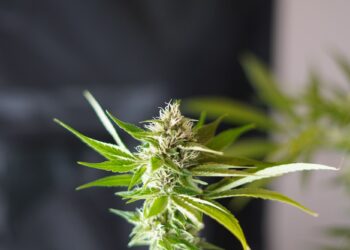
Since hemp became federally legal, many people have been trying “pure” cannabidiol (CBD) products, otherwise known as hemp-derived CBD. Granted, this kind of product is not likely to cause any “spacy feelings,” euphoria, or intoxication, but perhaps unknown to some CBD enthusiasts, the minute tetrahydrocannabinol (THC) that’s present in many products can trigger a positive result after a cannabis drug test.
CBD products are federally legal in the US when the CBD is derived from hemp. Note that for hemp to be considered legal in the US it needs to contain less than 0.3% THC.
It is easy to access hemp-derived CBD products throughout the US, either from physical stores or online vendors. Often, these products are labelled <0.3% THC, low/no THC, THC free, or non-detected THC. This may imply non-intoxicating effects and “no failed drug tests” .
In a recent study announced by researchers from John Hopkins University, even fractional (0.39%) amounts of THC in CBD products could trigger a failed drug test. In this case, a single vaping experience sufficed to trigger positive results for THC. [1]
Six participants were involved: 3 male and 3 female with an average age of 31 years. The participants were given 1 gram of cannabis containing 10.5% CBD and 0.39% THC to vaporize. The THC potency for this product would not be compliant as per federal regulations, so products with this level of THC shouldn’t make it to market in the first place. Therefore, it would be interesting to see more representative chemistries compared to the product studied. Pure CBD (crystalline) and a placebo were also introduced, both as vapor and capsules, as part of a “double dummy dosing procedure” and crossover design.
The standard cut off for THC testing in urine samples was used, namely a concentration of at least 50 nanograms per milliliter of THC metabolite (THC-COOH). Two study participants tested positive for the THC metabolite after inhaling the CBD-dominant vapor. There was one positive result for the pure CBD (out of 218 specimens) and no positive results for the placebo.
THC metabolites may build up in the system following subsequent use. This implies a higher risk for failing a drug test following regular use of products containing even small amounts.
Even though cannabis is legal in 33 states, it is still illegal at the federal level. Even in states with legal cannabis programs, some employers regularly screen for cannabis use and may use this as a basis for failure to hire or termination of employment.
The results of this study were published in the Journal of Analytical Toxicology. [1]
Image Source
ProjectManhattan, CC BY-SA 4.0
References
- Spindle TR, et al. Urinary pharmacokinetic profile of cannabinoids following administration of vaporized and oral cannabidiol and vaporized CBD-dominant cannabis. Journal of Analytical Toxicology. 2019;44:109-125. doi: 10.1093/jat/bkz080. [Impact Factor: 3.513; Times Cited: 3]