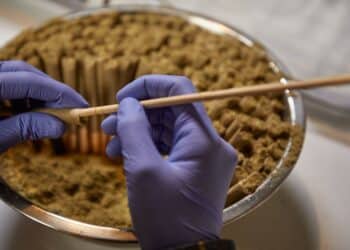

In a new study, researchers have identified that extraction protocols impact the final chemical profiles of cannabis extracts. They focused on comparing the results of four different extraction protocols used to collect extracts from the same cultivar. The first two were alcohol extraction methods, using either ethanol (EtOH) or isopropanol (IPA) for a 30-minute extraction. The other two were supercritical fluid CO2 extraction methods, where separator pressure settings (250 or 70 bar) were adjusted to distinguish between the two, and a 60-min cycle time was employed. [1]
It was noted that each extraction method produced unique chemical profiles in the final extract, despite all of the extracts being collected from the same cultivar (starting biomass phytochemical profiles were not provided). The cannabinoid content, terpene profiles, and the presence of other compounds in the extract varied. There were 41 compounds detected using gas chromatography-mass spectrometry. Of those 41 compounds, 33 were significantly different between extracts. These differences imply that certain extraction protocols are better than others for preferentially extracting specific cannabinoids, terpenes, or other beneficial compounds.
For example, the study authors report that “there is a trend of higher abundance of phytocannabinoids (including CBD [cannabidiol] and Δ9THC [tetrahydrocannabinol]) in the EtOH and IPA extracts compared to the supercritical CO2 fractions”. [1] This means that the alcohol extraction produced extracts with more total cannabinoids than supercritical CO2. These alcohol methods were also better at extracting the terpene alcohol, bisabolol.
That said, these were very small extraction experiments (e.g., 7-g of plant material) and do not necessarily reflect an industrial scale. Supercritical CO2 extraction, for example, can pull out 80+% of the total CBD (CBD and CBDA). Also, despite using the same cultivar as feed, there was considerable variance within a given set of data depicting peak areas used for assessing cannabinoid abundance, as evaluation of the study’s supplemental information highlights. For example, CBD peak areas detected using ultra-performance liquid chromatography combined with tandem mass spectrometry ranged from 718 to 1300 across five replicates, and from 641 to 992 for the supercritical CO2 70-bar separator replicates.
Both of the supercritical CO2 methods were better at producing more sitosterol. Sitosterol is a plant sterol with many known medical benefits. It is currently used in cancer treatments as well as cholesterol drugs. Being able to increase the production of sitosterol and other highly medicinal compounds magnifies the importance of these findings for creating products to be used for specific therapeutic applications.
Some of the variation can be explained by the polarity differences between the alcoholic and supercritical CO2 solvents. Other differences seem to defy polarity expectations. That said, there is sufficient evidence to show that cannabis extraction methods can be adjusted to manipulate the therapeutic benefits of the final extract. More research is needed to determine the exact mechanism of action that causes these changes. Until then, we can at least know that the extraction protocol we choose is going to impact the final content of the extract. Knowing which ones produce which compounds can help producers decide which process to start with based on their intended outcome.
Reference:
1- Bowen JK, Chaparro JM, McCorkle AM, et al. The impact of extraction protocol on the chemical profile of cannabis extracts from a single cultivar. Sci Rep.2021;11: https://doi.org/10.1038/s41598-021-01378-0 Times Cited: 1 Journal Impact Factor: 4.379