The importance of calibrating your equipment: how standard maintenance can save you money
Legally growing cannabis can be a costly endeavor. You’re required to invest in equipment, facilities, and people to prepare samples and run your instrumentation, whether in an extraction facility or in an analytical laboratory. Properly maintaining and calibrating said equipment is critical if you don’t want to bleed money. If your equipment doesn’t function properly, you may experience things like the attention of, and possibly fines or suspensions from industry regulators and oversight agencies, or failed extractions that amount to nothing more than squandered time and money.
Calibration, as Amanda Rigdon, formerly of Emerald Scientific, notes, is “truly the foundation of all quality data. Calibration is the basis for all measurement, and it is absolutely necessary for quantitative cannabis analyses including potency, residual solvents, terpenes, and pesticides.”
Obviously, in order to have faith in their outputs, you need to calibrate your instruments. Any results generate dare devoid of meaning if not traced to a known reference point. Your equipment might still function if it’s not calibrated, but you’re introducing an element of uncertainty.
Cannabis laboratories are often tasked with testing for everything from potency to contaminants that could cause harm, especially to someone with a compromised immune system. But what about outside of the lab?
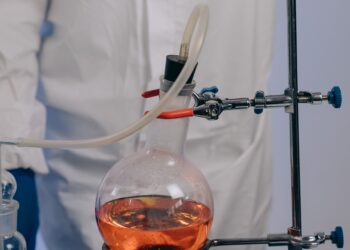
Cannabis extraction facilities also employ sophisticated equipment like a rotary evaporator, or a CO2 extractor, that use variables like pressure and temperature to capture solvents from products, or tune the extraction to different chemical constituents in the starting biomass, respectively. In order to properly set up this equipment, and know that the readings the device shows can be trusted, technicians must evaluate data acquired on the process, and the trends observed.
Thus, the take home message is that any piece of equipment used in generating a cannabis product, or to test that product analytically must be properly calibrated and the performance of that calibration must be monitored over time to ensure appropriate functionality. Professionals looking to break into the industry need to pay close attention to their equipment. Cannabis businesses are fighting against an unstable legal environment, massive restrictions, and years of long-standing social stigma. Combine this with the fact the many people getting involved in the production and testing of cannabis are inexperienced, especially when it comes to such a complex plant.
To stay on the right side of the law and to keep the business thriving, maintain your equipment. Lost batches due to improper equipment settings, suspensions due to a lack of compliance with regulatory codes, or failure to identify contaminants in cannabis due to improperly calibration analytical instrumentation damage the legitimacy of that cannabis business, and ultimately cost more than addressing proper quality assurance and control before the data is ever even acquired.