

How solvent is recycled in hydrocarbon extractions
The system of cannabis manufacturing has evolved significantly in recent years. When in times past it was more likely to think of disaster, pollution, and flames any time hydrocarbon extractions were brought up. Not to mention those home-made high-proof ethanol or other home-made experiments cannabis enthusiasts had thought up.
Today however, a very different environment exists. Much has evolved in the way of cannabis manufacturing since the days of open blasting. In states where the distribution and possession of cannabis is legal, a thriving extraction apparatus has grown to support the demands of the market.
These extractions all have in common the desire to remove cannabinoids and terpenes from the cultivated cellulose matrix of the cannabis plant and to concentrate it for heightened pharmacological activity and flavor. The ways extractors go about this depends on the method and solvent their company chooses to use.
Among the most popular and arguably cheapest extraction methods are a general category called hydrocarbon extractions, which use a range of small-molecule, non-polar solvents (composed solely of carbon and hydrogen) to solvate and extract the hydrophobic molecules of interest. The most common solvents in hydrocarbon extractions are propane, butane (n-butane), and pentane (isomeric mixture).
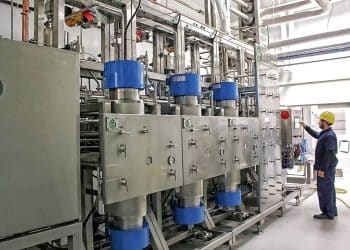
Professional, closed-loop extraction systems operate in a continuously-sealed chain of containers and tubes. The general principles are as follows. Pressured liquid solvent is sent onto a column filled with cannabis (sometimes called the ‘material’ column). It spends a few minutes soaking into the plant matrix. Then, the loaded solvent is transferred into a ‘collection’ column.
The purpose of the collecting column is to allow a separate space for the concentration of the extract via solvent evaporation. This also accomplishes the dual task of solvent recycling. In the industry this process is known as solvent being ‘reclaimed.’
To reclaim the solvent, the collection vessel’s temperature is maintained at a temperature higher than the boiling points of the solvent, usually via a condenser built into the column itself or by immersion in an exogenous water both. A line is then run through a molecular sieve (which uses diatomaceous earth particles to sponge-up and remove any moisture or alcohol from the evaporate) into a gas compressor and chiller, whose job it is to turn the incoming hot vapors back into liquid form.
The reclamation process can generally be very efficient, or less so, depending mostly on how tightly the cannabis is packed into the material column (i.e. residual solvent lost in the plant matrix) and how long the recycling step is allowed to proceed. Running the gas compressor takes up a lot of electrical power, and to go from 90% to 99% efficiency takes almost as long as it takes to get to 90% itself. These are all factors that a manufacturer will consider when determining their total acceptable loss.