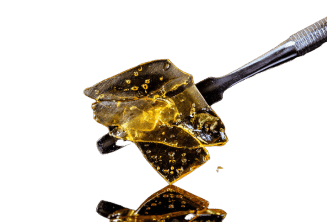


The cannabis industry has never been static. Over the past decade, it has transformed from a largely manual craft into a high-tech, precision-driven enterprise. Today, the most forward-thinking producers are harnessing the combined power of artificial intelligence (AI) and the Internet of Things (IoT) to elevate cannabis extraction to levels once unimaginable.
This technological leap is about more than incremental improvements. It’s about laying the groundwork for a new era of intelligent, fully automated process control that maximizes yield, enhances purity, and ensures consistent product quality—all while meeting the stringent regulatory demands unique to cannabis.
Market Momentum and Unprecedented Growth
According to Precedence Research, the North American cannabis extract market alone is projected to surge from $9.55 billion in 2024 to more than $50 billion by 2034, representing a staggering compound annual growth rate approaching 18%. This growth is fueled in large part by the promise of AI-driven efficiencies and IoT-enabled transparency.
Producers recognize that scaling operations without sacrificing quality demands real-time visibility into every step of extraction. The old paradigm—where operators manually monitored temperatures, pressures, and flow rates—is giving way to a future where machines learn, adapt, and optimize autonomously.
The AI Brain: Smarter Extraction Decisions
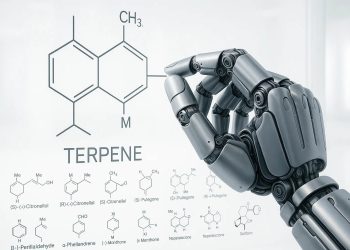
At the heart of this revolution lies AI, which transforms raw data into actionable insights. Machine learning algorithms now analyze vast streams of sensor data to optimize extraction in real time.
These intelligent systems monitor variables such as:
- Solvent ratios
- Temperature gradients
- Pressure curves
- Cannabinoid and terpene concentrations
- Equipment performance indicators
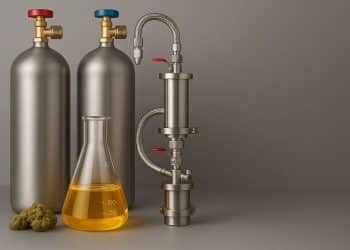
Imagine an extractor running a supercritical CO₂ system. Midway through the cycle, AI detects a drift in pressure that could degrade terpene profiles. Rather than waiting for a human operator to intervene, the system automatically adjusts pressure settings to maintain target parameters, preserving the delicate aromatic compounds consumers prize.
One of the most compelling examples comes from pharmaceutical cannabis processing, where AI-enhanced digital controls have been applied to one-step olive oil extraction. This approach not only reduced operator error but significantly improved cannabinoid reproducibility compared to traditional methods.
IoT: The Nervous System of Modern Facilities
While AI serves as the brain, IoT provides the nervous system that connects every component across the facility. IoT networks link thousands of sensors—measuring everything from equipment vibrations to solvent purity—to cloud-based platforms where data is aggregated and analyzed.
These IoT-enabled systems offer a suite of benefits:
- Real-time monitoring: Operators can view live dashboards showing the health of each extractor and environmental conditions.
- Automated alerts: If a sensor detects an anomaly—such as a sudden pH shift or temperature spike—alarms trigger instantaneously.
- Remote control: Technicians can adjust parameters from anywhere via secure interfaces.
- Regulatory compliance: Every action and data point is logged in immutable records, supporting audits and certifications.
For example, leading cannabis processors now employ IoT sensors similar to those used in smart agriculture, including electroconductivity and nutrient sensors. These devices feed continuous data streams into AI models that fine-tune extraction processes with unmatched precision.
Digital Twins: Simulating and Perfecting Extraction
One of the most transformative innovations is the deployment of digital twins—virtual replicas of physical extraction systems. These sophisticated models simulate the dynamic behavior of machinery, solvents, and plant materials under various conditions.
A digital twin can forecast how slight variations in biomass moisture content or solvent composition will impact yield and cannabinoid profiles. Operators can run “what-if” scenarios before ever touching the equipment, de-risking experimentation and improving process consistency.
By integrating AI, IoT, and digital twins into a single control framework, producers unlock a self-optimizing environment where predictive maintenance and adaptive workflows become routine.
Quality Control Reinvented with Hyperspectral Imaging
Quality assurance has always been a bottleneck in cannabis processing. Traditionally, verifying cannabinoid content or terpene profiles involved destructive sampling and lab analysis. Today, AI-powered hyperspectral imaging is changing that equation.
Hyperspectral systems capture rich spectral data across hundreds of wavelengths. Machine learning models analyze these data layers to detect subtle chemical signatures invisible to the human eye. In drying operations, hyperspectral imaging can predict cannabinoid content with exceptional accuracy.
Though still emerging in extraction, this technology shows promise for inline monitoring, potentially enabling real-time adjustments to optimize purity and potency without interrupting production.
Overcoming Adoption Challenges
Despite its clear advantages, implementing AI and IoT process control is not without challenges. Cannabis facilities must navigate:
- Integration complexity: Aligning legacy equipment, modern sensors, and cloud platforms requires careful planning.
- Validation requirements: Regulatory bodies demand documented evidence that automated systems perform reliably and consistently.
- Workforce adaptation: Teams must be trained to interpret data dashboards and collaborate with AI systems.
Yet these obstacles are far from insurmountable. Many cannabis producers view the investment as essential to maintain competitive advantages in efficiency, compliance, and product differentiation.
Early Success Stories and Industry Leaders
Several pioneering companies are already demonstrating the potential of AI and IoT integration. For instance:
- CloudBox developed a modular platform combining IoT sensors with AI algorithms to automate climate control, lighting, and extraction workflows.
- Cure8 introduced IoT-based RFID tracking systems to monitor inventory movements from cultivation to final packaging.
- GrowerIQ applied smart greenhouse automation principles to cannabis extraction, creating fully integrated environments that respond dynamically to real-time data.
These early adopters report not only cost reductions but also measurable gains in product consistency and speed to market.
Regulatory and Compliance Benefits
Regulatory scrutiny in cannabis is intense. Jurisdictions often require traceability of every batch, from raw material intake to packaged product. AI and IoT platforms make this possible through automated recordkeeping, tamper-proof logs, and detailed process histories.
Digital twins also support validation by demonstrating how systems respond under varying conditions, providing regulators with unprecedented transparency.
In many ways, compliance is no longer a burden but an opportunity to showcase the technological sophistication of an operation.
The Road Ahead: Toward Fully Autonomous Extraction
The trajectory of cannabis extraction mirrors broader trends in manufacturing and biotechnology. As AI models grow more sophisticated and IoT devices become more affordable, the future will likely bring:
- Closed-loop optimization: Fully autonomous extraction systems that learn and adapt without human intervention.
- Predictive maintenance: AI models that forecast equipment failures weeks in advance, preventing downtime.
- Mass customization: Dynamic process control that tailors extraction parameters to unique biomass profiles, enabling boutique product lines at scale.
This vision is not speculative—it is already unfolding in progressive facilities across North America and Europe.
Why Now Is the Time to Invest
For operators still relying on manual processes, the message is clear: the competitive gap is widening. As AI and IoT become the standard rather than the exception, late adopters risk falling behind on quality, efficiency, and regulatory compliance.
Investing in intelligent process control today is an investment in the future viability of any extraction business. It is a commitment to delivering premium products with the consistency and traceability that modern consumers—and regulators—demand.
Conclusion
AI and IoT are no longer futuristic concepts in cannabis extraction. They are here, delivering tangible results in yield, quality, and compliance. As these technologies mature, they will redefine what is possible, transforming extraction from a reactive process into a proactive, intelligent, and self-optimizing operation.
The only question that remains is how quickly the rest of the industry will catch up.
Sources
- Precedence Research – Cannabis Extract Market Analysis
- MDPI – Digital Process Control in Cannabis Olive Oil Extraction
- Cure8 – IoT in Cannabis Compliance
- CloudBox – IoT and AI in Cannabis Facilities
- GrowerIQ – IoT for Smart Cannabis Production
- Extraction Magazine – AI and Robotics in Extraction
- Frontiers in Plant Science – Hyperspectral Imaging and Machine Learning
- Nature – AI in Smart Agriculture
- ResearchGate – AI Applications in Cannabis
- CityGreens – IoT Nutrient and EC Control
- LinkedIn – AI Trends in Cannabis Production
- TandFOnline – Digital Twins and Process Optimization