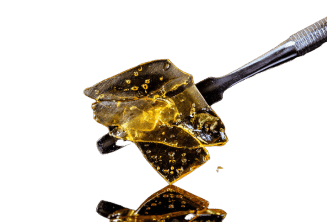

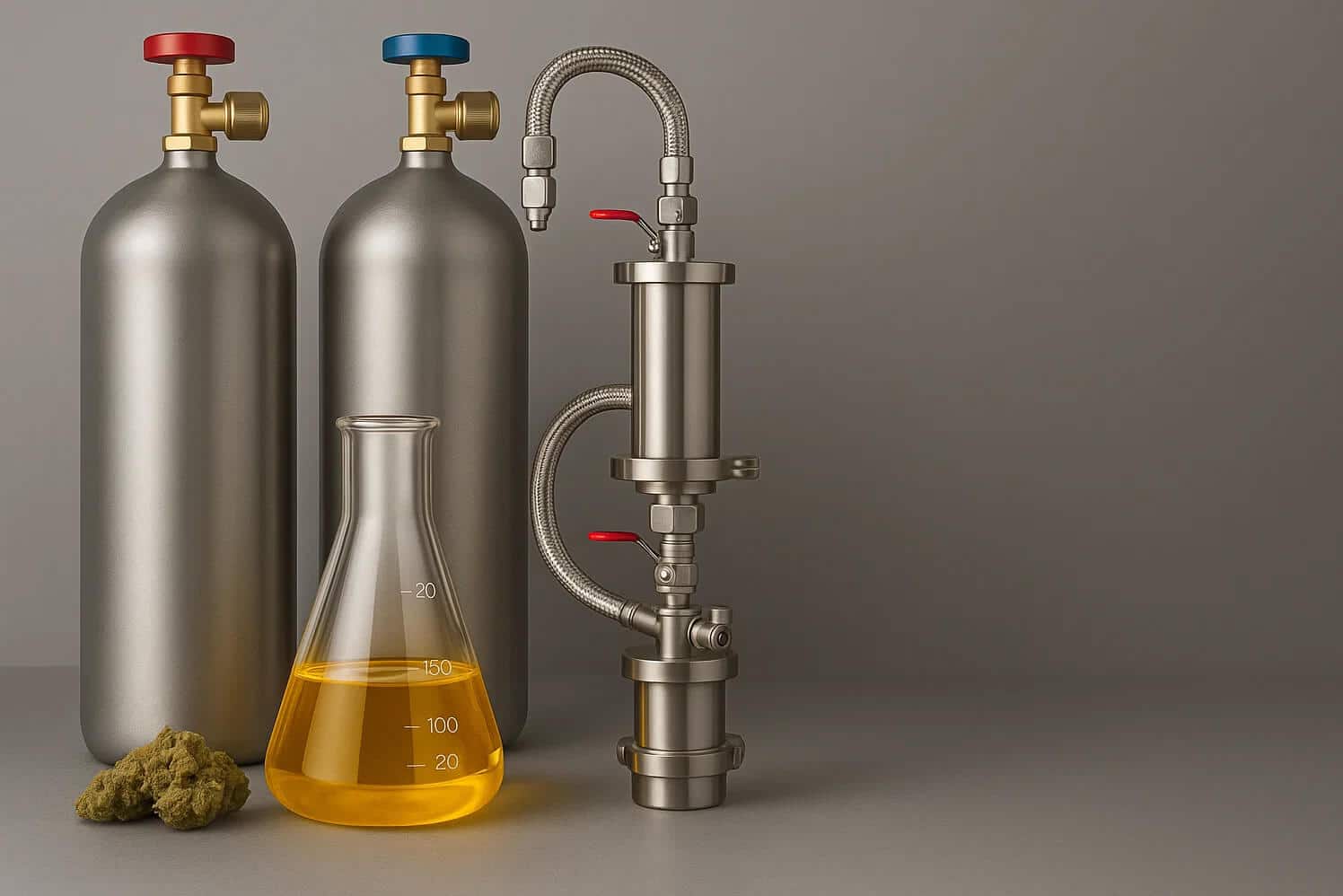
While CO₂ extraction has long been revered for its clean and solvent-free appeal, hydrocarbon and ethanol methods have staked their claim as dominant players—each offering unique benefits and drawbacks. In recent years, however, an intriguing trend has emerged: combining butane and ethanol in hybrid processes designed to capitalize on their complementary strengths.
This dual-solvent approach is driving innovation by improving selectivity, enhancing terpene retention, and optimizing throughput. In this article, we’ll explore how butane and ethanol can be strategically paired to achieve selective terpene capture and unlock new levels of product differentiation in cannabis extracts.
Understanding Solvent Selectivity: Butane and Ethanol Compared
Butane: The Terpene Guardian
Butane has earned its reputation as the solvent of choice for high-terpene extracts like live resin and sauce. As a non-polar hydrocarbon, butane exhibits strong selectivity for cannabinoids and terpenes while excluding many unwanted plant compounds.
Because of its low boiling point—around −0.5 °C—it can be purged at low temperatures, preserving the volatile aromatics that define each cannabis cultivar’s signature profile. Unlike ethanol, butane extraction at cryogenic temperatures minimizes co-extraction of chlorophyll, waxes, and plant sugars. The result is a potent, aromatic concentrate requiring minimal post-processing.
That said, butane’s advantages come with serious operational considerations. Its high flammability demands closed-loop extraction equipment, C1D1-certified environments, and rigorous safety protocols.
Ethanol: The Industrial Workhorse
Ethanol, in contrast, is a polar solvent capable of rapidly extracting a broad spectrum of compounds. It’s widely used in food-grade facilities for its scalability and throughput, easily processing hundreds of pounds of biomass per day. Ethanol is particularly effective in removing fats and lipids during extraction, reducing the need for winterization in some workflows.
However, ethanol’s polarity is a double-edged sword. While it excels at pulling cannabinoids, it also extracts chlorophyll, flavonoids, and water-soluble sugars. Even with cold extraction techniques, some chlorophyll contamination is inevitable, requiring additional filtration and decolorization steps.
Perhaps most critically for terpene enthusiasts, ethanol-based extractions can degrade delicate volatile compounds during solvent recovery. Evaporative methods like rotary evaporation or falling-film distillation often expose extracts to elevated temperatures, causing loss of aroma and flavor.
The Case for Selective Terpene Capture
Terpenes are more than just flavor and fragrance. These volatile organic compounds—such as myrcene, limonene, and pinene—contribute synergistic therapeutic effects that enhance the overall efficacy of cannabis extracts. As consumers become more sophisticated, demand for full-spectrum products rich in terpenes has surged.
Selective terpene capture is now a priority, driving extractors to refine techniques that protect these fragile molecules from degradation. Butane extraction shines in this regard. When performed at sub-zero temperatures under vacuum, butane can deliver exceptional terpene preservation unmatched by ethanol alone.
But the scalability and efficiency of ethanol are hard to ignore. This realization has inspired producers to combine both solvents into hybrid strategies that promise the best of both worlds.
Hybrid Extraction Strategies: Combining Strengths
Sequential Extraction
One effective approach involves a sequential process. The workflow typically begins with cold ethanol extraction to strip the bulk of cannabinoids and fats from the biomass. Because ethanol is efficient at dissolving cannabinoids, this stage produces a crude extract with high potency.
After the initial pass, the material is subjected to butane extraction under low temperatures. This second phase focuses on recovering terpene-rich fractions that might otherwise be lost in ethanol’s higher boiling point recovery process. The result is a highly purified concentrate with preserved aroma and flavor.
Sequential extraction offers multiple benefits:
- Improved selectivity: Ethanol removes the majority of cannabinoids and fats, reducing impurities before the butane phase.
- Enhanced terpene profile: Butane captures the delicate volatiles ethanol tends to degrade.
- Operational efficiency: Combining methods can optimize throughput without sacrificing quality.
Blended-Solvent Extraction
Another strategy involves blending butane and ethanol into a single solvent mixture. By tuning the ratio, extractors can adjust polarity to target specific compound groups. For example, a small proportion of ethanol in butane may improve extraction of certain minor cannabinoids while maintaining terpene selectivity.
However, blended-solvent approaches are complex and require precise control of solvent ratios, temperature, and pressure. Additionally, solvent recovery can be more challenging, as different boiling points necessitate carefully staged evaporation and condensation.
Engineering Considerations and Safety Protocols
Hybrid extraction systems are not plug-and-play. They demand a thorough understanding of process engineering, solvent handling, and regulatory compliance.
Key operational factors include:
- Solvent Containment: Closed-loop systems must be capable of safely containing both butane and ethanol vapors.
- Temperature Control: Low-temperature operation is essential for terpene preservation and to prevent solvent volatility.
- Solvent Recovery: Multistage recovery systems are necessary to separate and recycle solvents effectively.
- Material Compatibility: Extraction vessels and seals must resist degradation from repeated solvent exposure.
- Safety Protocols: Rigorous training, monitoring, and compliance with fire codes are non-negotiable.
Despite the complexities, these engineering investments can deliver significant returns in product quality and market differentiation.
Innovations in Solvent Technology
While butane and ethanol remain the mainstays of extraction, emerging solvents are gaining attention. One notable example is R134a, a fluorocarbon solvent known for its low toxicity and capacity to extract a broad terpene profile at room temperature. Early studies suggest that R134a may rival butane in terpene preservation without requiring deep cryogenic conditions.
Still, hydrocarbon and ethanol processes have the advantage of established regulatory frameworks and proven scalability. For producers aiming to balance innovation with operational reliability, combining butane and ethanol remains the most practical path to superior terpene capture.
Economic Considerations: Cost vs. Value
Producers weighing hybrid extraction strategies must consider not only solvent performance but also operational economics. Ethanol’s low cost and high throughput can reduce per-gram extraction expenses. Butane, though requiring more safety infrastructure, can justify higher costs by delivering premium, terpene-rich concentrates that command superior retail pricing.
In today’s competitive market, consumer demand increasingly favors products that preserve the plant’s natural aroma and therapeutic effects. Investing in selective terpene capture can translate directly to higher margins and brand differentiation.
Future Outlook: The Road Ahead for Hybrid Extraction
As the cannabis industry matures, extraction technologies will continue evolving toward more sophisticated and targeted processes. Combining butane and ethanol is just one example of how solvent strategies can be optimized for both efficiency and selectivity.
In the coming years, expect to see:
- Increased adoption of hybrid systems among mid- to large-scale producers.
- Greater automation and closed-loop controls to improve safety and consistency.
- Ongoing research into alternative solvents like fluorocarbons and novel hydrocarbons.
- Growing consumer awareness driving demand for full-spectrum, terpene-rich extracts.
Producers who invest in these capabilities now will be well-positioned to lead the market as expectations for quality and transparency continue to rise.
Butane + Ethanol: Selective Terpene Capture in Focus
Product Differentiation: Crafting a Signature Extract
One of the most compelling arguments for hybrid extraction is the ability to create truly differentiated products. While single-solvent extracts can produce consistent results, combining butane and ethanol empowers processors to fine-tune their output to meet niche consumer preferences.
Consider a producer crafting live resin cartridges. Using butane alone yields robust terpene preservation but may limit throughput and scalability. Ethanol alone offers speed but sacrifices some aroma complexity. By sequencing ethanol extraction for the cannabinoid fraction and finishing with butane to capture the terpenes, the producer can design a concentrate that is:
- Highly potent
- Rich in native terpene profiles
- Cleaner, requiring fewer post-processing steps
- Scalable to commercial volumes
This approach not only maximizes yield and quality but also supports transparent labeling, allowing brands to communicate exactly how each extract was made.
Overcoming Challenges in Hybrid Extraction
Solvent Management
One of the biggest operational hurdles is solvent management. Both ethanol and butane require specialized storage and handling. Butane must be stored under pressure in certified vessels, while ethanol storage is subject to strict fire code requirements. Implementing a system that accommodates both solvents demands:
- Separate storage tanks with dedicated recovery lines
- Precise solvent tracking to avoid cross-contamination
- Regular maintenance to prevent leaks and ensure compliance
Equipment Considerations
Hybrid extraction setups typically integrate multiple modules, such as:
- Ethanol extraction vessels for bulk cannabinoid removal
- Butane columns for terpene capture
- Cold traps and condensing coils
- Vacuum ovens or purging chambers
- Solvent recovery tanks and pumps
Each component must be engineered to withstand solvent exposure and meet stringent safety standards. Producers often partner with equipment manufacturers who can customize systems for hybrid workflows.
Regulatory Compliance
Cannabis extraction is heavily regulated. Operators must adhere to state and federal guidelines governing:
- Solvent storage and use
- Equipment certifications (UL-listed, ASME-rated)
- Worker safety and training
- Fire suppression and emergency response
Adding complexity with hybrid extraction underscores the need for meticulous documentation and compliance management.
Optimizing the Workflow for Maximum Terpene Retention
To maximize terpene capture, hybrid extraction workflows emphasize:
- Low-Temperature Operation: Sub-zero temperatures slow terpene degradation and improve selectivity.
- Vacuum-Assisted Solvent Recovery: Reducing pressure lowers boiling points, enabling solvent removal without heating.
- Minimal Exposure to Air: Oxygen can oxidize sensitive volatiles; closed systems mitigate this risk.
- Short Processing Times: The faster the extraction and purge cycles, the more aromatics remain intact.
Some producers also use nitrogen blanketing during solvent recovery to further protect the extract from oxidation.
Case Studies: Success Stories in Hybrid Extraction
Example 1: Live Resin Production
A mid-sized extractor in California implemented sequential ethanol-butane extraction to create live resin vape cartridges. By first performing a cold ethanol wash to remove cannabinoids, then running a butane pass for terpene capture, the operator reported:
- A 20% increase in total terpene content
- A reduction in chlorophyll contamination
- A higher consumer rating for flavor and aroma
Example 2: High-Volume Distillate Manufacturing
A Colorado facility combined ethanol’s throughput with a butane finishing step to craft distillate with reintroduced native terpenes. This approach enabled large-batch processing without sacrificing product character.
These case studies highlight the adaptability of hybrid extraction for varied production goals, from artisanal concentrates to industrial-scale distillate.
Emerging Solvents: The Next Frontier
While butane and ethanol are the backbone of today’s extraction operations, emerging solvents are beginning to attract attention. Among them:
- R134a: A fluorocarbon solvent praised for its low toxicity and exceptional terpene preservation. Early adopters report clean extracts with minimal post-processing.
- Dimethyl Ether (DME): Another promising candidate, offering high selectivity and low environmental impact.
- Hydrocarbon Blends: New ratios of propane and butane are being experimented with to fine-tune extraction performance.
However, regulatory frameworks around these solvents are still evolving. For most operators, ethanol and butane remain the most reliable and scalable options.
Conclusion: Navigating the Path to Premium Extracts
The cannabis market is evolving rapidly, and consumers are increasingly discerning. Full-spectrum, terpene-rich extracts have moved from novelty to necessity for brands seeking to stand out. By embracing hybrid extraction strategies that combine butane’s selectivity with ethanol’s efficiency, producers can meet this demand with innovative, differentiated products.
While hybrid extraction introduces operational complexity and requires significant investment in equipment and training, the payoff is clear: higher-quality concentrates, improved yields, and stronger market positioning.
For operators willing to commit to best practices in engineering, safety, and compliance, the fusion of butane and ethanol represents the next frontier of cannabis extraction—one where science and artistry converge to preserve the plant’s full potential.