
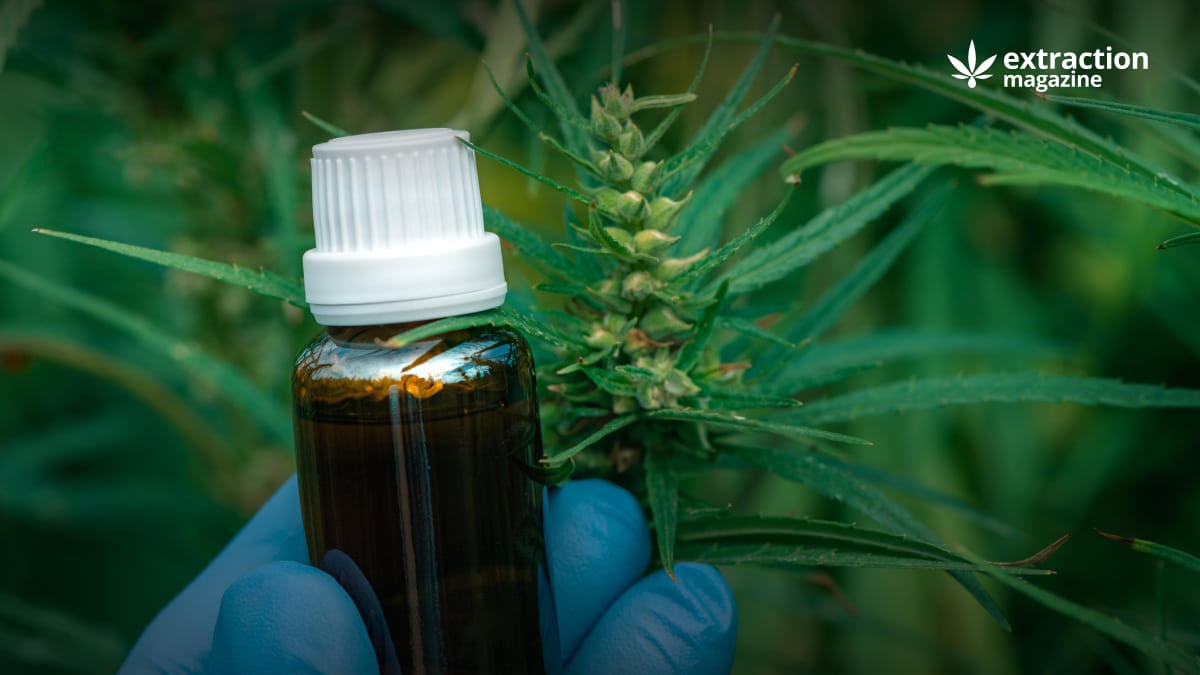
The cannabis essential oil is one of the most promising in terms of market expansion and the industrial potential. Derived from industrial hemp with less than 0.2% of tetrahydrocannabinol (THC), this oil has already proven useful in the cosmetic and food industries.
Cannabis essential oil is mainly composed of volatile substances, mainly monoterpenes, sesquiterpenes and other terpene-like substances.
There is still very limited data on what effects cannabis essential oil may have on the brain. Evidence suggests there may be positive effects, but could there be negative consequences as well?
Emotional Changes
The area with the largest potential for medical benefit resides in emotional response. The psychoactive effects of cannabis have been well documented, but those effects could produce chemical changes that lead to emotional responses. The most obvious comes in the form of mood elevation. Inhalation of cannabis essential oil provides near instantaneous temperament improvement. This has the potential to serve patients who suffer from depression or anxiety, but may serve the population more generally as well. One compound responsible for this beneficial effect is the terpene limonene, which has demonstrated similar uplifting benefits in mice.
In a related vein, many cannabis users report using cannabis to help stimulate relaxation or sleep. Meaning cannabis essential oil may make subjects happier, but also more physically comfortable to the point of stimulating somnolence. One theory for this is that cannabis essential oil can act as an analgesic. Pain relief alone is not enough to be conducive to sleep or relaxation, but it may signal physical responses that help to facilitate these. These physical effects would be in addition to the other emotional reactions coming both from cannabinoids and terpenes. Cannabis essential oil can also produce calming and energizing effects. This may be attributed to other terpene compounds found within the cannabis oil, specifically myrcene and β-caryophyllene, which demonstrate these results in mice.
All of these emotional outcomes would ultimately be seen as beneficial to various users. Increased well-being, relaxation, and pain relief are difficult to argue against. The only issue may lie in the potential for abuse, but that would fall to individual users and may not represent the population as a whole.
The Nervous and Digestive Systems
In addition to the emotional reactions, cannabis essential oil may stimulate various responses throughout the rest of the body. These are most noticeable in both the nervous system and the digestive system. Following the inhalation of cannabis essential oil, 60% of subjects tested saw increased heart rate, but at the same time 80% of the same subjects saw a drop in diastolic blood pressure.
The most likely terpene responsible for these reactions, pinene, has been shown to elicit responses both the autonomic nervous system and parasympathetic nervous systems. This is because pinene has the potential to inhibit acetylcholinesterase, which may account for the drop in diastolic blood pressure. This evidence is corollary though, and more data is needed at this time to confirm this finding. The other major change within the nervous system came from body temperature rising.
While these effects to the physical body appear to be minor, they may represent a more sinister problem. Any substance that has the potential to alter heart rate or blood pressure could exacerbate conditions related to heart health or could induce feelings of panic. In the case of the digestive system, the primary consequence of cannabis essential oil use is an increase in appetite. This does not present a major health concern, but this may be a negative for certain users. For others, like cancer or HIV patients who may lose their appetite as a side effect of their medications, this essential oil may serve a powerful medicinal benefit.
EEG Results
Mapping electroencephalogram (EEG) changes provides the most accurate picture of how cannabis essential oils stimulate changes in brain activity. One study measured changes across α, β 1, β 2, δ, and θ frequency bands to determine changes in amplitude and relative power. the study found various changes to the effects of brain waves in various parts of the brain, but what does this signify? Following the inhalation of cannabis essential oils, the changes to the EEG were similar to individuals who practiced meditation, yoga, or other mindfulness practices. This is especially prominent with the increases in both α and θ frequency bands, but this also can produce additional medical benefits. Long form meditation has been shown to increase levels of serotonin, noradrenaline, melatonin, dopamine, and cortisol in its practitioners. When comparing this to the emotional responses provided by various terpenes, the results are promising.
Each of these hormones can produce similar effects as the terpenes including pain relief, mood elevation, relaxation, well-being, and drowsiness. Evidence is still inconclusive about how much of a role the cannabinoids play compared to the terpenes, but it could be the case that the two augment and elevate the effects of the other. What the EEG results prove is that there is an additional benefit to cannabis essential oils beyond just relying on the terpenes alone. What the study concluded is that there is very strong evidence that cannabis essential oil can serve a purpose in treatments for anxiety and depression related disorders. This study is only preliminary and encourages more research to be done to confirm the data with larger sample size.
References:
- Baser, K. H. C., & Buchbauer, G. (2009). Handbook of essential oils: science, technology, and applications. CRC press.
- Crini, Grégorio, et al. “Applications of hemp in textiles, paper industry, insulation and building materials, horticulture, animal nutrition, food and beverages, nutraceuticals, cosmetics and hygiene, medicine, agrochemistry, energy production and environment: A review.” Environmental Chemistry Letters 18.5 (2020): 1451-1476.
- Farinon, Barbara, et al. “The seed of industrial hemp (Cannabis sativa L.): Nutritional quality and potential functionality for human health and nutrition.” Nutrients 12.7 (2020): 1935.
- Castañeda, Judy. “User perspectives on cannabis and SSRIs as treatment for depression.” Drugs and Alcohol Today 20.1 (2020): 74-83.
- Komiya, Migiwa, Takashi Takeuchi, and Etsumori Harada. “Lemon oil vapor causes an anti-stress effect via modulating the 5-HT and DA activities in mice.” Behavioural brain research 172.2 (2006): 240-249.
- Green, B. O. B., David Kavanagh, and Ross Young. “Being stoned: a review of self‐reported cannabis effects.” Drug and alcohol review 22.4 (2003): 453-460.
- Babson, Kimberly A., James Sottile, and Danielle Morabito. “Cannabis, cannabinoids, and sleep: a review of the literature.” Current psychiatry reports 19 (2017): 1-12.
- Jefferson, Delroy A., et al. “Postoperative analgesia in the Jamaican cannabis user.” Journal of Psychoactive Drugs 45.3 (2013): 227-232.
- Voruganti, Lakshmi NP, et al. “Cannabis induced dopamine release: an in-vivo SPECT study.” Psychiatry Research: Neuroimaging 107.3 (2001): 173-177.
- Bruijnzeel, Adriaan W., et al. “Behavioral characterization of the effects of cannabis smoke and anandamide in rats.” PloS one 11.4 (2016): e0153327.
- Surendran, Shelini, et al. “Myrcene—what are the potential health benefits of this flavouring and aroma agent?.” Frontiers in nutrition 8 (2021): 699666.
- Leonhardt, Valeria, et al. “Antispasmodic effects of essential oil of Pterodon polygalaeflorus and its main constituent β‐caryophyllene on rat isolated ileum.” Fundamental & clinical pharmacology 24.6 (2010): 749-758.
- Brands, Bruna, et al. “Acute and residual effects of smoked cannabis: Impact on driving speed and lateral control, heart rate, and self-reported drug effects.” Drug and alcohol dependence 205 (2019): 107641.
- Alshaarawy, Omayma, and Hosam A. Elbaz. “Cannabis use and blood pressure levels: United States national health and nutrition examination survey, 2005–2012.” Journal of hypertension 34.8 (2016): 1507.
- Politeo, Olivera, et al. “Chemical composition and evaluation of acetylcholinesterase inhibition and antioxidant activity of essential oil from Dalmatian endemic species Pinus nigra Arnold ssp. dalmatica (Vis.) Franco.” J. Med. Plants Res 5.30 (2011): 6590-6596.
- Jones, Reese T., NEAL L. BENOWITZ, and Ronald I. Herning. “Clinical relevance of cannabis tolerance and dependence.” The Journal of Clinical Pharmacology 21.S1 (1981): 143S-152S.
- Riggs, Patricia K., et al. “A pilot study of the effects of cannabis on appetite hormones in HIV-infected adult men.” Brain research 1431 (2012): 46-52.
- Gulluni, Nadia, et al. “Cannabis essential oil: A preliminary study for the evaluation of the brain effects.” Evidence-based Complementary and Alternative Medicine: eCAM 2018 (2018).
- Takahashi, Tetsuya, et al. “Changes in EEG and autonomic nervous activity during meditation and their association with personality traits.” International Journal of Psychophysiology 55.2 (2005): 199-207.
Bujatti, M., and P. Biederer. “Serotonin, noradrenaline, dopamine metabolites in transcendental meditation-technique.” Journal of Neural Transmission 39.3 (1976): 257-267.