• Advertise
  • Contact Us
  • Write For Us
  • Our Team
Extraction Magazine
No Result
View All Result
  • Botanical Extraction
    • Cannabinoids
    • Psychedelics
    • Nutraceutical
    • Product Refinement
  • Industry News
    • Business
    • Sustainability
    • Safety & Compliance
    • Partners
  • Extraction Technology
    • Equipment
    • Methods
    • Solvents
    • DIY Extraction
    • Analytical Techniques
  • Medical Research
  • Glossary
  • Business Directory
No Result
View All Result
Extraction Magazine
No Result
View All Result
Home Botanical Extraction

Crystallization of THCA

Extraction Magazine by Extraction Magazine
May 9, 2019
in Botanical Extraction, Cannabinoids, Extraction Technology, Methods
Crystallization of THCA

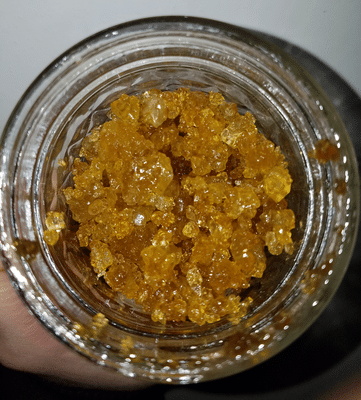
Crystalline THCA is a product of growing popularity due to its potential to reach extremely high potencies. There’s even been a submitted patent to trademark a particular method for obtaining it. [1] The basic idea of this product probably came as a result of the technique for making shatter or other full spectrum extracts; it essentially uses the same appliances and materials, but the extract is instead subjected to different conditions to induce crystallization, and we will talk about what those conditions are below.

Ed Rosenthal, author of Beyond Buds, has recently explored these products in a potent online expose. As he points out, Diamond Mining, or Jar Tech, is really a derivative of the basic organic chemistry concept called “Recrystallization”. Applying those techniques to full spectrum extracts, or Live Resin, is the key to learning how to crystallize THC-A, or its decarboxylated and activated derivative, THC.

READ ALSO

Will Cannabis Extractors Need Quality Departments Like Food Manufacturers?

What Cannabis Manufacturers Can Learn from Food Processing

When growing crystals, there are two concurrent processes that are kept in balance. Growth is the term that defines the rate at which individual crystals that are formed become larger. It depends on how soluble the desired molecule is in the solvent it’s dissolved in, and on the amount of impurities that are in the solution alongside it. Nucleation determines how quickly new crystal “seeds” are formed in the container.

The way to induce crystallization is to lower a mixture below the freezing point of a particular constituent that can then precipitate out of solution as a solid. [2] The effect that this “undercooling” has on the type of crystals that are formed depends in part on how far below the freezing point the solution is driven down (ΔT), and in part by how fast that cooling temperature is applied and transferred to the solution (ΔT/Δt).

These factors can be thought of as putting a “crystallization pressure” on the dissolved compound, and they affect crystallizations by influencing whether Growth or Nucleation becomes the more important factor. At small to moderate values of (ΔT) and/or (ΔT/Δt), the “pressure” to crystallize can be thought of as being small. The Growth factor dominates Nucleation in the equilibrium that exists between the two, and the conditions favor the formation of few, but large, crystals. When the temperature is dropped either quickly or by a large amount, there is a much stronger drive towards crystallization, and Nucleation becomes much more important in the formation of crystals, leading to many small crystals being formed.

References

  1. Dibble, Clare J. and Cole, Isaac B. “Methods for Obtaining Purified Cannabis Extracts and THCA Crystals”. US Patent number US20170008870A1. Accessed May 1, 2019.
  2. Shea, Thomas and Hammer, Julia E. “Kinetics of cooling- and decompression-induced crystallization in hydrous mafic-intermediate magmas”. J Volcan Geotherm Res. 2013; 260: 127-145 [Times cited = 44, Journal impact factor = 1.483].

Image Credit: Ed Rosenthal.com
Related Posts

Will Cannabis Extractors Need Quality Departments Like Food Manufacturers?
Botanical Extraction

Will Cannabis Extractors Need Quality Departments Like Food Manufacturers?

October 20, 2026
What Cannabis Manufacturers Can Learn from Food Processing
Botanical Extraction

What Cannabis Manufacturers Can Learn from Food Processing

October 16, 2026
Empty executive conference room prepared for an industry roundtable on extraction regulation and manufacturing compliance.
Extraction Technology

Executive Roundtable: Industry Leaders Predict the Next Five Years of Extraction Regulation

October 12, 2026
Hemp-derived CBD oil and topical product containers displayed with hemp leaves on a wooden platform
Industry News

What Happens if Hemp-Derived THC Products Face New Federal Restrictions?

October 6, 2026
Large-scale hemp cultivation facility with rows of cannabis plants under greenhouse lighting
Botanical Extraction

How the 2018 Farm Bill Created Today’s Hemp Industry

October 6, 2026
Cannabis leaves and cookies representing cannabinoid-infused consumer food products
Botanical Extraction

Could FDA Become the Primary Regulator of Consumable Cannabinoids?

October 2, 2026
Next Post
Geocann Introduces Patent-Protected VESIsorb® Formulated Cannabis Products to the Global Marketplace

Geocann Introduces Patent-Protected VESIsorb® Formulated Cannabis Products to the Global Marketplace

Sitemap

© 2026 Extraction Magazine is the trusted provider of botanical extraction news and the leading media in the ever-changing extraction industry.

No Result
View All Result
  • Industry News
  • Botanical Extraction
  • Medical Research
  • Medical Research
  • Glossary
  • Our Team
  • Write For Us

© 2026 Extraction Magazine is the trusted provider of botanical extraction news and the leading media in the ever-changing extraction industry.