
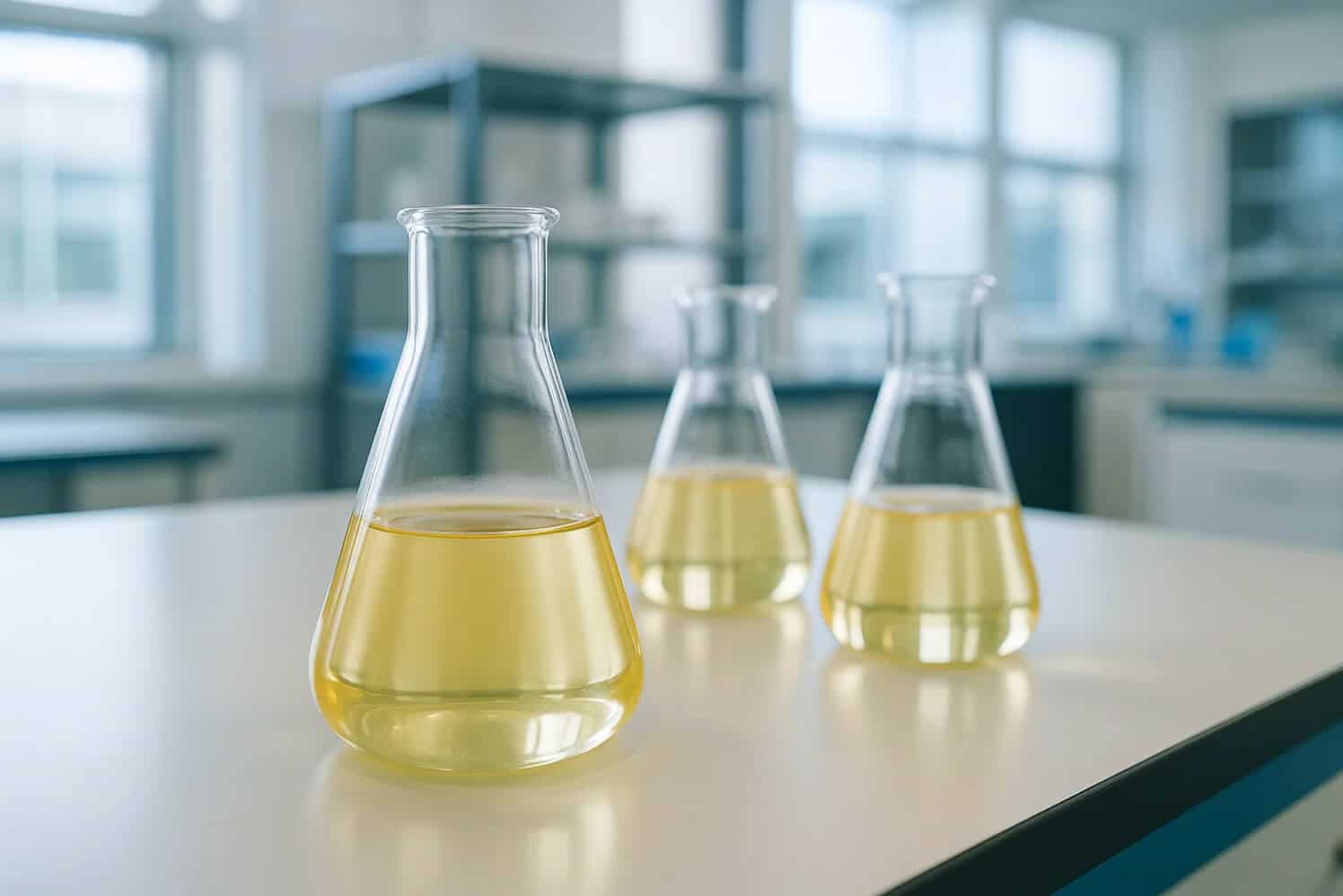
What if the solution to chemistry’s biggest environmental challenge was hiding in your kitchen cabinet? That’s exactly what researchers discovered when they realized that simple household compounds—sugar, salt, even honey—could be combined to create revolutionary solvents that outperform toxic chemicals while being completely biodegradable.
A pharmaceutical company in Switzerland was facing a crisis. Environmental regulations were tightening around their solvent-intensive manufacturing processes, threatening to shut down production lines worth millions in annual revenue. Traditional organic solvents were becoming liability nightmares—toxic, expensive to dispose of, and increasingly restricted by regulators.
Then their research team discovered Deep Eutectic Solvents (DES). Within six months, they had replaced 80% of their toxic solvents with biodegradable alternatives made from common food ingredients. Production efficiency actually improved. Waste disposal costs dropped by 90%. Regulatory compliance became routine instead of a constant battle.
Welcome to the deep eutectic revolution—where green chemistry isn’t just about doing less harm, but about doing more good.
The Toxic Legacy That Poisoned Progress
For over a century, industrial chemistry has depended on a dirty secret: most of our most effective solvents are environmental disasters waiting to happen. The statistics paint a sobering picture:
Traditional Solvent Problems:
- Over 20 million tons of organic solvents used globally each year
- 60-80% of pharmaceutical manufacturing waste consists of solvents
- Solvent disposal costs average $2,000-8,000 per ton
- Volatile organic compounds (VOCs) contribute significantly to air pollution
- Many traditional solvents are carcinogenic, mutagenic, or reproductive toxins
The industry knew change was inevitable. Environmental regulations were tightening. Consumer awareness was growing. Insurance costs for toxic chemical handling were skyrocketing. But the alternatives seemed inadequate—until deep eutectic solvents changed everything.
The Kitchen Cabinet Discovery
The breakthrough came from an unexpected place: food science. Researchers studying natural preservation methods noticed something remarkable about certain combinations of common compounds. When choline chloride (a vitamin-like nutrient) was mixed with urea (a common fertilizer component) in specific ratios, something extraordinary happened.
The mixture didn’t just dissolve—it created an entirely new liquid phase with properties unlike either parent compound. The melting point dropped dramatically. The viscosity became workable. Most importantly, the resulting liquid could dissolve materials that had previously required harsh chemicals.
The Science Behind the Magic: Deep Eutectic Solvents form when two or more solid compounds combine to create a liquid mixture with a melting point significantly lower than either component. This happens through hydrogen bonding networks that stabilize the liquid phase, creating solvents with tunable properties.
Key Characteristics:
- Non-volatile: No toxic vapors during use
- Non-flammable: Enhanced safety profiles compared to organic solvents
- Biodegradable: Break down into harmless natural compounds
- Tunable properties: Customizable for specific applications
- Cost-effective: Made from abundant, inexpensive materials
The Numbers That Shocked the Industry
Recent comparative studies have documented remarkable performance improvements when deep eutectic solvents replace traditional alternatives:
Environmental Impact Reductions:
- 95-99% reduction in toxic waste generation
- 80-90% decrease in volatile organic compound emissions
- 60-85% reduction in overall environmental footprint
- Complete elimination of hazardous air pollutants in many applications
Economic Benefits:
- 40-70% reduction in solvent costs for many applications
- 80-95% reduction in waste disposal expenses
- 50-75% decrease in regulatory compliance costs
- 25-40% reduction in insurance premiums for chemical handling
Performance Metrics:
- Extraction efficiency matching or exceeding traditional solvents
- Enhanced selectivity for target compounds
- Improved product purity in many applications
- Reduced processing temperatures and energy requirements
These aren’t theoretical projections—they’re being achieved in commercial operations right now.
Real-World Transformations: Industry by Industry
Pharmaceutical Manufacturing: The Early Revolution
The pharmaceutical industry, facing intense regulatory pressure and rising environmental compliance costs, became the first major adopter of deep eutectic solvents.
Case Study: API Synthesis A major pharmaceutical manufacturer in Ireland replaced dichloromethane and other chlorinated solvents with choline chloride-based DES systems for active pharmaceutical ingredient (API) synthesis. Results included:
- 90% reduction in hazardous waste generation
- Improved reaction selectivity leading to higher yields
- Simplified downstream processing and purification
- $2.3 million annual savings in waste disposal and compliance costs
The technology proved particularly valuable for companies manufacturing generic drugs, where cost pressures demand maximum efficiency while maintaining strict quality standards.
Natural Products Extraction: Beyond Traditional Methods
The natural products industry discovered that deep eutectic solvents could extract bioactive compounds more effectively than traditional methods while eliminating environmental concerns.
Botanical Extraction Revolution: Companies extracting compounds from herbs, spices, and medicinal plants report remarkable improvements:
- Antioxidant extraction rates 150-300% higher than conventional solvents
- Complete preservation of heat-sensitive compounds
- Elimination of solvent residues in final products
- Ability to extract previously inaccessible polar compounds
One European botanical extract manufacturer reports processing rosemary with choline chloride-glycerol DES systems, achieving antioxidant concentrations 250% higher than traditional ethanol extraction while producing food-grade extracts with no solvent residues.
Food and Beverage Processing: Clean Label Revolution
The food industry’s clean label movement found perfect alignment with deep eutectic solvents’ natural composition and food-grade safety profiles.
Flavor and Fragrance Applications:
- Essential oil extraction without petroleum-based solvents
- Natural color extraction maintaining stability and intensity
- Flavor compound isolation preserving organoleptic properties
- Processing aids that require no label declaration
Food processors report that DES-extracted natural colors show 40-60% better stability than conventionally extracted alternatives, while meeting clean label requirements without compromise.
Textile and Leather Processing: Sustainable Manufacturing
Traditional textile processing relies heavily on toxic solvents for dyeing, finishing, and chemical treatments. Deep eutectic solvents are transforming these processes:
Sustainable Textile Innovation:
- Dye solubilization without volatile organic compounds
- Fiber treatment processes eliminating formaldehyde and other toxins
- Leather processing without chromium-based chemicals
- Water-free or reduced-water processing options
A textile manufacturer in Bangladesh replaced 70% of their traditional solvents with DES systems, reducing environmental compliance costs by $400,000 annually while improving worker safety and product quality.
Electronics Manufacturing: Clean Technology
The electronics industry uses massive quantities of solvents for cleaning, etching, and component manufacturing. DES systems are proving viable alternatives:
Circuit Board Manufacturing:
- Flux removal without chlorinated solvents
- Metal etching with recyclable, non-toxic systems
- Component cleaning eliminating volatile emissions
- Simplified waste management and disposal
The Science Deep Dive: Understanding Eutectic Behavior
To appreciate why deep eutectic solvents work so effectively, it’s essential to understand the underlying science:
Molecular Interactions
Deep eutectic solvents form through specific molecular interactions between hydrogen bond donors and acceptors:
Common Hydrogen Bond Donors:
- Urea and thiourea
- Organic acids (lactic acid, citric acid, malonic acid)
- Sugars and polyols (glycerol, ethylene glycol)
- Amino acids
Common Hydrogen Bond Acceptors:
- Choline chloride and related quaternary ammonium salts
- Metal halides (zinc chloride, aluminum chloride)
- Carboxylic acid salts
Formation Mechanism: When mixed in optimal ratios, these compounds form extensive hydrogen bonding networks that stabilize a liquid phase at temperatures well below the melting points of individual components. This creates solvents with unique properties combining aspects of both ionic liquids and molecular solvents.
Tunable Properties
One of DES systems’ most valuable characteristics is their tunability. By varying the components and ratios, chemists can design solvents with specific properties:
Polarity Control: Selecting appropriate hydrogen bond donors and acceptors allows precise polarity adjustment for specific extraction or reaction requirements.
Viscosity Management: Component ratios and molecular structures directly influence viscosity, allowing optimization for processing conditions.
Temperature Stability: Different DES formulations remain stable across varying temperature ranges, enabling optimization for specific thermal conditions.
Selectivity Enhancement: Molecular recognition effects can be built into DES systems, providing enhanced selectivity for target compounds.
Technical Challenges and Solutions
Despite impressive advantages, deep eutectic solvents face specific technical challenges:
Viscosity Management
Challenge: Many DES systems exhibit higher viscosities than traditional solvents, potentially affecting mass transfer and processing rates.
Solutions:
- Temperature optimization to reduce viscosity
- Addition of water or co-solvents to adjust rheological properties
- Process design modifications to accommodate higher viscosities
- Development of low-viscosity DES formulations
Water Sensitivity
Challenge: Some deep eutectic solvents are sensitive to water absorption, which can affect properties and performance.
Solutions:
- Moisture control systems in processing environments
- Formulation modifications to reduce hygroscopicity
- Development of water-tolerant DES systems
- Integration of dehydration steps in processing protocols
Scale-Up Considerations
Challenge: Laboratory-scale successes don’t always translate directly to commercial-scale operations.
Solutions:
- Pilot-scale testing programs before full commercial implementation
- Process engineering optimization for large-scale production
- Quality control systems ensuring consistent DES preparation
- Supplier development for reliable raw material sourcing
Analytical Method Development
Challenge: Traditional analytical methods may require modification for DES-based systems.
Solutions:
- Development of DES-specific analytical protocols
- Validation of existing methods for DES compatibility
- Investment in analytical equipment suitable for DES analysis
- Training programs for analytical personnel
Innovation Pipeline: Next-Generation Developments
The deep eutectic solvent field continues evolving rapidly with exciting developments on the horizon:
Advanced Formulations
Therapeutic Deep Eutectic Solvents (THEDES): Combining active pharmaceutical ingredients with DES-forming compounds to create liquid drug formulations with enhanced bioavailability.
Natural Deep Eutectic Solvents (NADES): Formulations using only naturally occurring compounds, expanding applications in food, cosmetics, and pharmaceutical industries.
Hydrophobic Deep Eutectic Solvents: Development of water-immiscible DES systems for applications requiring organic solvent-like behavior.
Smart DES Systems
Temperature-Responsive Solvents: DES formulations that change properties with temperature, enabling switchable extraction and separation processes.
pH-Switchable Systems: Solvents that respond to pH changes, allowing easy separation and recovery of extracted compounds.
Magnetic Deep Eutectic Solvents: Incorporation of magnetic components for easy separation and recovery using magnetic fields.
Process Integration Technologies
Continuous Processing: Development of continuous flow systems using DES for pharmaceutical and chemical manufacturing.
Membrane Integration: Combining DES with membrane technologies for enhanced separation and purification processes.
Microwave Enhancement: Integration of microwave heating with DES systems for accelerated processing.
Future Market Evolution and Predictions
Technology Development Trajectories
Next 2-3 Years:
- Standardization of common DES formulations
- Development of industrial-scale supply chains
- Regulatory approval for major pharmaceutical and food applications
- Cost reductions through scale economies
5-10 Year Horizon:
- Integration with artificial intelligence for automated DES design
- Development of closed-loop, zero-waste processing systems
- Expansion into specialized applications (semiconductors, advanced materials)
- International standardization and harmonization of regulations
Long-term Vision (10+ Years):
- Deep eutectic solvents becoming default choice for new process development
- Complete replacement of toxic solvents in many industries
- Integration with biotechnology for bio-based chemical manufacturing
- Circular economy applications using waste materials as DES components
Market Disruption Potential
Industries Most Likely to Transform:
- Pharmaceutical Manufacturing: Regulatory pressure and cost benefits driving rapid adoption
- Natural Products Extraction: Perfect alignment with clean label trends
- Electronics Manufacturing: Environmental regulations forcing solvent alternatives
- Textile Processing: Sustainability demands and worker safety concerns
- Food Processing: Consumer preferences for natural ingredients
Competitive Dynamics:
- Early adopters establishing competitive advantages
- Traditional solvent suppliers investing in DES capabilities
- New companies emerging focused solely on DES technologies
- Academic spin-offs commercializing research developments
Conclusion: Chemistry’s Sustainable Future
Deep eutectic solvents represent more than just an environmental improvement—they embody a fundamental reimagining of how chemistry can serve human needs while protecting planetary health. The combination of superior performance, environmental safety, and economic benefits creates a compelling value proposition that transcends traditional trade-offs between cost, performance, and sustainability.
The evidence is overwhelming: organizations implementing deep eutectic solvents are achieving remarkable results. Environmental impact reductions of 80-95%, cost savings of 40-70%, and often improved product quality create business cases that command immediate attention from executives, regulators, and investors alike.
But perhaps most importantly, deep eutectic solvents prove that green chemistry isn’t about accepting inferior performance for environmental benefits. It’s about discovering that the most sustainable solutions are often the most effective solutions.
The transformation is already underway. Pharmaceutical companies are redesigning manufacturing processes. Food companies are creating cleaner products. Electronics manufacturers are eliminating toxic emissions. Academic researchers are discovering new applications weekly.
For industry leaders, the question isn’t whether deep eutectic solvents will become mainstream—the performance advantages and regulatory pressures make adoption inevitable. The question is whether to lead this transformation or be disrupted by it.
As one pharmaceutical executive recently observed, “We started investigating DES for environmental compliance. We stayed because it made our processes better, our products cleaner, and our business more profitable. This isn’t just green chemistry—it’s simply better chemistry.”
The green chemistry frontier isn’t coming. It’s here. And it’s being led by solvents that could have been discovered in a kitchen cabinet, if we had only known where to look.
References
- Natural Deep Eutectic Solvents: A Comprehensive Review – Chemical Reviews https://pubs.acs.org/doi/10.1021/acs.chemrev.1c00241
- Deep Eutectic Solvents in Pharmaceutical Applications – International Journal of Pharmaceutics https://www.sciencedirect.com/science/article/pii/S0378517321008043
- Green Extraction with Deep Eutectic Solvents – Current Opinion in Green and Sustainable Chemistry https://www.sciencedirect.com/science/article/pii/S2452223621000402
- Economic Assessment of Deep Eutectic Solvents in Industrial Applications – Green Chemistry https://pubs.rsc.org/en/content/articlelanding/2022/gc/d1gc04836c
- Regulatory Aspects of Deep Eutectic Solvents in Pharmaceutical Manufacturing – Pharmaceutical Technology https://www.pharmtech.com/view/deep-eutectic-solvents-pharmaceutical-manufacturing
- Environmental Life Cycle Assessment of Deep Eutectic Solvents – Environmental Science & Technology https://pubs.acs.org/doi/10.1021/acs.est.1c06242
- Deep Eutectic Solvents Market Analysis and Forecast – Allied Market Research https://www.alliedmarketresearch.com/deep-eutectic-solvents-market
- Applications of Deep Eutectic Solvents in Food Processing – Food Chemistry https://www.sciencedirect.com/science/article/pii/S0308814621015740
- Textile Industry Applications of Deep Eutectic Solvents – Journal of Cleaner Production https://www.sciencedirect.com/science/article/pii/S0959652621030967
- Electronics Manufacturing with Green Solvents – IEEE Transactions on Electronics Packaging Manufacturing https://ieeexplore.ieee.org/document/9472851
- FDA Guidance on Green Chemistry in Pharmaceutical Development – U.S. Food and Drug Administration https://www.fda.gov/regulatory-information/search-fda-guidance-documents/green-chemistry
- EPA Green Chemistry Challenge Awards – U.S. Environmental Protection Agency
https://www.epa.gov/greenchemistry/presidential-green-chemistry-challenge-awards - REACH Regulation and Alternative Solvents – European Chemicals Agency https://echa.europa.eu/regulations/reach/understanding-reach
- Natural Product Extraction Using Deep Eutectic Solvents – Trends in Food Science & Technology https://www.sciencedirect.com/science/article/pii/S0924224421002788
- Industrial Scale-up of Deep Eutectic Solvent Processes – Chemical Engineering Journal https://www.sciencedirect.com/science/article/pii/S1385894721039249