
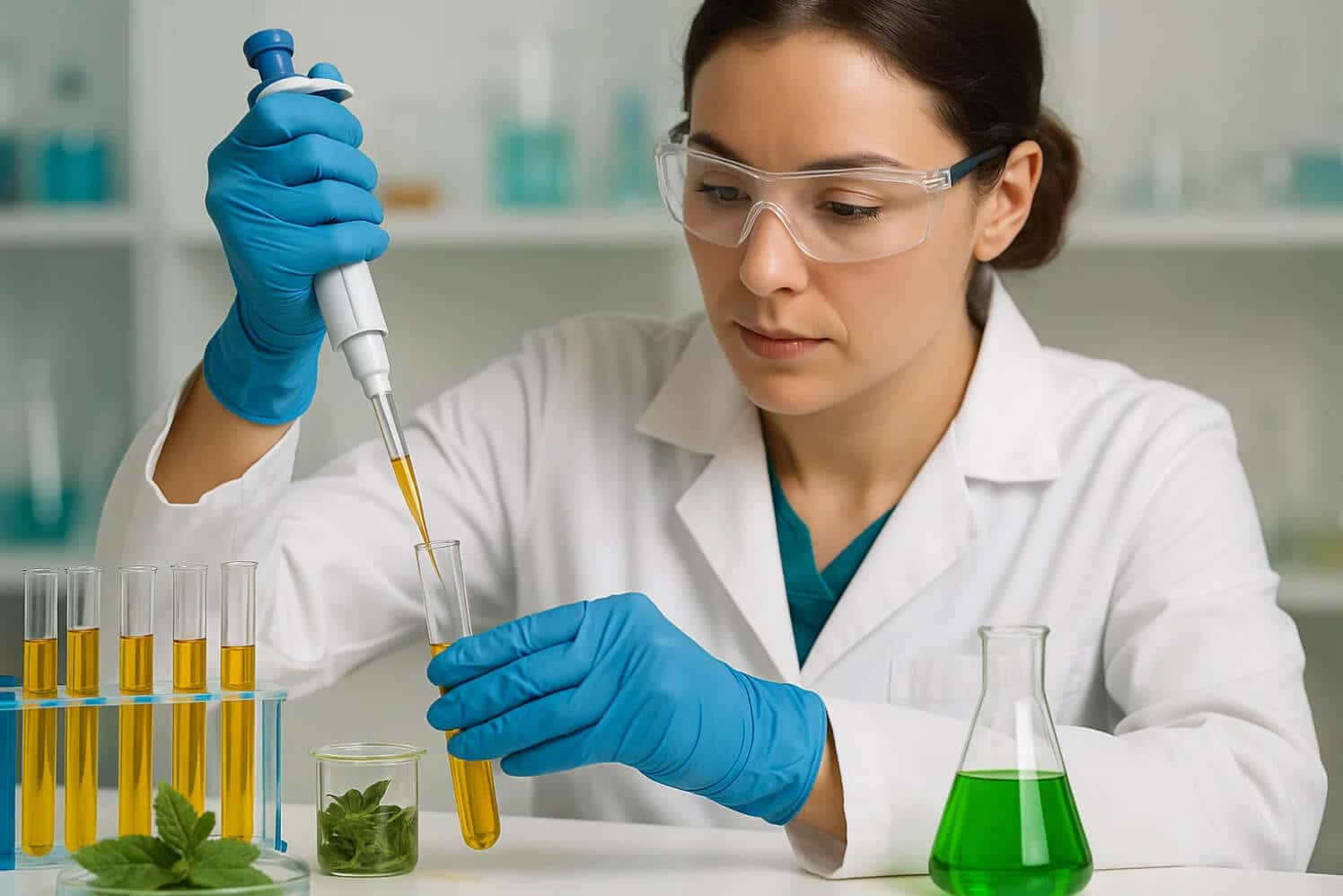
At its core, Enzyme-Assisted Extraction (EAE) leverages the catalytic power of naturally occurring enzymes — biological molecules that accelerate chemical reactions without being consumed.
By dismantling rigid cell walls and complex polysaccharide matrices, enzymes open a gateway to nutrients, pigments, antioxidants, and other bioactive molecules that traditional solvent-based extractions often leave behind.
Compared to conventional techniques, EAE offers a harmonious blend of efficiency, selectivity, and sustainability. In a world where green chemistry and circular economy practices are no longer optional but essential, enzymes have become indispensable allies for researchers and manufacturers seeking both performance and environmental stewardship.
The Science Behind Enzymatic Extraction
Plant cell walls are intricate composites made of cellulose, hemicellulose, lignin, pectin, and proteins. These robust structures evolved to resist degradation — an evolutionary advantage for plants but a hurdle for scientists attempting to access intracellular compounds. Enzymes solve this problem elegantly.
Hydrolytic enzymes such as cellulase, pectinase, xylanase, and protease act like molecular scissors, selectively cutting the bonds that hold the cell wall together. When a biomass substrate is treated with these enzymes, the cell wall matrix becomes porous or fully disassembled, releasing valuable metabolites into the extraction medium.
This process typically takes place under mild conditions:
- Temperatures ranging from 25 to 60 °C
- Neutral to slightly acidic pH levels
- Short reaction times, from minutes to a few hours
These conditions help preserve thermolabile compounds like anthocyanins, carotenoids, and certain proteins that degrade under heat or harsh solvents.
Enzymes in Action: Who Does What?
Each enzyme has a specific target:
- Cellulase: Breaks down cellulose, the main structural component of the cell wall.
- Pectinase: Degrades pectin, a polysaccharide that cements cells together, making it easier to release pigments and juice.
- Xylanase/Hemicellulase: Attacks hemicellulose, contributing to cell wall loosening.
- Protease: Hydrolyzes proteins, liberating protein-bound bioactives and peptides.
- β–Glucosidase: Assists in releasing glycosidically-bound phenolic compounds.
In many cases, extraction protocols rely on enzyme cocktails — combinations of these enzymes tailored to the substrate composition. For instance, a mix of cellulase, pectinase, and xylanase has proven exceptionally effective for extracting carotenoids and polyphenols from tomato peels.
Advantages Over Conventional Extraction Methods
The growing popularity of EAE stems from several compelling benefits:
- Higher Yields: Studies report up to tenfold increases in extracted compounds compared to solvent-based methods. For example, enzyme treatment of tomato waste boosted carotenoid yields nearly 10 times.
- Lower Solvent Usage: EAE often requires minimal or no organic solvents, aligning with environmental regulations and consumer demand for clean-label products.
- Preservation of Bioactivity: Mild processing conditions maintain the functional and nutritional properties of sensitive compounds.
- Time Efficiency: Reaction times are significantly shorter, which can improve throughput in industrial settings.
- Scalability and Cost-Effectiveness: The enzyme industry’s robust supply chain has made large-scale applications feasible and economically viable.
These factors explain why EAE is now applied in sectors ranging from nutraceuticals to cosmetics and biorefining.
Plant-Based Bioactives: Polyphenols and Carotenoids
One of the most exciting areas of enzyme-assisted extraction is the recovery of plant bioactive compounds. Polyphenols, flavonoids, and carotenoids are renowned for their antioxidant, anti-inflammatory, and antimicrobial properties.
Consider olive leaves, a byproduct of olive oil production. Traditional solvent extractions were often limited by pectin-rich cell walls that trapped polyphenols. However, combining Viscozyme® L (a multi-enzyme complex) with pectinase increased total polyphenol recovery to nearly 468 mg gallic acid equivalents per liter — an impressive yield obtained in just two hours.
Similarly, in tomato waste valorization, the application of pectinase and cellulase achieved significantly higher yields of lycopene, a powerful antioxidant carotenoid linked to reduced risk of certain cancers.
Mulberry leaves and fruits, too, have benefited from enzymatic approaches. When enzymes were optimized via response surface methodology, phenolic yields and antioxidant activities surpassed those of conventional hot-water and solvent extractions.
Pigments and Natural Colorants
Natural pigments are in high demand for clean-label food and cosmetic formulations. Enzymes have proven essential in this context as well.
For example, spinach leaves are a rich source of chlorophyll — a vibrant green pigment with both culinary and nutraceutical applications. A customized enzyme mix of cellulase, xylanase, and polygalacturonase enabled solvent-free extraction of chlorophyll at just 25 °C in less than two hours. This gentle process preserved color intensity and minimized degradation.
In wine and juice production, pectinase has long been a workhorse enzyme. It not only clarifies beverages but also enhances the release of anthocyanins and other color compounds, improving flavor and visual appeal.
Protein and Polysaccharide Recovery
Beyond pigments and polyphenols, EAE has unlocked new opportunities to recover proteins and complex polysaccharides from plant biomass.
Cauliflower and broccoli leaves, often discarded as waste, contain valuable proteins. Enzymatic pretreatment with Viscozyme® L and Vinozyme® boosted protein yields by up to 30%, turning an agricultural byproduct into a potential resource for high-protein functional ingredients.
Polysaccharides like pectins and β-glucans are prized for their health-promoting properties. For instance, in Potentilla anserina, a medicinal plant, enzyme-assisted extraction using a cellulase:pectinase blend yielded nearly 20% polysaccharide content — significantly higher than ultrasound or hot-water methods.
These examples underscore how EAE can contribute to circular economy strategies by transforming waste streams into valuable inputs.
Marine Biomass: Seaweed and Beyond
While plant biomass has been the traditional focus, enzyme-assisted extraction is now driving innovation in marine biorefinery. Seaweeds, such as Ulva armoricana, are abundant sources of polysaccharides like alginate, laminarin, and fucoidan — compounds valued for their antiviral, antioxidant, and prebiotic properties.
Using tailored enzymatic cocktails, researchers have demonstrated nearly complete extraction of these biopolymers under mild conditions. In one economic assessment, enzyme-assisted seaweed biorefinery achieved full biomass valorization with a net profit estimated at €1.07 per kilogram of dried biomass — an encouraging proof-of-concept for scaling up.
Moreover, EAE from Ulva armoricana yielded ulvan-rich extracts that showed significant antiviral activity, highlighting the promise of enzyme technology in nutraceutical and pharmaceutical applications.
Optimization Strategies: Getting the Most from Enzymes
Successful enzyme-assisted extraction depends on fine-tuning multiple parameters:
- Enzyme Dose and Ratios: Overloading enzymes doesn’t always lead to higher yields. Optimal concentrations often need careful balance to avoid substrate inhibition or unnecessary costs.
- Temperature and pH: Each enzyme has an activity peak. For example, pectinase generally performs best at 40–50 °C and slightly acidic pH.
- Extraction Time: Longer is not always better. Prolonged exposure can degrade target compounds.
- Co-factors and Additives: Metal ions or chelating agents can improve or inhibit enzyme action.
- Pre-treatment: Mild mechanical disruption or sonication can enhance enzyme accessibility.
Many researchers use statistical modeling tools such as response surface methodology to identify the best combination of variables. For instance, when extracting pectin from feijoa peel, combining enzyme treatment with microwave pre-treatment increased pectin yields to over 13% — a significant improvement compared to using either technique alone.
Sustainability and Green Chemistry
One of the defining features of EAE is its alignment with green chemistry principles. Unlike traditional solvent extraction, enzyme-assisted methods drastically reduce the reliance on hazardous organic solvents. This not only minimizes environmental impact but also improves safety for workers and consumers alike.
Additionally, the lower energy requirements (due to milder processing temperatures) contribute to smaller carbon footprints. When applied to food and agricultural waste, EAE supports circular economy objectives by valorizing side-streams that would otherwise contribute to landfill or incineration.
The market potential for industrial enzymes reflects this trend. Recent estimates suggest the sector will reach approximately $9.2 billion in global revenues by 2027, driven in large part by applications in food, feed, pharmaceuticals, and biofuels.
Real-World Applications and Case Studies
Let’s explore several compelling examples that illustrate the versatility and value of enzyme-assisted extraction:
- Tomato Waste Carotenoids: A pectinase/cellulase treatment improved carotenoid yields nearly tenfold compared to solvent-based extractions.
- Olive Leaves Polyphenols: Viscozyme® L and pectinase recovered nearly 468 mg GAE/L of polyphenols in just two hours.
- Eggplant Anthocyanins: Enzyme pretreatment preserved pigment integrity and increased extraction efficiency.
- Cauliflower and Broccoli Proteins: Enzymes turned discarded leaves into high-protein powders suitable for functional foods.
- Seaweed Biorefinery: Enzymatic processing unlocked valuable polysaccharides and contributed to economically viable bioproducts.
Each example demonstrates how enzymes can adapt to different matrices and product goals, making EAE one of the most flexible extraction platforms available today.
Challenges and Considerations
Despite its advantages, enzyme-assisted extraction is not without challenges:
- Enzyme Cost: Although costs have decreased over the past decade, high-purity enzymes can still represent a significant investment, especially for large-scale operations.
- Enzyme Stability: Some enzymes lose activity over time or under suboptimal conditions.
- Substrate Variability: Biomass composition varies by season, cultivar, and processing history, requiring adaptive process control.
- Downstream Processing: The presence of enzyme residues or incomplete hydrolysis may complicate purification steps.
However, ongoing advances in enzyme engineering, immobilization techniques, and process modeling are steadily mitigating these issues.
Future Directions
The future of EAE is bright and likely to intersect with other innovative technologies:
- Enzyme Immobilization: Fixing enzymes onto solid supports can improve stability and enable reuse, lowering operational costs.
- Synergistic Processes: Combining EAE with supercritical CO2, ultrasound, or pulsed electric fields can further enhance yields.
- Designer Enzymes: Protein engineering may produce bespoke enzymes optimized for specific substrates or target compounds.
- Precision Fermentation: Microbial fermentation could produce tailored enzyme blends sustainably and at scale.
As regulatory frameworks and consumer preferences continue to favor sustainable practices, EAE is poised to become a mainstream extraction technique across industries.
Conclusion
Enzyme-assisted extraction represents a paradigm shift in how we access and valorize natural compounds. By harnessing the precise catalytic capabilities of enzymes, this approach delivers superior yields, preserves bioactivity, and reduces environmental impact. From plant polyphenols and marine polysaccharides to proteins and pigments, EAE is redefining what’s possible in food, nutraceutical, and biorefinery applications.
Nature’s catalysts are no longer confined to living cells — they are now central players in laboratories and factories worldwide. For scientists and manufacturers committed to green chemistry and innovation, enzyme-assisted extraction offers an unparalleled blend of performance, sustainability, and adaptability.