
Propolis is a glue-like, resinous material created by bees and used to block holes and seal cracks in hives. Moreover, propolis contains phenolic acids and their esters, flavonoids (flavones, flavanones, flavonols, flavanonols, and chalcones), terpenes, triterpenes, fatty and amino acids, and other beneficial compounds, which makes the Extraction of Bioactive Compounds from Bee Propolis desirable.
As a result, the optimal extraction conditions for propolis are of great interest.
Ultrasound Extraction and Propolis
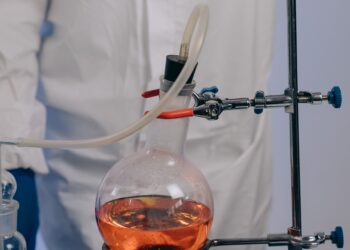
Ultrasound extraction is often preferred for its eco-friendliness, high selectivity, energy- and time-conservation, and efficiency for antioxidants.
The study focused on how various factors affect the extraction of bioactive compounds from propolis using ethanol as a solvent. Specifically, the researchers investigated how temperature, time, solvent concentration, and ultrasonic frequency affect the extraction of balsam content, total phenolic content (TPC), total flavone content (TFC), and individual phenolics such as gallic acid, vanillic acid, chlorogenic acid, caffeic acid, p-coumaric acid, rosmarinic acid, myricetin, quercetin, luteolin, and kaempherol.
The results indicated that increasing ultrasound amplitude increased the extraction efficiency of the target molecules. As the researchers increased the amplitude from 20% to 100%, they observed a 23.3% increase in balsam content, a 17.5% increase in TPC, and a 29.1% increase in TFC.
Propolis & Ethanol
The concentration of ethanol also had a significant impact on the extraction efficiency of the bioactive compounds. Researchers found that increasing the concentration from 40% to 80% resulted in a 150% increase in balsam content, a 175% increase in TFC, and a 43% increase in TPC. They observed the most significant difference between the 40% and 60% concentrations. While the increase from 60% to 80% was less pronounced.
Extraction temperature had a slight effect on TPC and balsam content, but not on TFC. Researchers found that the highest efficiency was achieved at 58°C. Time, on the other hand, did not have a significant effect on the three main molecular groups of interest.
Final Word
Overall, the study demonstrated that researchers achieved the highest extraction efficiency of bioactive compounds from propolis using ethanol as a solvent at 100% amplitude of ultrasonic treatment, 70% solvent concentration, 58°C, and 30 minutes of extraction time.
Reference:
[1] Oroian M, Ursachi F, Dranca F. Influence of ultrasonic amplitude, temperature, time and solvent concentration on bioactive compounds extraction from propolis. Ultrason Sonochem. 2020;64:105021. [journal impact factor = 7.491; times Cited = 20]
Image Credits: Wikimedia Commons