
Lack of Federal Standards Coupled with Inaccurate Labels Call Safety and Quality of CBD Products into Question
Americans Are Unaware of CBD Wild West and Willing to Replace Prescription and OTC Medicines with CBD
WASHINGTON, DC, March 5, 2020 – As millions of Americans increasingly rely on cannabidiol (CBD) products – to the tune of more than $1 billion in sales — to help with pain, depression, anxiety and even cancer, new Digital Citizens Alliance (Digital Citizens) research shows that CBD levels listed on product labels may often be inaccurate, putting consumers at risk and highlighting the need for federal standards and regulation by the U.S. Food and Drug Administration (FDA).
More than half of the products purchased and tested by Digital Citizens contained CBD levels that were 20 percent higher or lower than what was listed on the packaging. In a number of cases, CBD levels were less than half, with some containing less than 10 percent, of what the label claimed. That means consumers were receiving essentially a placebo.
What makes the findings alarming is that many Americans who take CBD report they did so to replace a prescription medication to treat medical issues including pain, insomnia, anxiety, depression, and, even in some cases, cancer and Alzheimer’s disease.
“CBD shows promise to treat pain, anxiety and seizures such as epilepsy. But the market can’t be built on inaccurate CBD levels, misleading claims and a false sense of security about safety.” said Tom Galvin, Executive Director of Digital Citizens. “For consumers to truly trust CBD, they need to know that products meet safety and quality standards backed up by the FDA.”
The Digital Citizens report, “CBD Confusion: How Consumers Can Be Misled and Why the Market Needs Adult Supervision Now,” relied on the testing of dozens of CBD-infused products purchased online and at retail outlets. In addition, the Digital Citizens Alliance commissioned three national surveys to shed light on consumer’s use of CBD, their understanding of CBD products and their attitudes toward government regulation.
CBD, which is the abbreviation for cannabidiol, is one of the primary extracts from hemp and cannabis. Unlike tetrahydrocannabinol (THC), CBD doesn’t create a “high” when ingested. The FDA approved CBD to treat two forms of epilepsy in 2018, and that is the only federally approved usage of the extract. But that hasn’t stopped the rapid consumer adoption of CBD-infused products to treat depression and anxiety and help with insomnia.
According to a John Zogby Strategies survey of 2,506 American consumers commissioned by Digital Citizens, three in 10 Americans say they have tried CBD products, and of those, 82 percent call the emergence of the products a “positive” thing.
But the results of the Digital Citizens investigation and consumer research raise concerns that widespread use, a willingness to substitute CBD for prescription medication, and, anecdotal evidence that some small retailers mislead consumers into believing CBD is regulated creates a false sense of security that could have serious health implications. Here are the key findings of the Digital Citizens investigation:
- Many products that Digital Citizens had tested had significantly less CBD than claimed on the label. Two products, Talyoni Youthful Glow 850mg Tincture (6 percent of what label said) and Relax Dried Fruit Apricot CBD 750mg (3 percent of what label said) had little CBD at all.
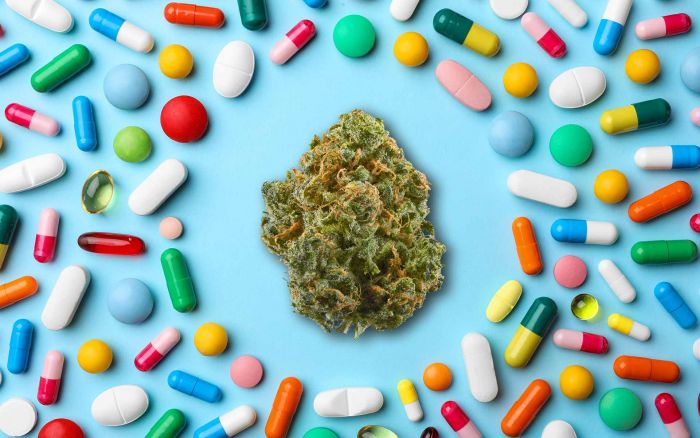
- Seventy percent of those using CBD products said they do so “as an alternative to taking other medication.” Nearly half (46 percent) said it was a replacement for a prescription medication.
- Americans are turning to CBD as a replacement for medication treating serious health issues. When asked, “If you used a CBD product in replacement of a medication, what type of medical issue were you treating?”, CBD users not surprisingly answered pain (53 percent), anxiety (48 percent), and depression (29 percent). They also said they used CBD in place of medication for cancer (9 percent), Alzheimer’s disease (7 percent) and diabetes (7 percent).
- Only 1 in 4 Americans who have purchased products containing CBD know that it’s largely unregulated at the federal level. This lack of awareness about the unregulated nature of CBD suggests consumers believe the products meet standards for safety and quality.
The CBD market is in desperate need of adult supervision. The products live in a legal and regulatory no-man’s land at the federal level but are widely sold all over the United States. It is up to Congress, the FDA and FTC to step in. And if they don’t, Congress should mandate they do with legislation. Digital Citizens calls for the following policy steps:
- It’s vital that we learn more about CBD. Users of CBD swear by its therapeutic properties. Eighty-two percent of users call the emergence of CBD a positive thing. But we need more testing, and more funding for research, to know the long-term impacts, both positive and negative.
- The FDA, by its own admission, is way behind in providing a CBD regulatory roadmap. But that admission is no excuse. If CBD is as therapeutic as its users claim it is, then the FDA’s delay is a hinderance to Americans’ health. The delay also hinders research and testing. The only entity that can unstick the FDA is Congress which should continue to demand action.
- The FDA cannot send a warning letter once or twice a year and expect to tame the Wild West marketplace. The FDA and FTC must act to consistently protect consumers by flagging and punishing those who make fraudulent health and safety claims.
About DCA
The Digital Citizens Alliance is a nonprofit, 501(c)(6) organization that is a consumer- oriented coalition focused on educating the public and policymakers on the threats that consumers face on the Internet. Digital Citizens wants to create a dialogue on the importance for Internet stakeholders— individuals, government and industry—to make the Web a safer place. Based in Washington, DC, the Digital Citizens Alliance counts among its supporters: private citizens, the health, pharmaceutical and creative industries as well as online safety experts and other communities focused on Internet safety. Visit us at www.digitalcitizensalliance.org
Media Contact:
Adam Benson
202.999.9104