• Advertise
  • Contact Us
  • Write For Us
  • Our Team
Extraction Magazine
No Result
View All Result
  • Botanical Extraction
    • Cannabinoids
    • Psychedelics
    • Nutraceutical
    • Product Refinement
  • Industry News
    • Business
    • Sustainability
    • Safety & Compliance
    • Partners
  • Extraction Technology
    • Equipment
    • Methods
    • Solvents
    • DIY Extraction
    • Analytical Techniques
  • Medical Research
  • Glossary
  • Business Directory
  • Botanical Extraction
    • Cannabinoids
    • Psychedelics
    • Nutraceutical
    • Product Refinement
  • Industry News
    • Business
    • Sustainability
    • Safety & Compliance
    • Partners
  • Extraction Technology
    • Equipment
    • Methods
    • Solvents
    • DIY Extraction
    • Analytical Techniques
  • Medical Research
  • Glossary
  • Business Directory
No Result
View All Result
Extraction Magazine
No Result
View All Result
Home Industry News

Cows, Unicorns and Cannabis: Wait . . . What?

Dr. John MacKay, PhD by Dr. John MacKay, PhD
October 4, 2018
in Industry News
Cows, Unicorns and Cannabis: Wait . . . What?

When I go to the grocery store to buy milk, I look into the refrigerated cabinet and see a lineup of 1% fat, 2% fat and 100% whole milk. I have to admit, they all look the same to me, so I can only conclude that someone is profiting from selling only a portion of the milk, or diluting it.

But, on the other hand, perhaps dairy farmers have figured out a way to raise cows that produce only 1, 2 or 100% milk? And if so, how do they raise them and how do they tell them apart?

READ ALSO

How AI-Designed Formulas Just Cracked the $2.3B Terpene Code

Cannabis Extracts Market Projected at US $16.6 B in 2025

Now you might be asking, what does this have to do with cannabis? Stick with me, it’s coming.

So, I conclude that the different breeds of cows must be raised in close proximity of each other to provide the economy of scale to allow the care and feeding of the nutrients they need. For the same reason, they might also be raised in close proximity of the unicorns. In which case, the farmers have to create significant barriers between the different species as well as the different breeds of cow to prevent the possibility of interbreeding.

Now a little bit about cannabis . . .

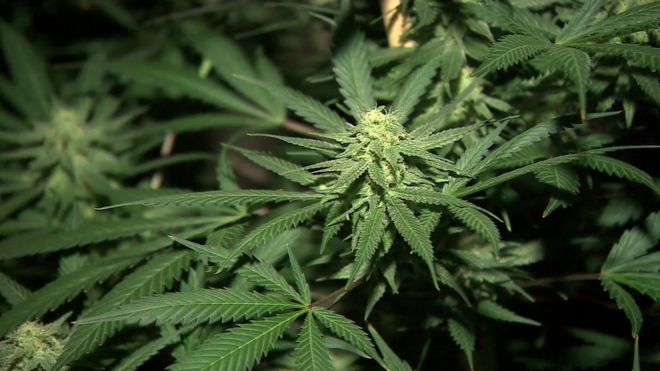
In some cases, there are licensed cultivators raising different classes of cannabis chemovars on the same farm.  While the Class I, Class II, Class III and Class IV chemovars are raised separately from each other, it is not easy to differentiate one chemovar from another by looking at them.  The trained specialists can distinguish one chemovar from another.  But, since I am not an expert, I would need to do some simple experiments to understand the potency of natural syntheses of the major cannabinoids between the different chemovars.

Back to the dairy farm . . .

Dairy products are regulated by the USA Food and Drug Administration (FDA) and the United States Department of Agriculture (USDA). It is essential to develop cultivation requirements on the percentage of fats in the products to meet the agency regulations.

“The federal Food and Drug Administration (FDA) establishes standards for different types of milk and milk products. Some states use these standards, while others have their own standards. Before 1998, the federal standards required that fluid milk sold as whole milk must have no less than 3.25% milk fat, low-fat milk must have 0.5-2.0% milk fat and skim milk must have less than 0.5% milk fat. Starting in 1998, the FDA required that milk with 2% milk fat must be labeled as “reduced-fat” because it did not meet the new definition of low-fat products as having less than 3 grams of fat per serving. Milk with 1% milk fat could still be labeled as “low-fat” because it did meet the definition. As a comparison, the light cream has no less than 18% milk fat, and heavy cream has no less than 36% milk fat”.

Enough about milk, what does all of this have to do with cannabis?

As the states strive to provide regulations that help patients and consumers to understand the differences in the formulations they are considering or ingesting, it is important to have measurable distinctions between the dosages.

How can this be possible? That is the subject of the next few blogs.

SPOILER ALERT:  Defatting is done in the dairy process.  I wonder if the same tools could be transferred to the cannabis process?

References

https://www.fda.gov/Food/GuidanceRegulation/GuidanceDocumentsRegulatoryInformation/Milk/default.htm

https://www.ams.usda.gov/about-ams/programs-offices/dairy-program

http://www.madehow.com/Volume-4/Milk.html

http://www.madehow.com/Volume-4/Milk.html#ixzz5PyXmfjEC

Related Posts

AI-powered cannabis cultivation system optimizing terpene and cannabinoid production with real-time data analytics
Business

How AI-Designed Formulas Just Cracked the $2.3B Terpene Code

July 14, 2025
Cannabis oil and concentrates representing the booming extracts market projected at $16.6 billion in 2025
Business

Cannabis Extracts Market Projected at US $16.6 B in 2025

July 7, 2025
Transparent cannabis leave, sci-fi, futuristic-looking, in a lab setting.
Business

AI & IoT‑Powered Process Control in Cannabis Extraction Is Here

July 1, 2025
Green Extraction Techniques
Sustainability

Green Extraction Techniques and Smart Solvents for Bioactive Recovery

June 25, 2025
Industrial supercritical CO2 extraction equipment in modern processing facility showing market growth to $75 million in 2025
Industry News

CO₂ Reigns Supreme: How a “Magic” Gas Just Conquered a $75M Market

June 2, 2025
A vision for the cannabis business
Business

Cannabis Business In South America

May 1, 2025
Next Post
Cannabis Testing not for the Faint of Heart

Cannabis Testing not for the Faint of Heart

LATEST ARTICLES

Modern CBD extraction equipment in a commercial cannabis processing facility

CBD‑Specific Gear Hits US $65 M Market Milestone

September 22, 2025
Buffalo Hybrid Extraction System

Multi‑Tech Platforms: Hybrid Extraction On Tap

July 20, 2025
AI-powered cannabis cultivation system optimizing terpene and cannabinoid production with real-time data analytics

How AI-Designed Formulas Just Cracked the $2.3B Terpene Code

July 14, 2025
Cannabis oil and concentrates representing the booming extracts market projected at $16.6 billion in 2025

Cannabis Extracts Market Projected at US $16.6 B in 2025

July 7, 2025

Subscribe Now

Subscribe to our newsletter now to receive quick updates from us


    Background
    About

    Extraction Magazine is the trusted provider of botanical extraction news, ever-changing politics, cool gadgets and technologies, and methods for producing safe, ethical, and compliant formulations.

    Advertisers
    Navigation
    • Botanical Extraction
    • Industry News
    • Extraction Technology
    • Medical Research
    • Glossary
    • Business Directory
    Recent Posts
    • CBD‑Specific Gear Hits US $65 M Market Milestone
    • Multi‑Tech Platforms: Hybrid Extraction On Tap
    • How AI-Designed Formulas Just Cracked the $2.3B Terpene Code
    • Cannabis Extracts Market Projected at US $16.6 B in 2025
    Subscribe to our Newsletter
    loader

    Sitemap

    © 2025 Extraction Magazine is the trusted provider of botanical extraction news and the leading media in the ever-changing extraction industry.

    No Result
    View All Result
    • Industry News
    • Botanical Extraction
    • Medical Research
    • Medical Research
    • Glossary
    • Our Team
    • Write For Us

    © 2023 Extraction Magazine is the trusted provider of botanical extraction news and the leading media in the ever-changing extraction industry.